10 Tips for Travelling to Paris
Visiting Paris, the City of Lights, is a dream come true for many. Its monuments, museums, gardens, and charm make it one of the most visited cities in Europe, but to ensure everything goes smoothly, it’s important to follow a few simple tips.

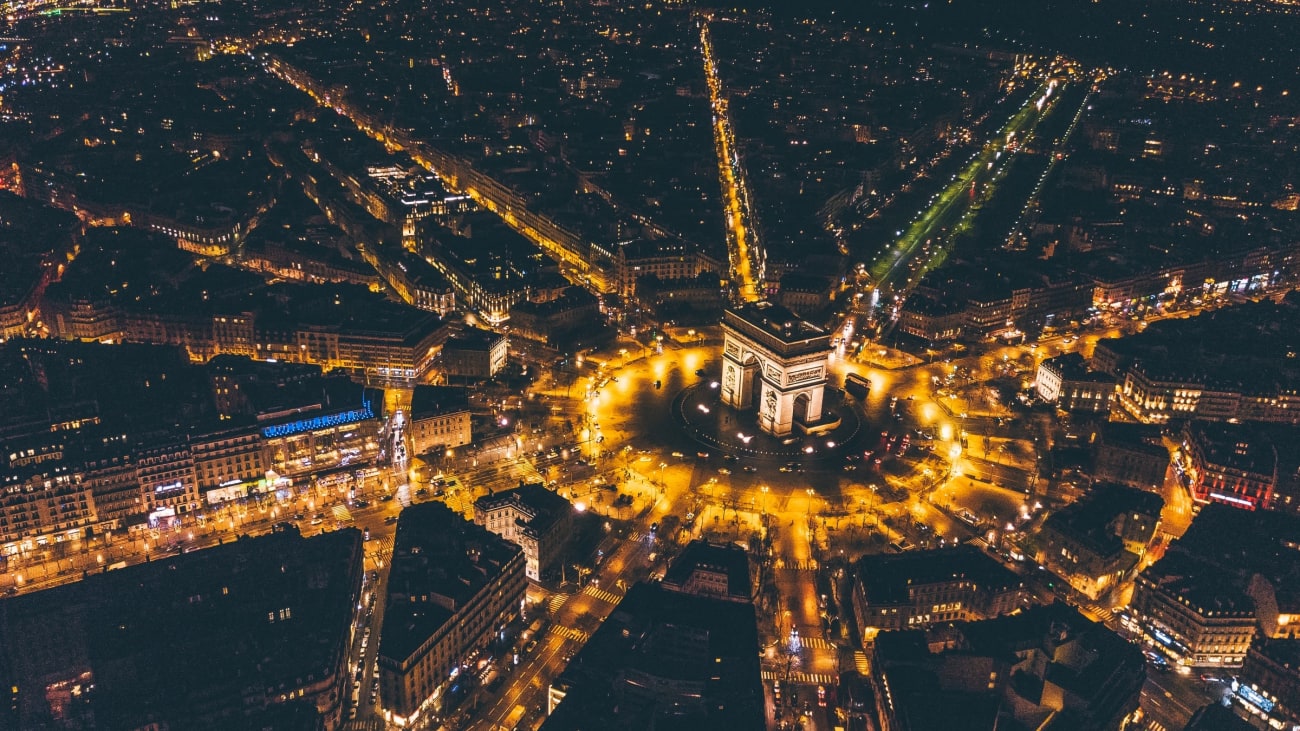
Aerial View of the Arc de Triomphe at Night | ©Alexus Goh
When you start planning a trip to Paris, you usually focus on mapping out itineraries and researching all the sights to see in the city. Given the sheer number of attractions, this step is essential for making the most of your time, but sometimes equally important practical details get overlooked.
That’s why, in this article, I’m sharing some simple tips to help ensure your trip goes smoothly. Sometimes, it’s the small details that make the difference between a great experience and a trip filled with problems, such as knowing how to get around the city or the option of purchasing a tourist card to save a little money and make your trip more comfortable.
1. Visit the Louvre and the Eiffel Tower when the crowds aren’t too large

If there are two places you must always visit when traveling to Paris (even if you’re only spending one day there), they are the Louvre Museum and the Eiffel Tower. Their popularity, however, can lead to large crowds, making the experience less satisfying than you’d hope.
To try to avoid the crowds, you should be aware of the busiest times, as well as which times are generally best for seeing both attractions in a more relaxed atmosphere:
- As for when to visit the Louvre Museum, ideally you should avoid visiting between 11:00 a.m. and 4:00 p.m., as this is the time of day when crowds are at their peak. Remember that it opens around 9:00 a.m., so getting there early to have time to see the Louvre more peacefully could be the solution. You can also go in the afternoon or take advantage of days when it stays open later, usually until around 9:30 p.m.
- Going up the Eiffel Tower during the high season— summer in Paris—usually means long lines, especially on weekends. Outside of this period, the crowds thin out considerably, but my advice is to try to arrive early, before 10:30 a.m. Another good time to go up is after 5:00 p.m. or at night.
2. Book tickets in advance for the most popular attractions
Paris is one of the world’s most visited cities each year. One consequence of this popularity is the endless lines that form in front of its main tourist attractions. These waits, in addition to being inconvenient, end up being a huge waste of time—especially if you’re on a short trip—and there’s only one way to avoid them: buy tickets in advance.
Fortunately, many of Paris’s attractions offer this option to avoid long waits, from the Louvre Museum to the Eiffel Tower, as well as other iconic Parisian landmarks:
- Tickets for the Musée d'Orsay — starting at $43
- Tickets for the Montparnasse Tower — starting at $22
- Tickets for Les Invalides— starting at $20
- Tickets for the Rodin Museum— starting at $17
- Tickets for the Palace of Versailles —starting at $65
- Tickets for the Arc de Triomphe— starting at $21
Oh, by the way, if you’re planning to visit Disneyland Paris, don’t forget to buy your one- or two-day tickets in advance.
3. Save on the metro with one of the available passes

The French capital has a very efficient public transportation network, with the metro being the main way to get around the city quickly, as it allows you to avoid traffic.
In my article How to Use the Paris Metro, I explain all the factors you should keep in mind. Among them is the great utility of the “Next Stop” app, which includes a handy map of the operating lines and lets you plan routes without needing an internet connection. Among the different types of tickets, you’ll find:
- Ticket t+: this is the single-ride ticket. If you’re not planning to use the metro much, this will suffice.
- Paris Visite: There are several options depending on the validity period (between 1 and 5 days) and the zones you want to cover. It also includes discounts for some of Paris’s tourist attractions.
- Navigo Pass: In general, this pass is more economical than the previous one if you’re staying in Paris for about a week. The main drawback is that it’s a bit more complicated to obtain, as you need a passport-sized photo and must pay a non-refundable €5 fee.
4. Save on your visits with the tourist card

Unless you’re lucky enough to extend your stay in Paris for more than 7 days, to make the most of your time you’ll need to make a list in advance of what you want to see. From a financial standpoint—which is also important—it’s worth researching the options the French capital has to offer.
Possibly the best way to save on your visits is the Paris Pass tourist card. This card offers significant discounts on admission to over 60 attractions, including the Louvre Museum, the Arc de Triomphe, and the Basilica of Saint-Denis.
Additionally, it’s worth noting that on the first Sunday of every month, many museums offer free admission.
5. Discover Paris on a guided tour or by tourist bus

The sheer size of Paris (and its surrounding areas) and the vast number of places to visit can make exploring the city a challenge. Getting from one place to another takes time you may not have, not to mention the time wasted figuring out how to get to each monument. To avoid this, one of the best options is to book one of the many tours available in Paris. Practically everyone will find one tailored to their interests:
- Food lovers can book a tour of Paris’s pastry shops.
- Sports enthusiasts can book a bike tour of Paris or even an electric bike tour.
- For fans of scary stories, the perfect plan is to book a nighttime ghost tour or even do it by bike.
- There are also tours that explore specific districts in depth, such as the tour of the Latin Quarter, the tour of the Saint-Germain-des-Prés neighborhood in Paris, or the tour of Montmartre.
- In addition, you can also take day trips outside of Paris.
Another option to save time is the sightseeing buses. These allow you to hop on and off as often as you like and usually cover the city’s most interesting spots. On one hand, you can get a spot on the Big Bus; on the other, you can book a seat on the Toot bus, which also includes two self-guided walking tours through different areas of the capital.
Finally, you can always take advantage of an interesting option the city offers its visitors: the Batobus. This is a boat that travels along the Seine under the same conditions as a sightseeing bus, allowing you to hop on and off at its many stops near the most important attractions.
6. Dare to discover the other Paris

Although it always depends on how long you’re in a city, personally, one of the tips I like to follow most is to stray a bit from the beaten path. In the case of Paris, with its many hidden charms, you can discover stunning places if you decide to walk through the city’s neighborhoods.
These are spots less frequented by tourists, but they’ll delight anyone who stumbles upon them. Here’s a short list of those hidden gems, but you’re sure to find more on your own:
- Canal St-Martin: This is a sort of artificial tributary of the Seine where merchant ships sail. A stroll along its banks is truly pleasant—something Parisians know well, as they often have picnics there on sunny days. A great idea is to book a cruise along the Seine and the Canal St-Martin. If you’re lucky, you’ll see the bridges open to let the boats still traveling along the waterway pass through.
- Passages and Galleries: Paris is full of passages and galleries that combine beautiful architecture with stunning decor. My advice is to find a good map to plan a route or book a tour of Paris’s covered passages and galleries.
- Paris Viewpoints: Beyond the views from the Eiffel Tower or Notre Dame, Paris offers visitors other vantage points from which to admire the city. Some, like the Montparnasse Tower, require an admission fee, while others, such as the terrace at the Printemps department store, are completely free.
7. Experience Paris by night
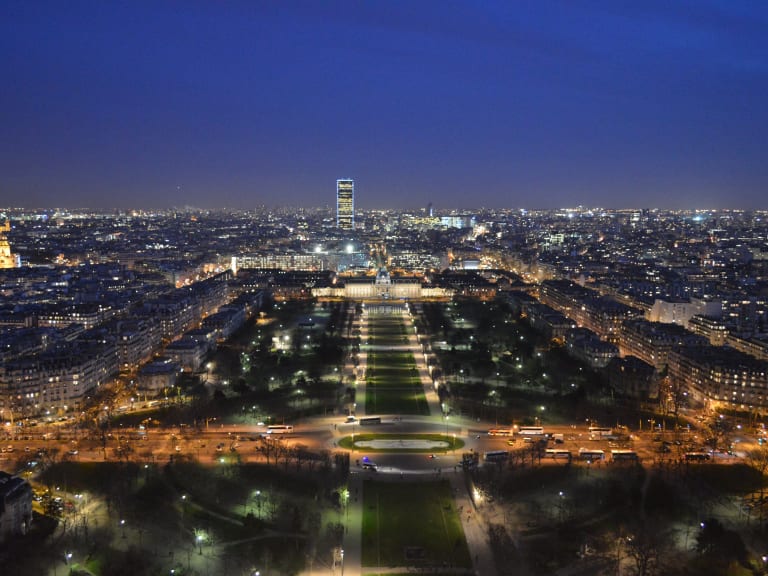
When the sun sets, the city of Paris transforms and reveals a different side. In Paris at night, its streets and many of its monuments light up, and life continues to buzz in a multitude of venues.
Although everyone has their own way of traveling, there are some nighttime attractions in Paris you shouldn’t miss. Here’s a short list of the must-sees so you can find the ones that best suit your interests:
- Visit the Eiffel Tower: Paris’s iconic landmark lights up at night to showcase its imposing silhouette to the entire city. To enjoy it, you can simply admire it from a nearby spot or take a nighttime climb up the Eiffel Tower to view the metropolis from above. Finally, if the weather permits, you can also sit in the Champs de Mars and have a little nighttime picnic.
- Enjoy the nightlife: although it’s a cliché applicable to many cities around the world, it’s safe to say that Paris never sleeps. Night owls will find a wealth of bars and nightclubs to enjoy well into the night.
- Go to a cabaret: many believe that Paris is the birthplace of cabarets. The most famous is, without a doubt, the Moulin Rouge, which offers the chance to dine and watch the Moulin Rouge show. Other equally interesting venues include the Lido, the Crazy Horse, and the Paradis Latin.
- The Seine at night: the river that runs through the capital also offers visitors several ways to enjoy it at night, such as taking one of the night cruises on the Seine or simply strolling along its banks while admiring its beautiful bridges.
Getting Around Paris at Night
Since public transportation schedules are limited, getting around at night will depend on the time of day. The metro runs until 1:00 a.m. (2:00 a.m. on weekends). After that, you’ll need to find another way to get around, such as the Noctilien bus service, which runs from 12:30 a.m. to 7:00 a.m., or take a taxi.
8. Adapt to Paris’s schedule

Although schedules in Paris are somewhat more flexible than in smaller French towns, the differences with Spain are still noticeable, especially when it comes to Parisian restaurants.
Any traveler must adapt to the customs of the country they are visiting unless they want to risk finding everything closed. In the French capital, lunch is typically eaten between 12:00 and 1:30 p.m., so it’s relatively common for many kitchens to close at 2:00 p.m.
On the other hand, dinner usually starts between 7:30 and 8:00 p. m., which means that if you want to have an afternoon snack, you’ll also need to move your schedule up quite a bit.
9. Include French cuisine among the attractions of Paris to discover

For those of us who love to explore the cuisine of the places we visit, Paris offers a great opportunity. Trying different dishes is the best way to experience the local culture, and it’s something I highly recommend you don’t miss.
Among the most typical dishes you’ll find in the French capital are:
- Foie gras.
- Escargots (snails).
- Boeuf bourguignon (a beef stew with red wine).
- Quiche Lorraine (a savory tart with meat and cheese).
- Croque-monsieur (a classic grilled cheese and ham sandwich).
- French cheeses, best enjoyed with a glass of wine or champagne.
And, of course, you should always save room for the country’s wonderful sweets. If you have a sweet tooth, you can’t miss out on:
- The best crepes in Paris.
- Macarons.
- Petit fours.
- Café au lait with a freshly baked croissant —their typical breakfast.
10. Learn a few more tips to make your visit to Paris perfect

To make your trip a complete success, here are some simple tips that can come in handy:
- Learn a few phrases in French. You don’t need to become bilingual, but learning to say bonjour (good morning), merci (thank you), or s’il vous plaît (please) will come in handy on occasion. If you add monsieur or madame, the result will be even better.
- Closely related to this is the great importance placed in France on manners and politeness. Never forget to greet people or ask for things “please” in restaurants or at ticket counters, and always try to avoid using informal speech.
- It might not occur to you, but you should still know that feeding the pigeons is strictly prohibited. The fines, moreover, can be quite high.
- Swimming in the Seine is also prohibited, even in summer. If you can’t resist the urge, you’ll just have to head to the so-called Paris Plage.
- One last rule you might find useful to know is that appearing drunk in public can result in a fine. Obviously, no one will say anything if you have a glass of wine while picnicking in a park, but try not to go overboard.