










More about: 10 Things to Do in Belem in Lisbon
The Belém neighborhood is located at the mouth of the Tagus River and is famous for the Jerónimos Monastery and the Belém Tower, two examples of the Manueline style. This artistic style is very typical of Portugal and will surprise you with its extravagant decoration. Here are the best things to do in this authentic Lisbon neighborhood.
1. Take a guided tour

Any trip to Lisbon must include a visit to Belém. This area is closely tied to Portugal’s colonial history; from these very shores, the caravels set sail from Europe to reach the coasts of Brazil or the overseas territories in India.
By choosing a guided tour, you can explore this neighborhood with an expert guide who will take you to see the area’s main attractions: the Jerónimos Monastery, the Padrão dos Descobrimentos, and the Belém Tower. These tours usually last two hours and typically start at Praça do Império (in front of the Navy Museum) or at Doca de Bom Sucesso, the docks along the riverbank.
Best Tours of Belém
Don’t assume all tours of Belém are the same—there are different ways to explore the neighborhood. These are the most popular:
- Guided walking tour of Belém - from $39
- Tuk-tuk tour of Lisbon’s Belém area - from $92
- Segway tour of the Tagus River and Belém in Lisbon - starting at $84
2. Visit the masterpiece of Manueline architecture
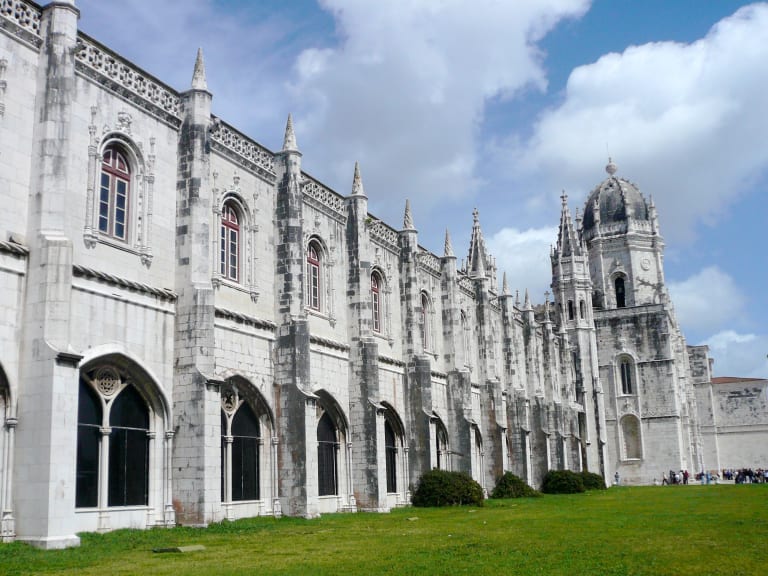
Whichever tour you choose, during your tour of Belém you’ll pass by the Jerónimos Monastery, a majestic religious building that dominates Praça do Império. Its history is linked to maritime exploration and the figure of Vasco da Gama. In 1497, the Portuguese navigator set sail from the port of Santa Maria de Belém, skirted the west coast of Africa, rounded the Cape of Good Hope, and arrived in Calicut (India) on May 20, 1498. A year later, two ships returned to Portugal laden with spices. To celebrate this new trade route, King Manuel I decided to build a grand church and commissioned the project to the architect Diogo de Boitaca.
The first stop is the Church of Santa Maria de Belém, a Gothic church with large columns and the tombs of four Portuguese monarchs, Luís de Camões, and Vasco da Gama. Another must-see is the two-story Manueline-style cloister. Both floors are richly decorated with gargoyles, nautical symbols, medallions, tiles, and much more. From October to April, it is open from 10:00 a.m. to 5:00 p.m., while from May to September, it closes at 6:30 p.m.
When you’re inside the monastery church, look up at the vault of the transept. This extraordinary dome is characterized by a structure reminiscent of a spiderweb, but despite its height and size, it’s not supported by any columns!
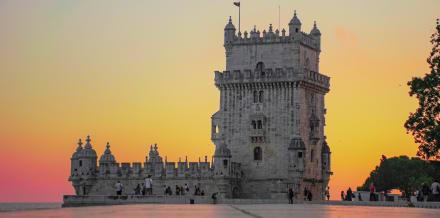
3. Discover the city’s symbol: the Belém Tower

The Belém Tower stands in an iconic location in Lisbon: on the former Restelo beach, from where ships set sail for Brazil, Africa, and the other overseas colonies. Construction began during the reign of Manuel I and bears the signature of Francisco de Arruda. The architect designed the fortress of Azamor, a town on the Atlantic coast of Morocco, and his time in the Maghreb is reflected in the tower’s decoration, which features distinctive Arabic-style elements.
The Belém Tower is open Tuesday through Sunday from 10:00 a.m. to 5:30 p.m. (between October and April) or from 10:00 a.m. to 6:30 p.m. (between May and September).
Before entering, take a moment to look at the rhinoceros gargoyle, a sculpture depicting this animal. The statue hides a unique story linked to 16th-century maritime explorations. In 1513, Admiral Afonso de Albuquerque returned from India with a rhinoceros and presented it as a gift to Manuel I: it was the first time this beast had set foot on European soil. At the royal court, people wondered if it was as strong as an elephant, and to settle the matter, the monarch had them face off in a deadly battle. According to legend, the rhinoceros won, and the king wanted to honor the “strongest animal in the world.”
4. Admire the monument commemorating the Portuguese navigators

Just a few meters from the Belém Tower stands a tower resembling a caravel: the Padrão dos Descobrimentos. The monument commemorates the 500th anniversary of the death of Henry the Navigator, a key figure in Portuguese history.
On the opposite side of the bow, a large cross completes the monument, and at its base is a door. Behind this doorway is a small museum illustrating the routes of the Portuguese navigators. From here, you can climb up to the observation deck, which offers splendid views of the Sport Bridge, the Tagus River, the 25 de Abril Bridge, and the Jerónimos Monastery. If you love scenic viewpoints, you’ve chosen the right city. Lisbon is also famous for its viewpoints, and the most highly rated ones are located in the nearby Alfama neighborhood.
** From October to February, the Padrão dos Descobrimentos is closed on Mondays**, while on other days it is open from 10:00 AM to 6:00 PM. From March to September, however, it is open daily from 10:00 AM to 7:00 PM.
5. Admire the city from the Tagus

To see the tower, the Jerónimos Monastery, and the Padrão dos Descobrimentos from a different perspective, you can opt for a river cruise on the Tagus. Tours depart from the port of Belém or other central neighborhoods in Lisbon. A sunset boat ride is a great option. This way, you can see the main monuments of the Portuguese capital as you glide along the river.
The boats usually reach Praça do Comércio by passing under one of the city’s icons: the 25 de Abril Bridge, the longest suspension bridge in Europe. Opened in 1966 as the Salazar Bridge, it was renamed after the 1974 Carnation Revolution. Due to its shape and red color, it resembles San Francisco’s Golden Gate Bridge.
If you’re traveling to Lisbon in the summer, I recommend booking your tour in advance. During the warmer months, these excursions are very popular.
6. Relive the past at the Carriage Museum
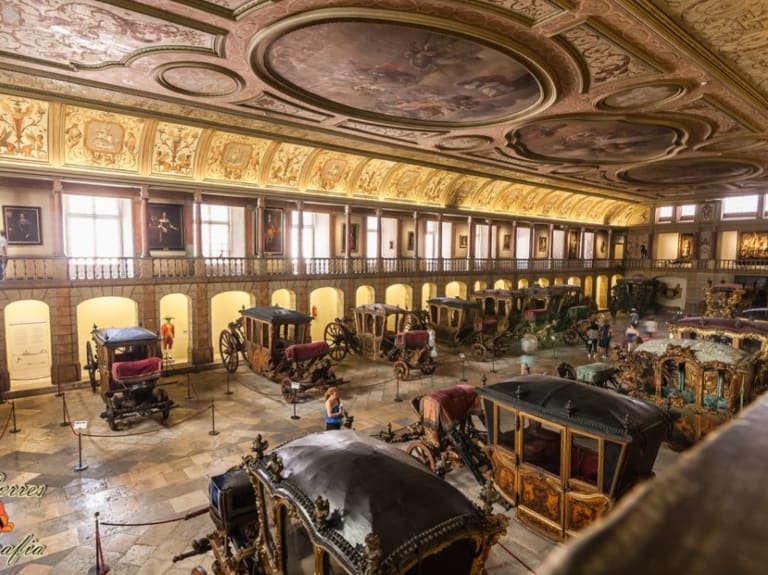
Until the 19th century, Lisbon’s long avenues and steep hills were traversed by a multitude of carriages. Royalty traveled in luxurious, richly decorated carriages, and many of these have left the streets to be housed in the National Coach Museum.
The museum is divided into two parts: some vehicles are displayed in the Picadeiro Real (the former royal riding arena), while others are housed in a modern structure designed by Brazilian architect Paulo Mendes da Rocha. Both buildings are located in Praça Afonso de Albuquerque.
If you’re coming from downtown Lisbon, you can take tram 15 to the Belém stop. The ride takes about twenty minutes. If you’re passionate about transportation, I recommend visiting the Museu da Carris, a cultural institution that houses double-decker buses, subway cars, horse-drawn carriages, trams, and much more. From Praça Afonso de Albuquerque, take tram 15 (this time in the opposite direction) and get off at the Estação de Santo Amaro stop.
7. Stop by Casa Pastéis de Belém

In Lisbon, pastéis de Belém are an institution, and the pastry shop that uses the original 19th-century recipe is located in this part of the city. Naturally, we’re talking about Casa Pastéis de Belém, the shop at Rua de Belém 84. You’ll recognize it by the tiles on its façade and the line that often forms at the entrance. The pastries that come out of this place every day are a delight for the palate and well worth the wait. In addition to the pastéis, you can also buy a Bolo Inglês, assorted sweet and savory treats, and jam.
During the Christmas season, the shop’s offerings are complemented by the bolo-rey and the bolo-rainha, two Portuguese versions of the roscón de reyes. If you’re traveling during this time, I recommend reading the post “10 Things to See and Do in Lisbon in December.”
8. Immerse yourself in modern and contemporary art
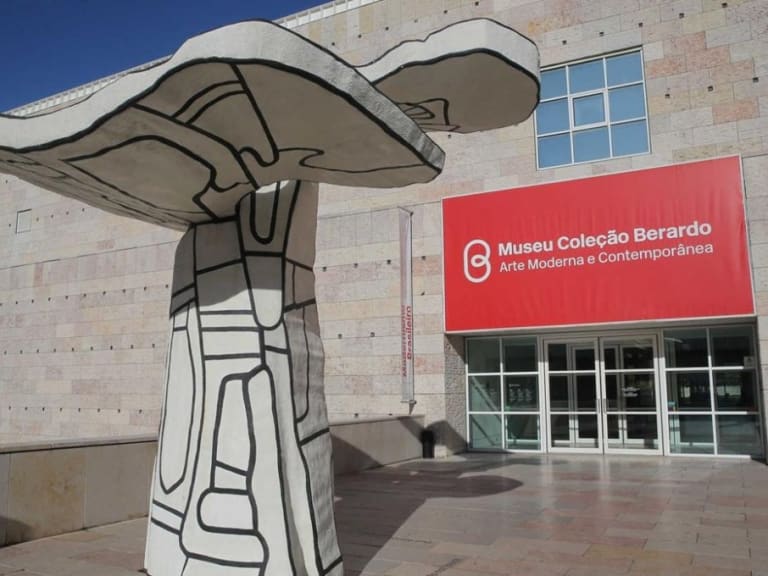
A short distance from the Jerónimos Monastery lies the Museu Coleção Berardo, now known as the Museu de Arte Contemporânea, a cultural institution housing over 900 works from the major artistic movements of the 19th and 20th centuries.
Among the most notable works, we must mention Picasso’s “Femme dans un fauteuil” and “Tête de femme,” Andy Warhol’s “Brillo Box” (wooden cubes recreating sponge packaging), and Francis Bacon’s “Oedipus and the Sphinx after Ingres.” The museum won a Tripadvisor “Travelers’ Choice” award in 2021, and I assure you it’s well worth a visit. It’s located at Praça do Império, and general admission **costs approximately €5.
**
Mateo’s tip
If you love contemporary art and are visiting the Portuguese capital over the weekend, you’re in luck. Admission is free on Saturdays!
9. Come check out the neighborhood’s newest addition: the MAAT

The riverbank is home to a cultural institution of great interest: the MAAT, the Lisbon Museum of Art, Architecture, and Technology. It’s located next to the city’s old power plant, and its shape resembles a wave on the Tagus. Opened in October 2016, it hosts exhibitions by contemporary artists, architects, and thinkers. It’s also used for concerts and film screenings.
Architecturally, this building is characterized by 15,000 three-dimensional tiles that reflect the water’s surface and by its public viewing platform overlooking the opposite bank of the Tagus. The two buildings that make up the complex (Central – Museum of Electricity and the MAAT) are open from 11:00 a.m. to 7:00 p.m., Wednesday through Monday.
To round out your visit, grab a bite at maat Café & Kitchen, a restaurant serving Mediterranean-style signature cuisine. Their specialties include fish and seafood from the Portuguese coast.
10. Step through the gates of an iconic stadium

Are you a soccer fan? Then you’ll be happy to know that the Belém neighborhood is home to the Os Belenenses stadium, Lisbon’s third-largest team and the fourth-largest in the country by number of fans. The Estádio do Restelo has been their home since September 23, 1956, when the home team defeated the mighty Sporting 2–1. The stadium has a capacity of 19,856 spectators and offers a beautiful view of the Jerónimos Monastery and the river. If you’d like, you can visit it on a guided tour. If you’re interested, I recommend checking out their official website.