


More about: Lisbon in 5 Days: tips, what to see, and much more
If you are lucky enough to spend five days in Lisbon, you will have the opportunity to get to know the city in depth. And you can do so at a leisurely pace, with plenty of time to see and enjoy its monuments and the possibility of taking trips to the most interesting places in the surrounding area.
You can see all the points of interest in the city center, in the Belém neighborhood, and in the northern part of the city. Then you can take the opportunity to visit Sintra and Cascais, two towns near Lisbon with a lot to see and do. Here is an itinerary designed to make the most of a five-day trip to Lisbon.
Day 1: Historic center: Alfama, Baixa, and Chiado neighborhoods
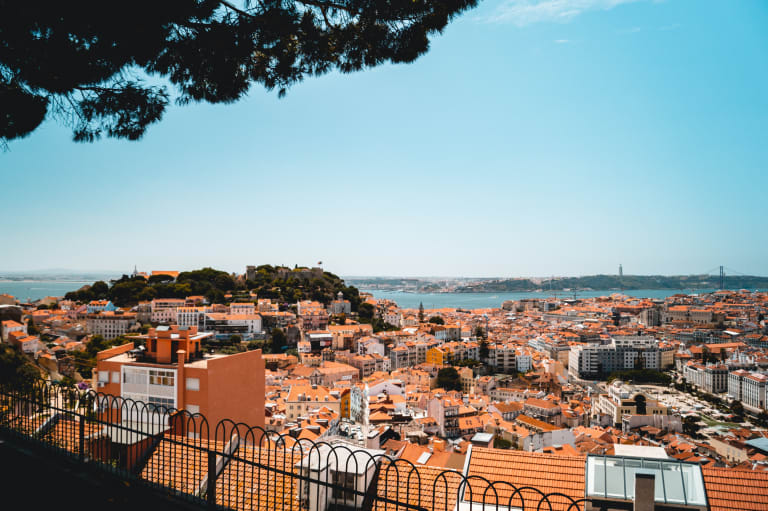
I always recommend starting your visit to Lisbon in the historic center. It is home to many of the main monuments and captures the authentic essence of the Portuguese capital. The center consists of the Alfama, Baixa, and Chiado neighborhoods, as well as the upper neighborhood, which are adjacent to each other and can be easily explored in a day at a leisurely pace.
Alfama neighborhood
There is a lot to see and do in Alfama. Its steep streets can be explored by tram and represent the essence of the city. The monuments we can see in Alfama are: St. George's Castle, Lisbon Cathedral, the Portas do Sol and Santa Lucia viewpoints, and the National Pantheon.
The most "typical" way to explore Alfama is aboard tram 28, which has become more of a tourist attraction than a means of transportation. I also recommend taking some time to wander around and discover its hidden corners, architecture, and cuisine.
Baixa and Chiado
These central neighborhoods are located below the Alfama hill. They are home to some of the city's most emblematic streets and important squares, such as Pedro IV Square and Commerce Square. In addition, there is the Santa Justa elevator, which we will have to take to visit the Convento do Carmo.
This area is ideal for strolling while admiring its charm, enjoying its cuisine in its many restaurants, or shopping in the stores on Rua Augusta.
All of these neighborhoods can be visited in the first 24 hours without having to rush. But to do so, you will have to get up early to make the most of your time.
Day 2: Get to know the Belém neighborhood in depth
On the second day of this itinerary, we will only visit one neighborhood. But that's more than enough considering the number of monuments located there. This is the Belém neighborhood. An area that was once a separate town from Lisbon but was eventually absorbed by the capital.
As a result of the era of explorers that marked the history of Portugal, many of the buildings that are now emblematic of Lisbon and some of the most important in the country were built in Belém. The main ones are:
Jerónimos Monastery
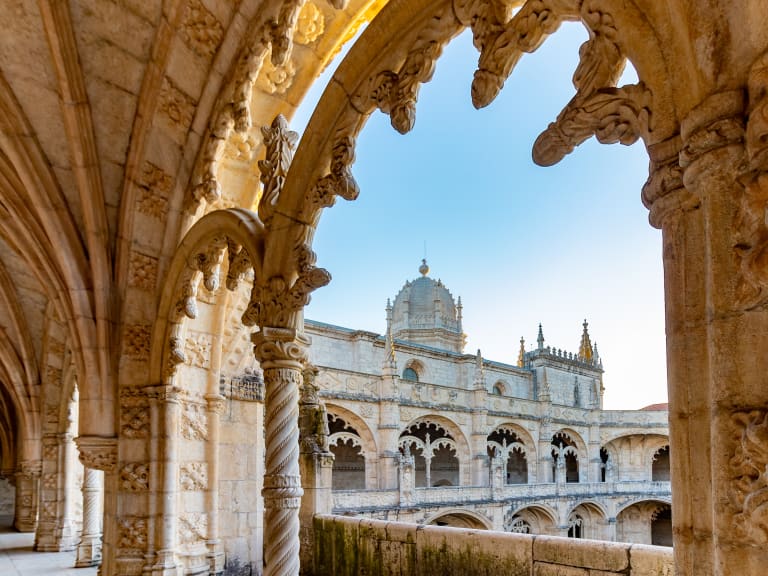
I would venture to say that the Jerónimos Monastery is the most important historical site in Lisbon. It is also the most visited in the capital and is recognized as a World Heritage Site. All this is thanks to its artistic and architectural ensemble, headed by its cloister and church.
Taste the Pastéis de Belém
Of all the things to do in the Belém neighborhood, the most essential is to try its traditional pastries. They can be tasted throughout Lisbon, but Belém is home to the original factory where the monks of the Hieronymite order first made them, making it the best place to try these sweets.
Belém Tower
The most iconic spot in Lisbon is this small fort on the Tagus River, which stands out for its unique architecture, rarely seen in similar constructions. The Belém Tower is just a few minutes from the Jerónimos Monastery and you can visit the inside and access its terrace with views of the entire Tagus River.
Monument to the Discoveries
Almost all, if not all, of the monuments in Belém were built thanks to the profits brought back by the conquistadors who set sail from the waters of Lisbon to new destinations. As a tribute to them and their discoveries, a huge monument over 50 meters high was built on the banks of the river, known as the Monument to the Discoveries. It is one of the most photographed spots in the city.
Day 3: Park of Nations, Eduardo VII Park, Avenida Liberdade, and cruise on the Tagus

After seeing the main sights of Lisbon on the third day, it's time to relax and take it easy. But that doesn't mean there aren't more places to visit. On a more relaxed day, we can take the opportunity to visit two of the most important and beautiful parks, as well as one of Lisbon's main avenues.
Parque das Nações
Located in the northern part of the city, the Park of Nations was
built to host the World Expo that Lisbon hosted in 1998. It is a place with very modern architecture that is worth seeing. The oceanarium, the largest aquarium in Europe, and the cable car are the two most recommended activities in the Park of Nations.
Eduardo VII Park
This is a central park in the city that is very popular with locals and tourists alike thanks to its views of the city center and its famous botanical garden. Its gardens are located on a slope and start at Marqués de Pombal Square, connecting with Avenida Liberdade. Its name does not come from any Portuguese king, but rather from the visit of the British monarch Edward VII in 1902.
Liberdade Avenue
This wide avenue is one of Lisbon's main thoroughfares, linking Praça dos Restauradores with Praça do Marquês de Pombal. Lined with shops and beautiful buildings, it is crossed by a boulevard with numerous trees, fountains, and statues. It is a very pleasant and recommended walk to enjoy a part of Lisbon.
Take a cruise on the Tagus
You can also take advantage of this peaceful day to take one of the best cruises to discover Lisbon. There is a wide variety of boat trips available, from sailing boats to traditional boats, catamarans and even yachts. Here is a selection of the best ones:
- Traditional boat trip around Lisbon
- Yacht trip around Lisbon
- Private sailboat trip around Lisbon
- Private catamaran trip around Lisbon
- Dolphin watching tour of Lisbon
Day 4: Excursion to Sintra
Located about 30 kilometers from Lisbon in the middle of a protected natural park, this town is known for its palaces and gardens. It has been a World Heritage Site since 1995 and can be visited from Lisbon by car, bus, train, or organized excursion. These include round-trip transportation from downtown Lisbon. The highlights of the Sintra complex are:
The Pena Palace
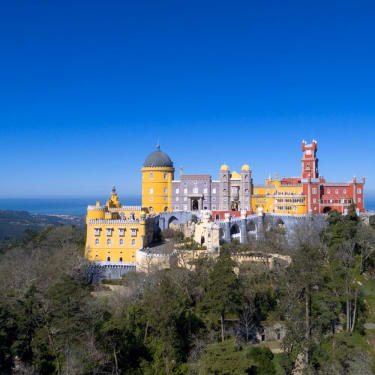
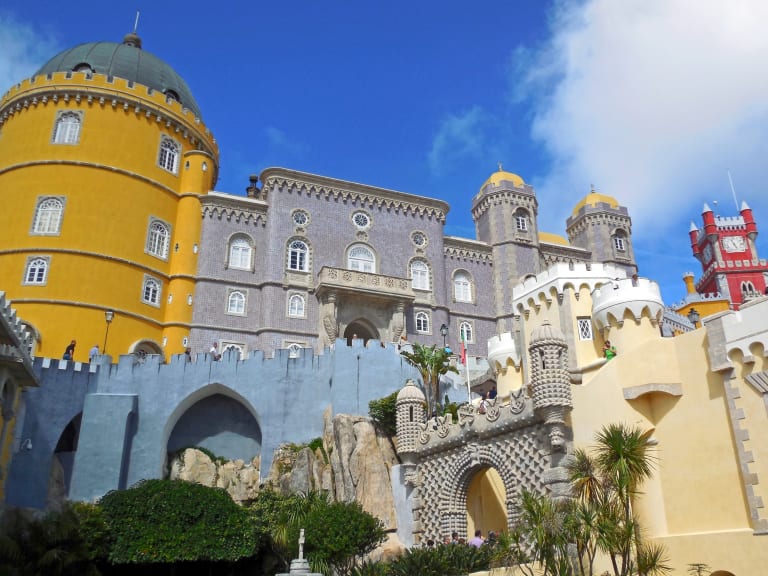
The Pena Palace is the first thing you should visit in Sintra. It is its main attraction and one of the best-known tourist attractions in Portugal. Its colors and mixture of architectural styles are striking. The interior of the palace and the gardens surrounding it are also an essential part of the visit. To visit it, here is a link with all the information about one of the best excursions you can do from Lisbon: visiting Sintra.
Quinta da Regaleira
Famous for its initiation well, the palace of La Quinta da Regaleira hides many secrets related to Freemasonry. Apart from this, its gardens and the palace itself are well worth spending time exploring. It is a place that is worth visiting with a guide.
The National Palace of Sintra
Its two impressive chimneys catch the eye of all visitors to Sintra. They stand out above the rest of the town of Sintra, attracting the attention of visitors as they are located in the very center of the town and are visible from almost anywhere. The National Palace is recognized as a UNESCO World Heritage Site.
The Palace of Monserrate
Monserrate Palace combines styles as diverse as Gothic and Arabic architecture. This unique blend, together with its impressive botanical garden, makes it a must-see in Sintra.
Other points of interest in Sintra
If, after visiting these four places, you want to continue exploring Sintra, which is quite likely, you still have many options. Other palaces and places in the town that are worth visiting include the Castelo dos Mouros, the Convento dos Capuchos, and the Chalet and Garden of the Countess.
Day 5: Excursion to Cascais and Barrio Alto

On the last day of this 5-day itinerary through Lisbon, we can take a trip to the beautiful village of Cascais and end the trip by enjoying the atmosphere of Barrio Alto. Both places are ideal for a more relaxed day focused on enjoying the culture and cuisine without having to visit as many monuments as on previous days.
Cascais
This beautiful coastal town is located just 30 kilometers from Lisbon. You will see that its streets and houses have a very stately and opulent air, and that is because it was once the favorite destination of the Portuguese aristocracy. This is faithfully reflected in its villas and palaces.
Today it is a very pleasant town to visit because of its varied atmosphere. There is a strong fishing tradition, and fishermen offer their catch in the town square while clothing markets are held and live fado shows take place. You can also visit some of Cascais' main attractions, such as the Citadel or the Museum of the Counts of Castro Guimarães.
Although Cascais is more crowded in summer, it is a good destination for a day trip thanks to its beaches. And it is still recommended throughout the year as a place to escape the tourist hustle and bustle of Lisbon, with its terraces, cafes, and restaurants.
Bairro Alto
Cascais can be visited and enjoyed in a morning, and the last few hours in Lisbon can be spent in the Alto neighborhood. This central neighborhood is Lisbon's nightlife district par excellence. It combines an avant-garde and modern atmosphere with the tradition of fado and old squares and buildings.
This diversity is where its charm lies, and there is no better way to say goodbye to Lisbon than by doing so in its streets. We can dine in one of its restaurants while enjoying a fado show and then enjoy the nightlife in its many pubs.
If we opt for a more touristy approach in the Alto neighborhood, we have the San Pedro de Alcántara viewpoint, which offers breathtaking views of Alfama, the Glória elevator to climb its steep streets, or the Santa Catalina viewpoint and its statue of the mythological sea giant Adamastor.