

More about: 10 Things to Do in Venice in the winter
Winter is definitely a great time to enjoy all there is to see and do in Venice. In addition to the usual attractions it offers visitors, this time of year features two of the city’s biggest celebrations: Christmas and, of course, its fantastic carnival.
Another advantage of spending a few winter days in Venice is that the tourist crowds are much smaller than in summer. This allows you to stroll more peacefully and appreciate every detail at your own pace. Add to this the chance to witness events like the arrival of the Befana or the Festa Veneziana sull’acqua, and your trip is sure to be unforgettable.
1. Visit the Christmas markets and enjoy the city’s holiday lights
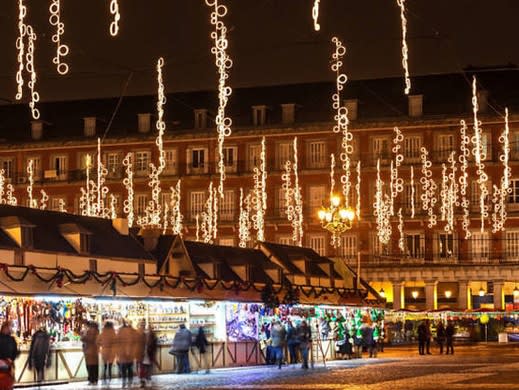
Winter in Venice is undoubtedly one of the best times to visit the city. In December, for example, all you need to do is stroll through its decorated and illuminated streets and squares to feel immersed in the Christmas spirit—a feeling that will only grow stronger when you visit one of the markets.
The city’s most notable Christmas market is the one at Campo Santo Stefano. With the Church of St. Stephen as a stunning backdrop, you’ll find all kinds of decorative items at the many stalls set up there. Alongside these products, you’ll also find toys for children, Venetian masks, and the most beautiful Murano glass objects.
While you’re browsing the stalls at this market, you can also try a grappa specialty, such as one with a delicious chocolate flavor. Of course, you can opt for a good sparkling wine and pair it with one of the culinary specialties sold there.
Other markets you’re sure to enjoy are those at Campo San Polo, the Palazzo Zenobio, or the ones set up in Mestre.
However, the Santo Stefano market also has the advantage of its proximity to the Grand Canal. In fact, my advice would be that after leaving the market, you cross that canal and head toward the Rialto Bridge area, a perfect spot to buy some gifts or grab a bite to eat at the many bars and restaurants there.
2. Attend one of the many concerts during the Venetian winter
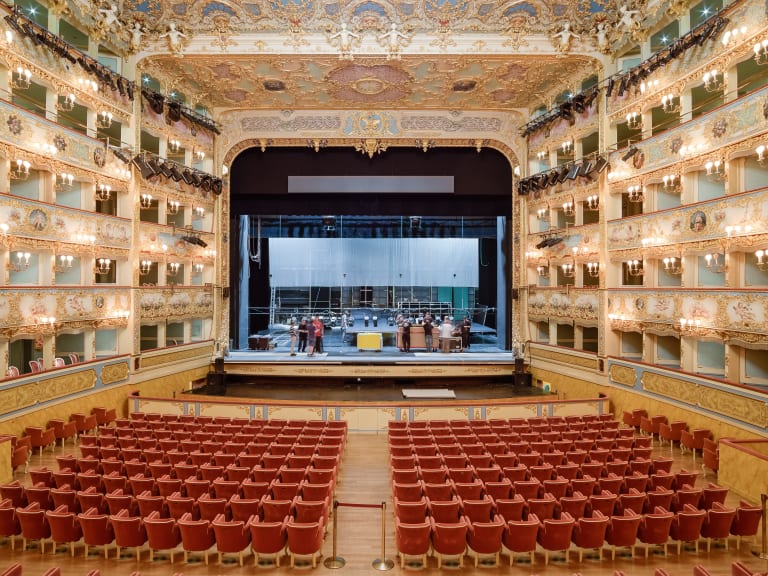
Classical music lovers —or simply anyone who wants to enjoy a concert in one of the city’s most beautiful venues —should know that the winter season in Venice offers a wealth of options, from those held to ring out the year to those taking place in the prison of the Doge’s Palace.
To start with, winter marks the beginning of the grand opera season at the Teatro La Fenice. Over the following months, all opera lovers will have the opportunity to attend performances at one of the world’s cradles of the genre.
Among the special events , the Concerto del Capodanno **—**the traditional New Year’s concert—stands out, held every January 1. However, you can also hear the same repertoire in the days leading up to it, between December 28 and 31.
Another major venue hosting concerts throughout the summer season is the Church of San Vidal, just a short walk from the Grand Canal. Many of these concerts are dedicated to the music of Vivaldi.
The Scuola Grande San Teodoro, as part of its cultural program, also offers Venetians and tourists a large number of concerts. The most notable is its traditional Carnival concert in February.
If there is one place that, at first glance, might seem an unlikely venue for musical performances, it is the prison in the Doge’s Palace. However, for several years now, the venue has been the setting for a number of spectacular Baroque music concerts.
Finally, concerts are organized in some of the city’s palaces that you can attend. You just need to hurry to get tickets before they sell out.
3. For the brave only: start the year with a swim at the Lido
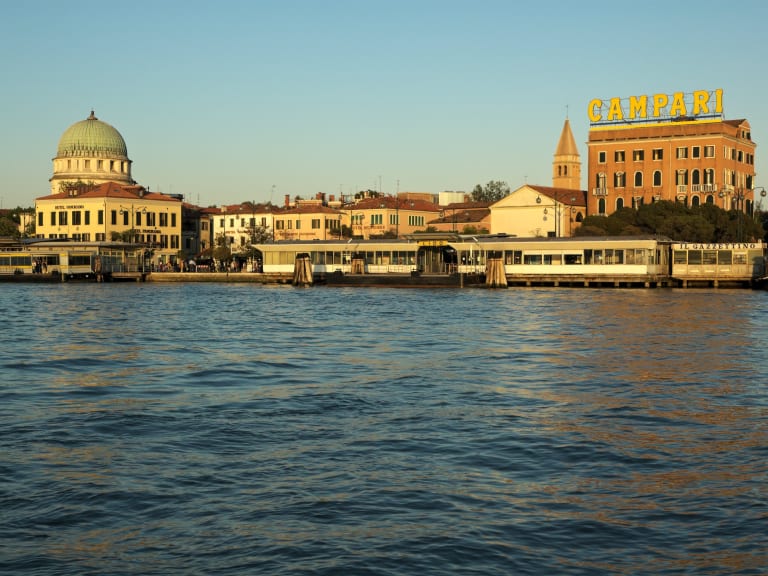
After spending New Year’s Eve celebrating the arrival of the new year, the most intrepid Venetians still have one tradition to fulfill: the first swim of the year. If you want to join in (or simply be in the area and enjoy the atmosphere), keep in mind that temperatures are usually quite low.
This tradition takes place on the beaches of the Lido, where hundreds of daring swimmers gather for a quick dip in the icy waters. Of course, the activity is open to anyone who dares, but I advise you to carefully assess your abilities and condition after a night of partying.
After the swim, the area turns into a small celebration. Panettone, wine, and lentils are handed out to those present, all for free (though it’s customary to leave a small tip). Since there aren’t usually many tourists, this is one of the best ways to immerse yourself in the authentic atmosphere of Venice.
The best way to get to the Lido is by Venetian vaporetto. In this case, look for the stop at Piazzale Roma. Another option is the train, as several lines depart from Venice to take you to your destination.
4. Experience Epiphany and the arrival of the Befana like a child
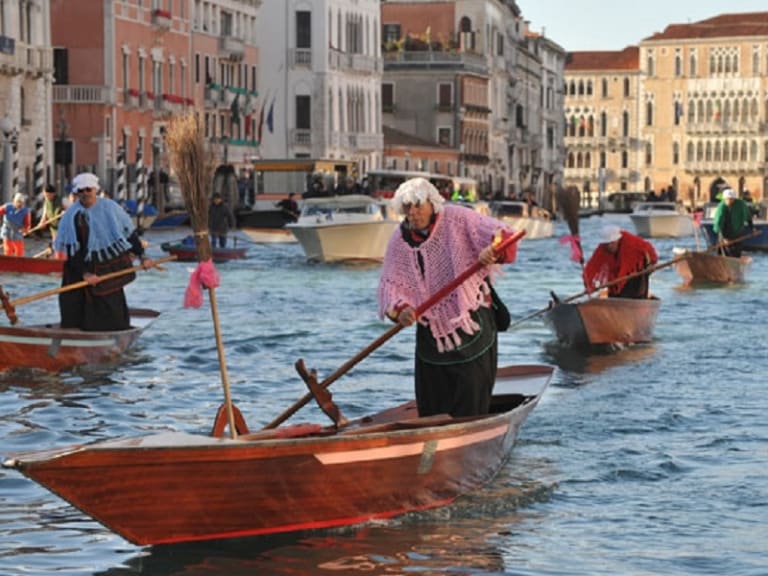
On the 12th day of Christmas, January 6, Italians celebrate the Feast of the Epiphany. On that day, a witch named Befana leaves gifts for all the children who have been good, as well as coal for those who haven’t been so good. In Venice, in addition to the official events, you can enjoy the markets set up that day and eat traditional sweets accompanied by hot chocolate.
However, what will catch your attention most if you spend that day in Venice is the way they celebrate the arrival of the Befana (here’s the legend in case you’re visiting Venice with children and want to explain it to them). To start with, Venetians dress up as old women and stroll through the city, and two interesting events are organized that are well worth seeing.
The first is a race, the Corsa dea Befana, on the island of Lido. Athletes and amateurs participate in this race, chasing the witch on a motorcycle throughout the city.
The second event is even more interesting. It is the Regatta delle Befane, featuring the top rowers from one of the city’s rowing clubs. The starting point is at San Toma, but I recommend finding a spot between the Grand Canal and the Rialto Bridge (one of Venice’s most beautiful bridges) to watch it.
5. Take part in the carnival opening at the Festa Veneziana sull’acqua

Find a mask, grab a costume (no matter how elaborate), and dive right in to enjoy the first events kicking off the popular Venetian Carnival. If you’re in town in February, you can’t miss the activities taking place over the two days of the Festa Veneziana sull’acqua, featuring spectacular shows and an exciting regatta.
The Festa Veneziana sull’acqua takes place on the Cannaregio Canal (a great spot if you’re looking for reasonably priced restaurants in Venice) during the first weekend of Carnival. On Saturday, a fabulous water show unfolds, featuring various artists performing their best acts dressed in costumes and masks.
The following day marks the first regatta of Carnival, the Regata delle Columbine. It starts on the Grand Canal, but the most interesting part is at the finish line, in Cannaregio itself. There, numerous food and mulled wine stands are set up, all accompanied by music.
The popularity of these events attracts a large number of Venetians and tourists. For that reason, I recommend arriving well in advance at the venues to secure a good spot.
6. Enjoying the Venice Carnival
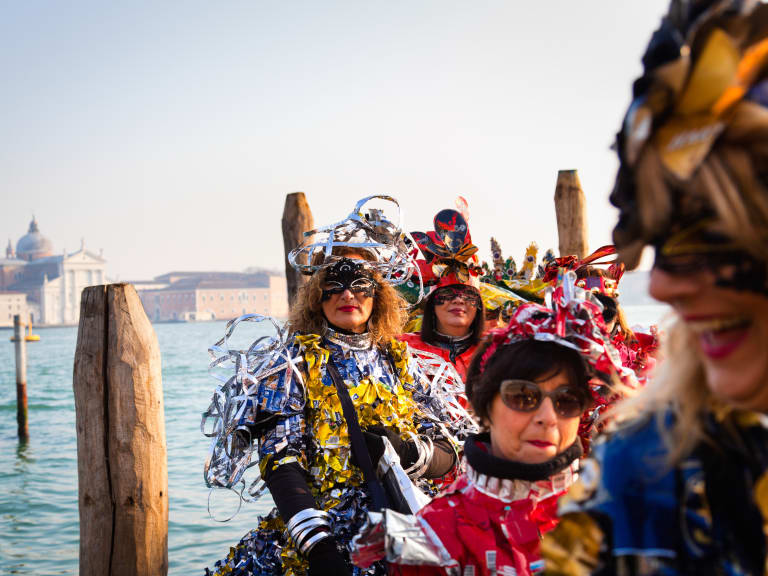
Venice in February means Carnival. The festivities begin weeks before the official opening and continue nonstop throughout the approximately 10-day celebration. Put your shyness aside and actively participate in the events taking place—I assure you, you won’t forget them.
During Carnival, it’s traditional to take a gondola ride and listen to a serenade, as well as attend the balls in the palaces or, if you’re not lucky enough to get in, in the city’s squares. The Doge’s Palace is adorned with two large masks to welcome these days of fun.
The first things that come to mind when talking about the Venice Carnival are the private balls and the masks. Many of these private parties have a centuries-old history and have continued to be held in the same palaces where they took place in the 18th century.
Unfortunately, it’s not at all easy to attend one of them. You can only try to attend those that charge an admission fee—and only if you buy your ticket nearly a year in advance. Don’t forget that there’s a very strict dress code: a haute couture costume with a historical theme and a mask.
It’s easier and less formal to attend any of the parties taking place in St. Mark’s Square. With a mask and some eye-catching attire, you’ll easily pass for a Venetian. In addition to enjoying the festivities, you can’t miss trying the local delicacies sold on the street, especially the sweets.
7. Discover the traditional Festa de la Marie
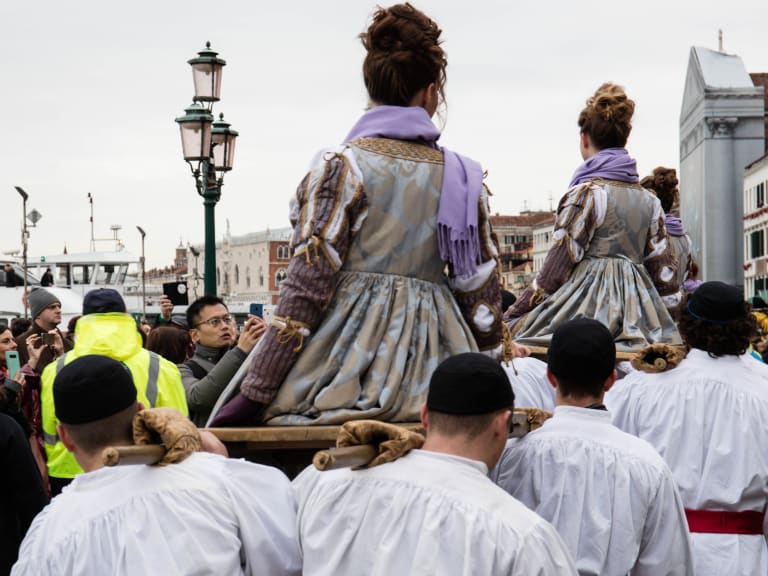
The best time to admire Venice’s most traditional costumes is the Festa delle Marie, an event where young women are chosen to participate in one of the carnival’s most important parades and the traditional Flight of the Lion.
The selection process begins several weeks before the carnival opens, when a preliminary selection of candidates is made. One of the requirements is that all candidates must reside in Venice.
Once the 12 Marie have been chosen, a parade takes place from San Pietro di Castello (where the city’s old basilica once stood) to St. Mark’s Square. There, each of the Marie is presented to the people of Venice. This parade is visually stunning, as representatives from many historical associations participate, dressed in elaborate medieval costumes.
The tradition of the Festa delle Marie dates back more than 10 centuries. Legend has it that all couples planning to marry had to receive a blessing on the Feast of the Purification of Mary, February 2. Twelve of the poorest brides were selected and given beautiful borrowed dresses and jewelry to adorn themselves. Later, the Doge himself would receive them at the Doge’s Palace, where a lavish feast would take place.
The tradition was interrupted in the year 973, when the city was attacked by pirates during the celebration. The 12 brides were kidnapped, but the Venetians managed to rescue them shortly thereafter. To commemorate this event, the Festa de la Marie was established.
8. Say goodbye to Carnival with the Svolo del Leone – The Flight of the Lion
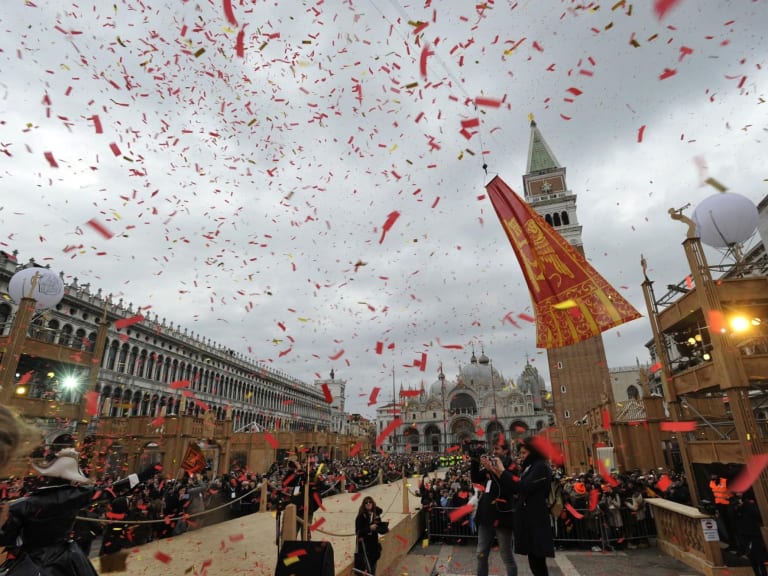
Whether you’ve had the immense fortune of spending the entire carnival in Venice or have only arrived for its finale, the Svolo del Leone ceremony is a must-see. Not only is it a truly beautiful celebration, but it’s also a deeply evocative event steeped in symbolism. Of course, the festive atmosphere—complete with music, drinks, and food—is not to be missed.
The winged lion is the symbol of the city and has been since the time of the Most Serene Republic. For this event, the lion is depicted on a massive St. Mark’s flag that is hoisted up to the bell tower of the basilica of the same name. Just before that, in a packed square, the winner of the Marie contest is announced.
While this is happening, musicians from La Fenice perform the Hymn of St. Mark. When the flag reaches its place, a spectacular fireworks display begins, bringing the festival to a close.
9. Escape the cold by visiting the city’s underground passages

If the cold really sets in, you might not feel like being out on the street. A unique activity that will let you escape the low temperatures for a while is heading down into the city’s underground to discover some of its lesser-known attractions. Although it may not seem like it, interesting crypts and passageways are hidden beneath some of Venice’s buildings.
Walking through these tunnels is definitely a unique experience. Typically, tours are conducted by torchlight or with a small flashlight, illuminating everything from nearly forgotten crypts (such as those of San Simeon Piccolo or San Zaccaria) to frescoes painted underground. You can also see a niche filled with skulls, reminiscent of the catacombs.
10. Try traditional Venetian winter sweets
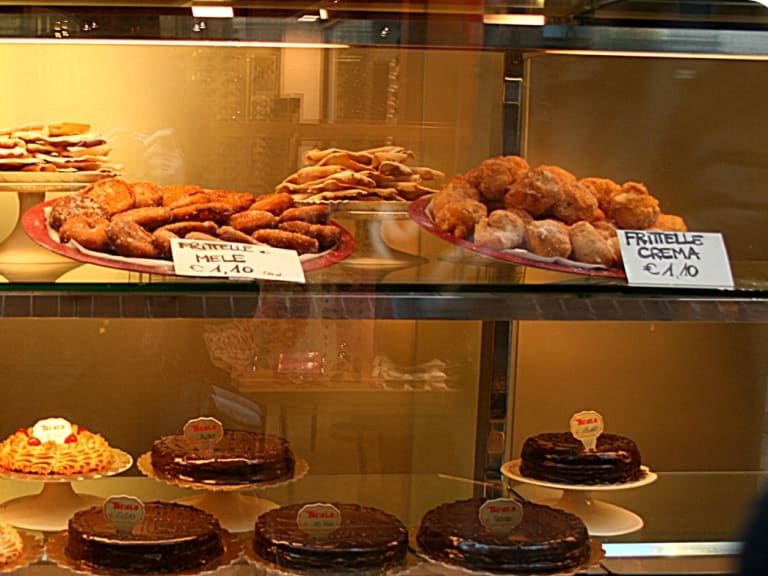
Winter in Venice brings with it a range of seasonal culinary specialties, particularly sweets. To fully immerse yourself in the experience of visiting the City of Canals during this time, you must try some of these dishes, whether on the street or on a food tour.
The first major Venetian specialty is closely tied to Carnival. It is the fritelle, a recipe that appears to date back several centuries. These are fritters sold at street stalls starting a few weeks before the city’s big festival begins. Today, you can find innovative versions like those with Nutella or rum.
Another typical dessert of the city is galani, a type of fried dough similar to castagnole. The main difference is that galani is served with powdered sugar on top.
Weather in Venice during the winter
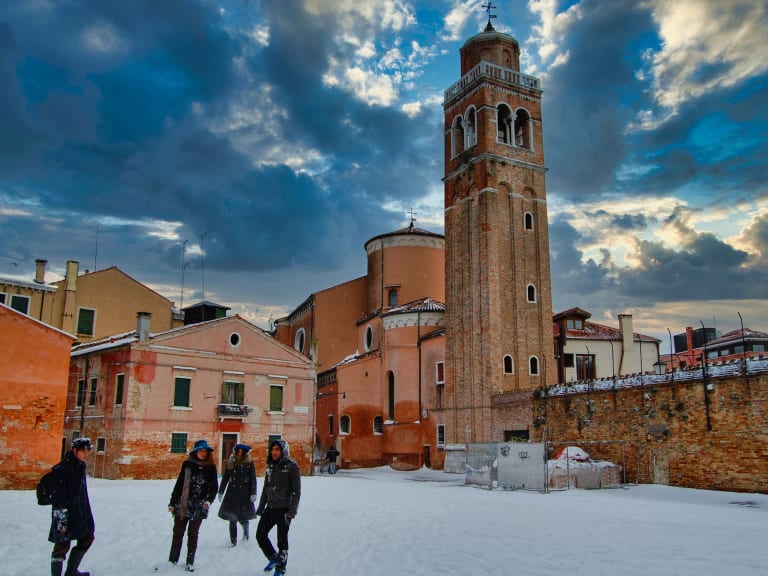
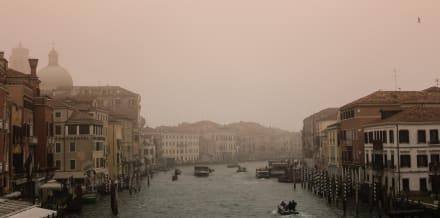
It must be said that those who hate the cold will find the Venetian climate in winterquite unpleasant. In addition to the low temperatures, the wind chill makes it feel even colder due to the fog, humidity, and winds like the sirocco or the bora. In any case, it’s always a good idea to check the forecast
before traveling.
Even so, there are some differences depending on when you travel within the winter season:
- December: This is the second coldest month of the year, with highs of 8°C and lows of 1°C.
- January: the coldest month. Highs barely exceed 8°C on average, while lows hover around 0°C. It is also the period with the highest probability of snow.
- February: the second half of the month brings a slight change in temperatures. Highs begin to approach 10°C, although lows remain around 1°C on average. On the plus side, it is the least rainy month of the year.
- March: Temperatures begin to rise, with highs reaching 13°C. At night, however, it remains quite cold, averaging around 4°C.
Traveling to Venice during high water season
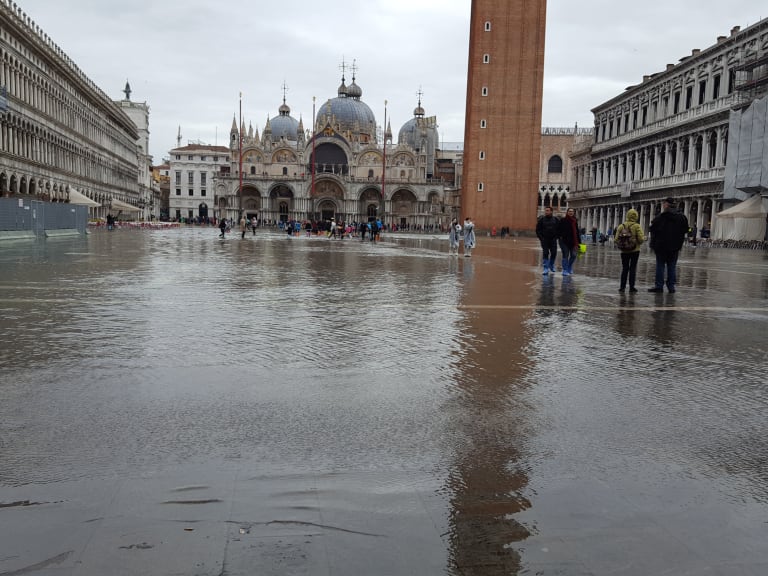
Although the risk of acqua alta (high water) begins in the fall months, December is one of the months when this phenomenon is most common. In short, it involves the tide rising to levels that cause the city’s streets and squares to flood.
An official website posts warnings about possible acqua alta, but the forecast is only reliable up to three days in advance. However, most of the time this phenomenon only causes minor flooding that does not prevent life from continuing almost normally, and it usually lasts between 2 and 3 hours.
It’s a very different story when a more severe episode of acqua alta occurs. When that happens, the city’s sirens sound as a warning, and the water can cause serious flooding in some areas.
In addition to checking those forecasts, my advice is to wear proper waterproof boots and, above all, to take it easy.
Is it worth traveling to Venice in winter?

Visiting Venice in winter means, on the downside, having to endure the cold. Additionally, daylight hours are significantly reduced, so you’ll need to plan your itineraries very carefully.
However, this season also has advantages that outweigh the aforementioned drawbacks. For starters, the influx of tourists is much lower (with the exception of Carnival), which means you can visit the city more comfortably and avoid the crowds. This, in turn, goes hand in hand with lower prices on flights and hotels.
Furthermore, winter in Venice offers truly interesting activities. To name just two, the Christmas festivities take place in December, while the city’s most famous festival, Carnival, is celebrated in February. For this reason alone, it’s safe to say without a doubt that the trip is definitely worth it.