Best Time of Year for Visiting Venice
Venice, known as the City of Canals or the Pearl of the Adriatic, is one of those cities you simply must visit at least once in your lifetime. However, there are always certain times of year that are better than others for visiting.

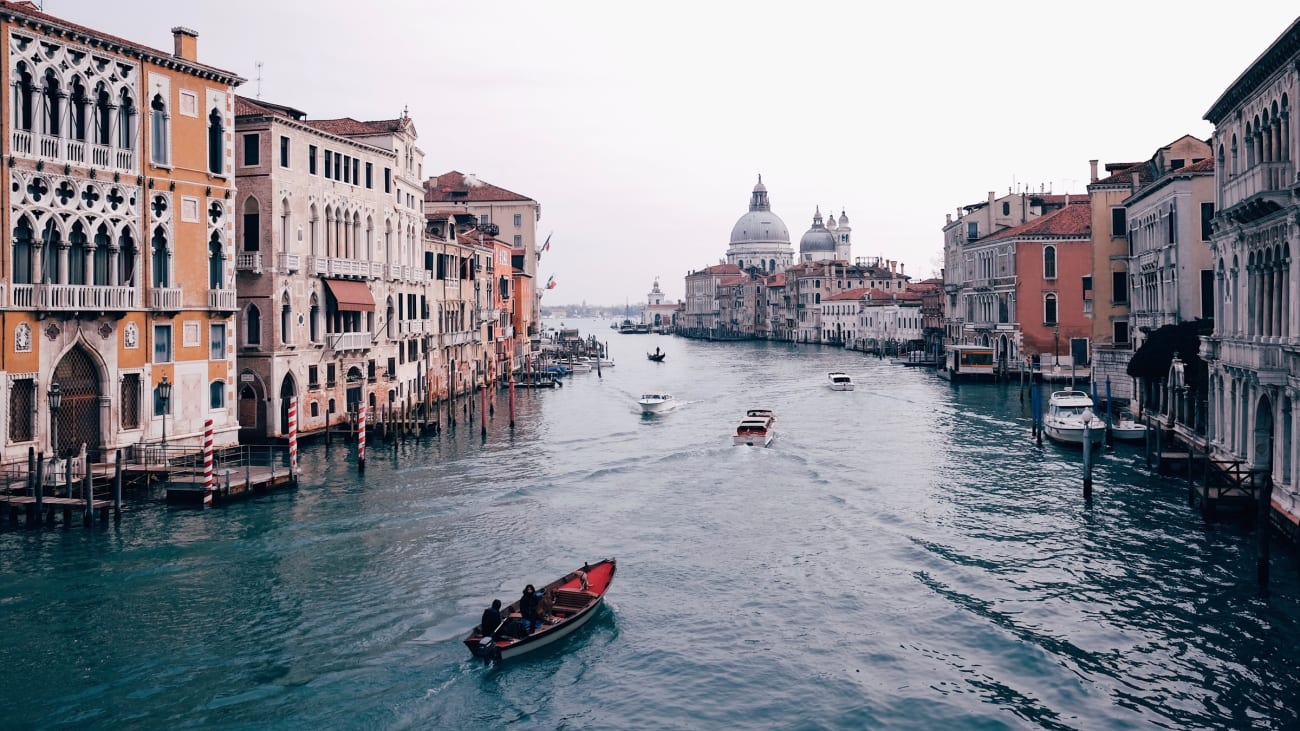
Venice, Italy | ©Stijn te Strake
No matter when you visit the city, Venice’s attractions will always be waiting for you. From its palaces to the extraordinary St. Mark’s Basilica, not to mention its lively markets, beautiful bridges, and, of course, its canals, this Italian city never disappoints.
That doesn’t mean there aren’t some times of year that are better for traveling than others. The weather, the number of tourists, prices, and other factors mean that some times of year may be better for enjoying your stay. In general, the spring months and early fall are the most comfortable when all factors are considered. In any case, if you can only go in summer or winter, I advise you not to hesitate.
When is the best time to visit Venice?

The weather is one of the main factors that will determine the best time to travel to Venice. In this city, winters tend to be quite cold, while the summer months are characterized by heat and humidity. Generally, if you have a choice, the best times to visit are the last months of spring and the first months of fall.
During both periods, the weather offers some relief with mild temperatures, though the chance of rain is always present. However, compared to summer, these seasons see slightly fewer tourists, allowing you to stroll more peacefully through the streets and along the canals. The weather during these times, however, can be somewhat unpredictable, so always check the forecast before traveling.
As a brief summary of the pros and cons, here’s a quick overview of each season:
- Spring (March–mid-June): With the exception of Holy Week, prices are somewhat lower and there are fewer tourists than in summer, though numbers increase as the season progresses.
- Summer (mid-June–late September): The city fills with visitors, and crowds are the norm. The weather is very hot, and prices rise. The upside is the chance to enjoy longer daylight hours and Venetian nights.
- Fall(late September–mid-December): The large crowds begin to gradually disappear. The heat subsides, though the cold hasn’t set in yet. However, there is a higher chance of rain and the occurrence of high water.
- Winter (late December–mid-March): The coldest and darkest months of the year, with daylight hours significantly reduced. Christmas and Carnival are two very busy times, especially the latter.
Traveling to Venice in spring: the best time to explore the city

The spring months are the perfect time to travel to Venice. Temperatures are milder, and you’ll find fewer tourists on the streets or waiting in line to enter, for example, the Doge’s Palace.
Within the season, May stands out. During this time, you’ll be able to make the most of the afternoons, as daylight hours gradually increase. Temperatures, meanwhile, can reach nearly 20°C, though they typically stay a few degrees lower.
In March and April, on the other hand, there may be some cold spells, but they’re less bothersome than in the winter months. The only problem is that this is one of the rainiest periods in the city.
April and May are the best months for strolling through the city’s streets and along its canals, as well as for taking day trips from Venice to nearby Burano, Murano, and Torcello. Burano, in particular, looks its best thanks to the effect of the spring light on its colorful houses.
However, spring also has its downsides. Starting in late April, there is a rise in flight and accommodation prices. This means you’ll need to book well in advance and may even have to choose hotels in a nearby town, such as Mestre. Fortunately, there are plenty of transportation options to get around Venice, allowing you to reach the city in just 15 minutes.
Things to Do If You Visit Venice in Spring
If you decide to or are able to travel to Venice in the spring, there are some activities you shouldn’t miss, in addition, of course, to the usual sights:
- Su E Zo per i Ponti: This is a race open to everyone that runs from the Ponte della Paja to St. Mark’s Square. Along the route, participants cross bridges throughout Venice.
- Feast of St. Mark: On the city’s patron saint’s day, April 25, an exciting gondola race takes place, among other celebrations.
- La Sensa: This festival blends religious elements with a celebration of Venice’s connection to the sea. It is one of the most beloved festivals among Venetians and is packed with cultural and leisure activities.
Traveling to Venice in the summer: heat, crowds, and a great atmosphere
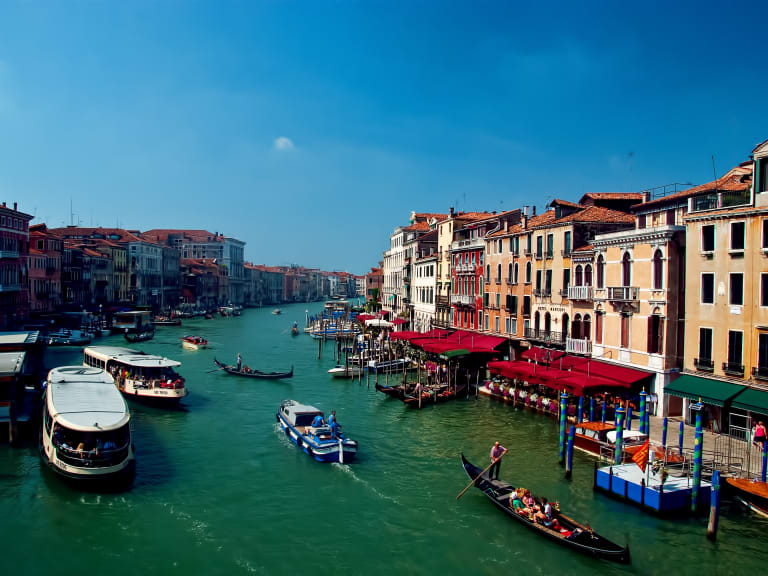
Most visits to Venice occur during the summer, when most people can take vacations. The first consequence is that the city fills up with visitors from all over the world. Places like St. Mark’s Square become a bit uncomfortable, especially when cruise ship passengers disembark.
This overcrowding leads to long lines to enter Venice’s most important monuments, making it more essential than ever to buy tickets in advance and opt for skip-the-line options. As for gondola rides, the Grand Canal tends to be very busy during this season, making travel slower and more complicated.
On the other hand, the weather in Venice at this time of year is quite hot. It’s humid heat and can be uncomfortable for some visitors unaccustomed to such temperatures. However, this also has its upside: the near-total absence of rain and the long daylight hours allow for much longer afternoons.
Prices, of course, tend to rise significantly, so it’s highly recommended to plan everything well in advance.
Things to Do If You Visit Venice in Summer
As it is high season, Venice offers its visitors a wide variety of events and festivals. Some of them are practically a must-see if you’re in the city:
- The Feast of the Redentore: This is the most important celebration of the summer. It takes place in the third week of July and, among other entertainment options, features an extraordinary fireworks display.
- Venice International Film Festival: In the first week of September, Venice hosts its famous film festival. You can head to the island of Lido to see some international stars and, of course, attend the premieres.
- Head to the beach: Venice is surrounded by several islands with beaches considered among the best in Italy. If the heat gets to you (or if you’re visiting Venice with children) , you can always spend a few hours at the beaches on Lido or Jesolo.
Traveling to Venice in the fall: more peace and quiet and still pleasant weather

The first weeks of fall, from late September to the last days of October, offer great advantages to visitors. For starters, there are still plenty of daylight hours, and temperatures tend to be mild. However, keep in mind that nights start to get colder, with lows that can drop to 8°C.
November and early Decemberin Venice are indeed colder months, though not cold enough to make a visit overly uncomfortable.
On the other hand, one phenomenon that can be a nuisance for visitors is acqua alta, the phenomenon that causes many areas of Venice to flood for two or three hours. Normally, the water level doesn’t rise too high, and the city is used to living with it. Only if you have the misfortune of experiencing a severe episode will you have to pause your tour until everything returns to normal.
As autumn progresses, the number of tourists also decreases significantly. This makes this season the best time to stroll comfortably through the city’s streets and visit attractions like St. Mark’s Basilica without the crowds.
Things to Do If You Visit Venice in the Fall
Although there aren’t as many as in summer, Venice also hosts some major festivals in the fall. Plus, the smaller number of tourists means these festivities give Venetians a more prominent role:
- Venice Historical Regatta: one of Venice’s major celebrations. In addition to enjoying music, drinks, and food, you’ll be able to watch several spectacular regattas and a parade featuring period costumes.
- Halloween in Venice: For the past few years, Venetians have been celebrating Halloween in a big way. Its narrow streets and squares fill with costumes and, naturally, Venetian masks.
- Madonna della Salute: On November 21, Venice celebrates the end of the great plague epidemic of the 17th century. Many Venetians cross the Rialto Bridge to head to the esplanade of the Basilica of Santa Maria della Salute, where the celebration takes place.
Traveling to Venice in winter: cold, damp, and a special atmosphere
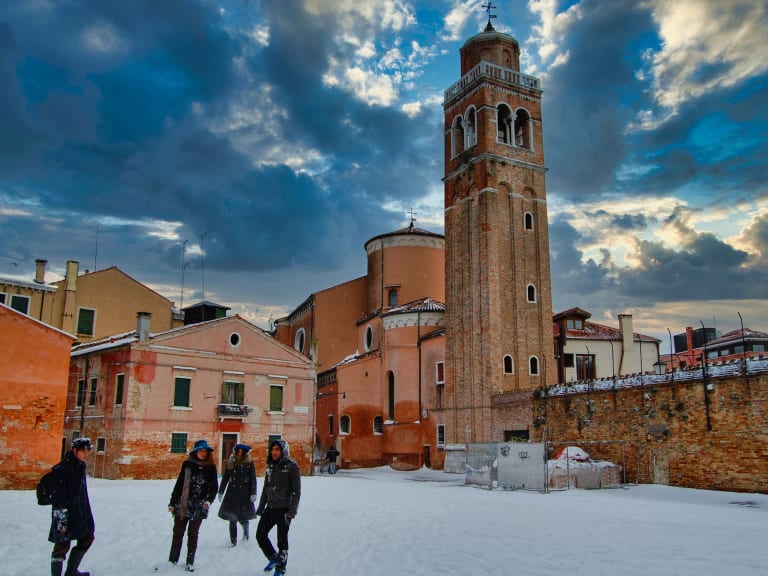
Winter in Venice is considered the worst time to visit, although paradoxically it is when the city’s premier event takes place: Carnival. There is no doubt that the cold and rain characteristic of this season cause many tourists to avoid visiting, but traveling at this time also has its charm.
Thus, the city takes on a darker appearance, and fog among its canals is not uncommon. On the positive side, this offers a different, almost ghostly atmosphere that many may enjoy.
On the other hand, this is the time of year when you’ll find the best prices, with the exception of the aforementioned Carnival and Christmas in Venice. Likewise, strolling through its streets and along its canals is much more comfortable, as are visits to the monuments.
Things to Do If You Visit Venice in Winter
The winter cold doesn’t stop Venetians from celebrating two of their biggest festivals: Christmas and Carnival. During these events, the city’s usual tranquility is disrupted, and finding a room in its hotels can be difficult:
- Carnival: For about 10 days in February, Venice comes alive with its flagship festival. Events, parties, dances, and parades are non-stop, but the crowds are enormous.
- Christmas: Starting around the second week of December, Venice decorates and lights up its streets to celebrate Christmas. During this time, you can visit the Christmas markets, skate on a large ice rink, or celebrate the end of the year.
- Befana Day: Befana is the one who brings gifts to Venetian children. On January 6, a regatta takes place in which all the crew members are dressed up as this character.
Comparison of the Different Seasons to Visit Venice
To give you the clearest and most accessible information, here is a table with details on the different times of year to visit Venice.
- Spring
- March–June
- High 21°C
- Low 12°C
- The best: the weather and fewer tourists than in summer
- The downside: the chance of rain
- Summer
- June–September
- High 28°C
- Low 18°C
- The best: more daylight hours and the atmosphere
- The worst: the heat and the crowds
- Fall
- September–December
- High 15°C
- Low 10°C
- The best: fewer crowds and more peace and quiet
- The downside: humidity and fewer hours of daylight
- Winter
- December–March
- High 9°C
- Low 0°C
- The best: the lack of tourists and the effect of the winter light
- The worst: the cold, the humidity, and the high water
Is it worth traveling to Venice during Carnival?
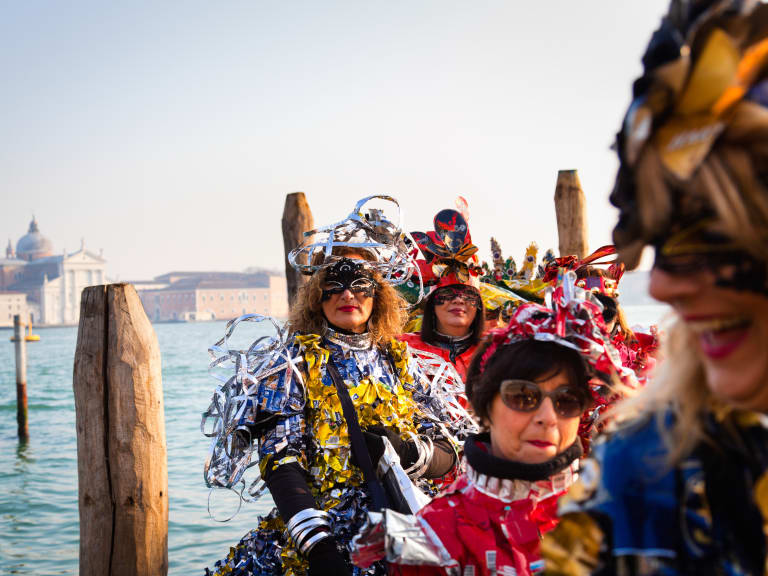
The short answer is yes, but the long answer is quite a bit more nuanced. During its most important festival, all the streets and squares of Venice fill with people in costumes and wearing the popular carnival masks. Likewise, many balls are organized, some exclusive and others open to visitors.
Throughout the festival, attendees will find a wide variety of events, though the Venetian nightlife is perhaps where the celebration truly comes alive.
However, this isn’t the best time if you’re looking to visit the classic monuments and museums. The sheer number of tourists everywhere makes it difficult to get around comfortably.
On the other hand, hotels fill up, and you’ll likely have to look for one quite far from the city.
Best time to visit Venice if you want to ride a gondola

One of the experiences almost all visitors have in mind when traveling to Venice is taking a gondola ride. These tours are available year-round, but some times are better than others for doing so.
Summer, for example, is hampered by the sheer number of visitors in the city. It’s not uncommon for actual boat traffic jams to form in the canals, and the experience loses some of its charm.
The best times to book a gondola ride are early spring or fall, when the canals are much less crowded.
A very interesting but often overlooked time for these rides is winter. Gondoliers usually provide a blanket for passengers to wrap themselves in on board, and the dim light adds to the romance of the experience.