
More about: Barcelona in 3 Days: tips, what to see, and much more
It may not be the capital of Spain, but Barcelona welcomes millions of visitors every year who want to see some of the country’s most iconic landmarks: the Sagrada Familia and Gaudí’s legacy, the Gothic Quarter, La Rambla, Passeig de Gràcia, the Mediterranean, and much more. If you’re thinking of spending three days in Barcelona, here’s an itinerary to help you discover the must-see spots.
Day 1: Experience Barcelona from above and take a trip back in time

Three days may seem like a short time to explore Barcelona, but if you plan well, you’ll be able to visit all its highlights and enjoy its monuments and attractions. On this first day, to get you started, I suggest you satisfy your curiosity by seeing the imposing Sagrada Familia. Before that, I suggest heading up to the top of Tibidabo, exploring the famous Park Güell, and taking a stroll through the Gracia neighborhood. In the late afternoon and evening, wrap up the day in the Gothic Quarter.
Marvel at the city from above
To get a clear first impression of Barcelona, I suggest stepping back a bit to take in a panoramic view of this beautiful city. To do this, take the green metro line (Line 3) and get off at the Vallcarca stop.
You’ll arrive at the upper part of the city, and in less than 10 minutes’ walk through a beautiful, aristocratic residential neighborhood, you’ll reach the Tibidabo funicular, one of the city’s highest peaks, offering spectacular views. For less than €5, you can take this unique funicular, which will take you to the top in just a few minutes. There, you’ll find the famous Sagrado Corazón Basilica and one of the city’s oldest amusement parks.
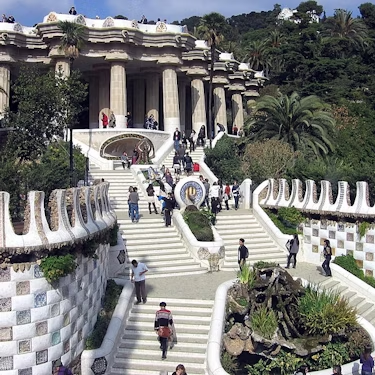
Discover the magic of Park Güell
After seeing Barcelona from above, one of the best ways to round out the morning is to make your way down to Park Güell. Just head to Travesera de Dalt, and in less than 10 minutes you’ll reach the park’s main entrance. Admission is free. However, if you want to explore the entire architectural complex designed by Gaudí, you’ll need to pay an entrance fee of around €10. You also have the option to book a tour of Park Güell to explore it in depth.
That said, I recommend keeping a close eye on Park Güell’s opening hours, as there are times of the year when admission may be free. For example, during the summer season, admission is free every Sunday starting at 5 p.m., so I recommend checking the official website carefully.
Have lunch near Park Güell

After a whole morning of walking, panoramic views, and culture, you’re probably ready to stop and recharge your batteries. Luckily, just outside Park Güell there are plenty of places to grab a bite to eat, and despite the park’s fame, the area is mostly residential, so you’ll find good-quality meals at affordable prices.
One such restaurant is La Salut, which serves Mediterranean cuisine and specializes in paellas, seasonal vegetables, calçots, and meats. You can also book a culinary tour of Barcelona to delve deeper into the local cuisine.
Head down and explore the Gracia neighborhood
Everything looks better on a full stomach, and I can’t think of a better way to walk off your meal than taking a stroll or booking a bike tour to the Gracia neighborhood. The great thing about starting from Park Güell is that it’s all downhill, so you just have to head down the narrow streets that cross Travesera de Dalt and you’ll arrive in the Gracia neighborhood, considered one of the most picturesque and artistic areas of Barcelona.
There, you can enjoy a coffee at the famous Plaza del Diamante, one of the neighborhood’s central hubs and the namesake of Mercè Rodoreda’s renowned novel.
Visit Barcelona’s iconic landmark, the Sagrada Familia
If you’ve come to explore Barcelona, you’re surely eager to see the Sagrada Familia, one of the city’s icons and one of the most iconic sights in the entire country. It’s one of the most experimental and fascinating architectural projects of the Modern Age. Just seeing it from the outside is impressive, but you also have the option to admire the interior of the Sagrada Familia, which I highly recommend since you’ve surely never seen anything like it.
To visit, you have several options: from buying a ticket and exploring on your own, taking a guided tour, or purchasing a combo ticket to save on two of your travel plans. Below, I’ll outline the different options available:
- Tickets for the Sagrada Familia, starting at $39
- Guided tour of the Sagrada Familia with optional tower access, startingat $90
- Tickets for the Sagrada Familia with access to one tower, starting at $54
- Skip-the-line guided tour of the Sagrada Familia, starting at $110
- Private guided tour of the Sagrada Familia, starting at $160
- Tour of Park Güell and the Sagrada Familia, starting at $124
- Gaudí tour of Barcelona featuring Casa Batlló, Park Güell, and the Sagrada Familia, starting at $155
- Private tour of Park Güell and the Sagrada Familia in Barcelona, starting at $222
Getting there from the Gracia neighborhood is very easy. Just walk about 15 minutes and you’ll be there. If you don’t want to walk that far, you can always take the metro from Joanic and get off at the Sagrada Familia station, transferring to Line 5.
Explore the alleys of the Gothic Quarter at dusk
It’s been a busy day, hasn’t it? Don’t worry—now it’s time to relax. By the time you leave the Sagrada Familia, the sun will likely be setting, so I suggest taking the metro to the Liceu stop. From there, you’ll find the entrance to the Gothic Quarter, which offers numerous tours and is one of Barcelona’s most famous and visited neighborhoods.
This is the oldest part of Barcelona, and you’ll notice it right away thanks to its narrow, winding streets and the remains of the city walls. Seeing it at dusk is a marvel, as it’s usually lit up and feels like you’re stepping back in time. You can book a tour of the Old Town and the Gothic Quarter, grab dinner at one of the restaurants on Plaça Nova, and enjoy a romantic evening with views of Barcelona Cathedral.
Day 2: Discover Art with Gaudí and Las Ramblas

For this second day, I’ve planned a day packed with art, culture, and tradition in all its forms. To start, you’ll get to see two of the most iconic buildings in downtown Barcelona up close: La Pedrera and Casa Batlló. Then you’ll explore the entire downtown area until you reach La Rambla, have lunch at the iconic Boquería Market, spend the afternoon visiting the famous MACBA museum, and end the day with a delicious dinner overlooking the sea in Barceloneta. Are you up for it?
Experience the essence of Gaudí by visiting La Pedrera
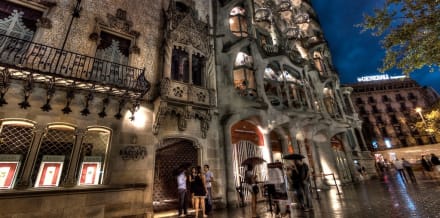
Gaudí’s presence is felt throughout the city of Barcelona. So much so that when you walk through the city center and along Passeig de Gràcia, it feels like you’re in a walking museum, as even the streetlights carry his essence. To delve a little deeper into his creative world, I suggest you spend the morning exploring one of Gaudí’s most famous works.
You’ll need to head to Diagonal Station on metro lines 3 and 5. From there, it’s just a short walk to La Pedrera, the former home of the Milà family, which today serves as a showcase of the architect’s modernist style. Its sinuous forms, stone façade, famous warrior-shaped chimneys, and flower courtyard are just some of the highlights you’ll discover inside this UNESCO World Heritage Site. Book your ticket to La Pedrera in advance. I assure you it’s an experience well worth it.
Continue exploring Gaudí’s work by visiting Casa Batlló
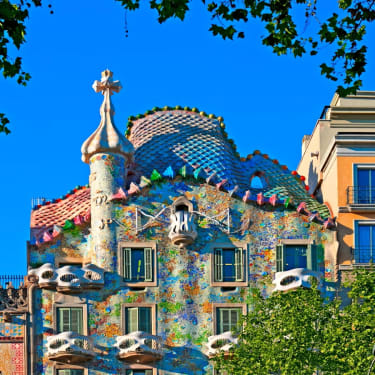
As you leave La Pedrera and walk down Passeig de Gràcia, you’ll find, just a few steps away on the opposite sidewalk, another major landmark by Gaudí: Casa Batlló. This iconic building was completely renovated by Gaudí at the request of Josep Batlló, who endowed it with his characteristic nature-inspired forms and colorful stained-glass windows. Stepping inside is like entering a fairy tale, so don’t wait any longer to book your ticket for Casa Batlló.
Stroll along Las Ramblas

After a morning of strolling and soaking up all of Gaudí’s Barcelona culture, I suggest gradually making your way toward the center of Barcelona, following the famous Paseo de Gracia until you reach Plaça Catalunya, one of the city’s most central spots. From here, you’ll be right at the entrance to the famous Ramblas, an iconic avenue in the city that connects Plaça Catalunya with the Columbus Monument and the entrance to the port.
Here you’ll find the famous Canaletas Fountain, where Barça fans celebrate their victories, as well as the famous flower kiosks and some of the most touristy shops. Strolling along the Ramblas is a must-do on your trip.
Eat at La Boquería
And from the Ramblas, you’ll easily reach the Boquería Market. It’s one of the city’s most important culinary destinations.
Here, people buy the finest ingredients, but there are also various top-quality food stalls where you can sample everything from meat and seafood to more experimental cuisine. A great option if you want to taste the best dishes is to book a food tour of Barcelona’s markets.
Spend a cultural afternoon at the MacBa and explore the Raval
I suggest you continue by visiting one of Barcelona’s most internationally renowned museums. The MacBa is Barcelona’s museum of contemporary art and a benchmark for all the world’s artistic avant-garde movements. It’s located right in the heart of the Raval neighborhood, just a few minutes’ walk from the Boquería Market, and is usually open until 8 p.m., so you’ll have plenty of time to visit it in the afternoon.
If you book tickets for the Museum of Contemporary Art, you’ll be able to enjoy the main exhibitions and see works by Picasso, Miró, Dalí, and many of the world’s leading modern and contemporary artists. On your way out, take some time to stroll through the streets of the Raval, one of the city’s most multicultural neighborhoods.
End the day with a stroll through Barceloneta
The day is drawing to a close, and from where you are, you’re just a short walk from the beach. Barcelona is a city with access to the sea, which makes it doubly appealing because, in the summer, in addition to enjoying the museums and culture, you can end the day with a dip in the Mediterranean.
One of Barcelona’s most iconic and character-filled neighborhoods is, in fact, Barceloneta, a former fishing village that now boasts an incredible culinary scene. I can’t think of a better way to end the day than sitting at one of Barceloneta’s outdoor cafes and enjoying a delicious fish dinner with a view of the sea.
Day 3: Soak up the culture and history of Montjuic
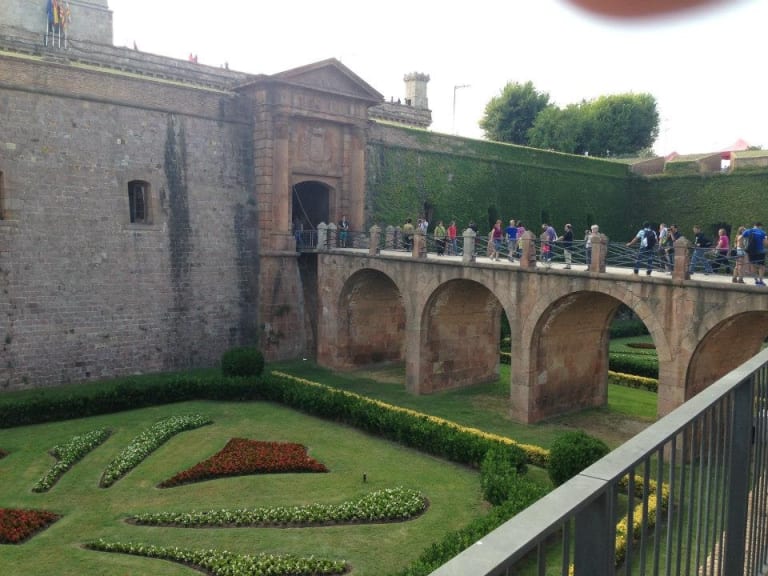
You’ve reached the final day of your 3-day trip to Barcelona, but the fun isn’t over yet—for this last day, I’ve reserved one of the areas most cherished by locals: Montjuic.
First thing in the morning, you’ll hop on a cable car that will take you to the top of the famous hill, and you’ll spend the whole day exploring its castle, gardens, museums, and incredible views. After lunch, I’ve set aside some time for you to do some last-minute shopping, and to wrap things up, I’ve got a beautiful light and water show lined up for you.
Take the cable car up to Montjuïc and visit its castle
To reach the top of Montjuic, I recommend heading to the Paral·lel metro station and from there taking a funicular inside the metro itself, which will take you up to the Parc de Montjuic station in just a few minutes. From here, a wide array of sights opens up before you, as this hill is home to two of the most important museums, the Olympic City, and Montjuic Castle.
I suggest several options. On one hand, you can book the Montjuic tour, or if you prefer to go on your own, you can also head to the cable car station. It costs around €10 and will take you to the castle in less than 5 minutes, offering a panoramic view of the entire hill. Once at the castle, depending on how much time you have, you can choose to walk around and see the moat and the exterior facade, or pay an entrance fee of about €5 to explore the interior as well.
Relive the 1992 Olympics

After leaving the castle, you can walk through Montjuïc’s beautiful gardens until you reach one of the most interesting areas for all sports enthusiasts: the Olympic Village. In 1992, Barcelona hosted the Olympics and built an entire sports complex atop Montjuic, which is still in use today and remains an impressive landmark.
You can visit the Olympic Stadium and explore the entire massive complex. Admission is free, and you’ll get a sense of what that event was like and the enormous scale involved.
Immerse yourself in the art at the Miró Foundation or the National Museum
Just before lunch, you have two options to choose from. At the top of Montjuïc, there are two museums that are quite significant to Barcelona’s culture, but since there isn’t enough time to see both, you’ll have to choose the one that best suits your tastes.
- Joan Miró Foundation: This museum is dedicated to the entire body of work by Joan Miró, the famous painter. From the building’s structure to all its paintings and sculptures, everything transports you to a childlike world of fantasy and innocence. It’s undoubtedly an experience for your senses if you enjoy avant-garde art. Admission costs approximately €15, and it’s located halfway between the gardens and the Olympic Village.
- National Art Museum of Catalonia: This is a massive neoclassical building housing the largest collection of Catalan and Spanish art. Inside, you’ll find a huge mural by Miró, Picasso’s “Woman with a Hat,” and an endless array of both classical and contemporary works and exhibitions. General admission is around €10.
Lunch with the best views of Barcelona
Whichever museum you’ve chosen to end your morning tour, you’re sure to be hungry by now. If you’ve chosen the National Art Museum, the place I’m going to suggest for lunch is right next door, and if you’ve chosen the Miró Foundation, you’ll only have to walk a few minutes.
It’s Óleum, the museum’s restaurant, which offers excellent cuisine and also boasts one of the best views in the entire area, as it’s located in the museum’s former Throne Room. You can sample some of the best local dishes while enjoying a spectacular view of Plaza España. And if you’d rather go for tapas and wine, you can also book a private food tour of Barcelona. Bon profit!
Do some last-minute shopping at the old bullring

There’s no better way to settle your meal than by walking down the stairs leading from the museum to Plaza España. Once back in the lower part of the city, you can spend much of this final afternoon buying your last-minute gifts and souvenirs from Barcelona at one of its most iconic shopping centers: Arenas. You can also get there easily by booking the Barcelona bus.
What makes this place unique isn’t just that it brings together all the major brands, but that it used to be an old bullring. When bullfighting was banned throughout the region, the site was renovated and is now one of the busiest shopping destinations. Plus, if you head up to the top floor, you’ll find a viewing platform that’s especially beautiful at sunset, when the lights come on.
Say goodbye to Barcelona with two options: Magic Fountain or Caixaforum
To wrap up this final day and ensure you leave with fond memories of this beautiful city, I’ve got one last plan for you. Right in the area where you are, at Plaza España, every Thursday, Friday, and Saturday, a light and water show takes place starting at 9 p.m. at the so-called Magic Fountain.
For an hour, the fountain creates shapes with water and light effects accompanied by music and all kinds of visual effects. It’s an ideal activity whether you’re visiting as a couple or with children, and best of all, it’s completely free.
If you can’t make it, another option to wrap up the evening would be to stop by the CaixaForum, a cultural center housed in a former factory that typically hosts very interesting exhibitions year-round and is open daily until 8 p.m., with admission around €5.
When is the best time to visit Barcelona?

As you might have guessed, Barcelona is a city that, due to its great tourist appeal, welcomes visitors all year round. You should be prepared to deal with crowds of tourists, so it’s advisable to book in advance to avoid long lines.
Even so, I recommend—though it may sound strange—that you avoid Barcelona’s peak summer season, as this is when all the cruise ships dock in the port and the city is absolutely packed with people, not to mention the scorching temperatures.
The best time to visit Barcelona is in the spring months, as you’ll be able to enjoy the nice weather and all the activities without the crowds. Another option, if you like the cold, is to come and enjoy Barcelona at Christmas, where you can experience its most authentic traditions and try authentic turrón.