

More about: Things to Do in Krakow in 2 Days
A historic center designated as a World Heritage Site, a Jewish quarter steeped in centuries of history, and an increasingly lively atmosphere are just a few of the many reasons to visit Kraków. Two days is the minimum amount of time you should spend in the city to see most of its attractions.
Day 1: Explore Stare Miasto, Kraków’s medieval historic center

The medieval historic center of Kraków is, without a doubt, the most visited area by tourists. Inside the old walled city, you’ll find many of the must-see monuments, churches, and buildings, as well as a large number of shops and restaurants.
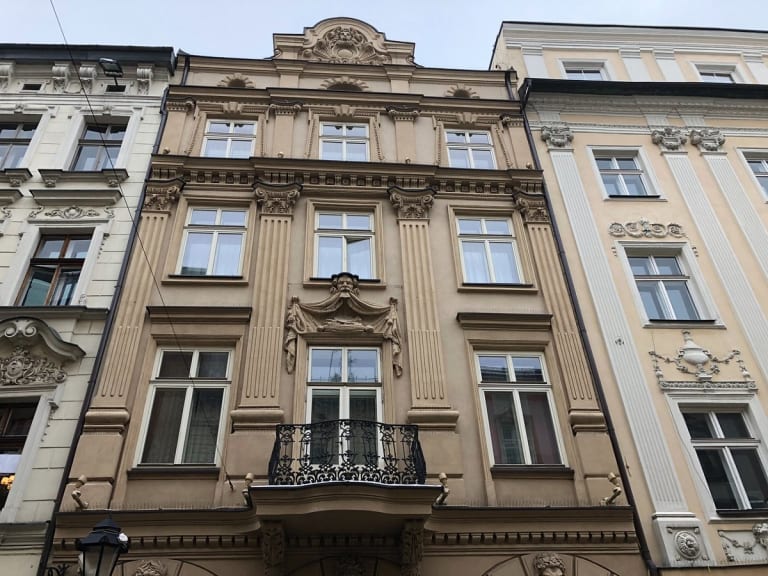
Its cobblestone streets, lined with beautiful pastel-colored houses, are perfect for strolling and discovering something new at every turn.
The best way to explore this area is to book a guided tour, but you can also do it on your own.
Enter the historic center through Florian’s Gate and discover the Barbican and the city walls
To enter Stare Miasto, head to the front of Matejko Square, where a equestrian statue of Wladyslaw II, one of Poland’s kings, stands. The complex is known as the Grunwald Monument.
For centuries, the old town was enclosed by walls, of which only a few hundred meters remain. The entrance to the town was the Florian Gate, built in the 13th century. Today, it is the only remaining gate and the perfect place to begin your visit to the historic center.
In this area, before venturing deeper into the medieval center, you can also see the Carpenters’ Tower, the Joiners’ Tower, and part of the old city wall.
Walk down Florianska Street
To continue the tour, head down Florianska Street, which leads from the Barbican (a late 15th-century fortification that now hosts exhibitions) to the heart of the medieval city.
This street is not only the best known in Kraków but is also famous throughout Poland, and every meter of it is full of charm. Although it is now lined with shops, cafés, and restaurants, these are housed in historic buildings that are a delight to behold:
- Matejko House, at number 41 on the street. This house was the residence of a famous painter of the same name, and today it houses a museum featuring his works, as well as some military artifacts and historical costumes that he collected himself.
- The Jama Michalika café, a place that served as a meeting spot in the 19th century for the city’s artists and journalists. Its interior is decorated in the Art Nouveau style and is well worth a peek.
- The Pod Hotel Roza, with its 16th-century Renaissance portal, and other historic houses lining the street are other highlights to look out for as you stroll.
The Market Square, the heart of the Old Town

At the end of Florianska Street lies Kraków’s Market Square, undoubtedly the most famous spot in all of Kraków. The buildings in the square—both those you can visit and those you can’t—are worth spending a good amount of time exploring.
This square, which hosts a fabulous Christmas market during the holiday season and stalls selling crafts from various neighboring countries at Easter, features several attractions worth exploring in more depth:
- St. Mary’s Basilica: It is one of the most important churches in Kraków. You can climb its towers to take in the views.
- Cloth Hall: This historic market houses two different museums and souvenir stalls.
- Old Town Hall Tower: built in the 16th century, you can climb to the observation deck inside, though be prepared for a narrow staircase with over 100 steps.
Joaquín’s Traveller Tip:
Every hour, a small door opens in one of the towers of St. Mary’s Basilica, and a trumpeter emerges to play a short melody. If you’re in the area, it’s a fun moment to spend in the square.
Grab a bite to eat in the area
This might be a good time to refuel. So you don’t have to stray too far from the route, I suggest you eat at one of these restaurants located near the square:
- Milkbar Tomasza: this spot is a sort of modern take on traditional Polish milk bars. Prices are very low and service is very fast. Another plus is that it has an English menu. It’s located on Świętego Tomasza Street.
- Chlopskie Jadlo: although the price is high by Polish standards (around €15 per person), this traditional restaurant is worth it, especially since it’s located right in the heart of the city. You can order everything from classic pierogis to zurek soup. It’s at 9 Grodzka Street.
Joaquín’s Traveler Tip:
Meal times in Poland start earlier than in Spain. Lunch is usually served around 1:00 PM, though in most places you won’t have any trouble if you arrive up to an hour later.
Follow in Copernicus’s footsteps at the Collegium Maius

Still within the historic district lies the Collegium Maius. The building, which has been renovated several times, was built in the 15th century, and its classrooms have been graced by such important figures as Nicolaus Copernicus.
A tour of the interior, which is only available as a guided tour, is truly fascinating. In its rooms, you’ll be able to see a large number of objects related to almost every field of knowledge: physics, chemistry, meteorology, cartography, and, of course, astronomy.
The building’s courtyard, with its fountain, is another must-see area. On one side, there’s an old clock that, every two hours, opens up to reveal several wooden figurines parading by while music plays.
Lose track of time at Wawel Castle
The next stop on the tour is at the top of a small hill. This is Wawel Castle, a fortification over 1,000 years old that served as the seat of the Polish monarchy until the 17th century.
My recommendation is that you book a guided tour of Wawel Castle to get an in-depth look at the rooms open to visitors:
- Lost Wawel: an exhibition on the history of the hill located in the palace basement.
- State Rooms: several rooms featuring furniture, paintings, tapestries, and other original artifacts from the palace.
- Royal Apartments: the rooms where the royal family resided.
- Treasury and Armory: as the name suggests, here you can see jewels, weapons, and armor.
In addition to these indoor tours, the castle also has an outdoor garden that’s worth taking your time to explore.
Don’t miss Wawel Cathedral

Still within the castle complex is the impressive cathedral dedicated to St. Stanislaus, which you can enter for free. However, if you want to explore it in depth and learn about its history, you can do so by choosing the option to book a guided tour of Wawel Castle that includes admission to the Cathedral.
Inside, you can see the Sigismund Chapel—which does require a paid admission—built in a beautiful Renaissance style and featuring a stunning dome. It’s also a must to take a look at the Mausoleum of St. Stanislaus and the crypt where several of the country’s kings are buried.
If you’d like, it’s also interesting to climb the Sigismund Tower and see the impressive 16th-century bell that was installed in the complex’s defensive towers.
Walk along Grodzka Street until you reach the Market Square again
Heading down the hill, look for the start of Grodzka Street, one of the busiest in the city center. In addition to shops and beautiful buildings, this street is home to the Church of St. Peter and St. Paul, one of the most beautiful in the entire country, especially for its exterior decoration. My advice is to take your time strolling down this street and, occasionally, take a detour onto its parallel street, Kanonicza Street, to enjoy some Renaissance houses and other churches.
At the end of the day’s tour, return to the Market Square. Stay there to see the nighttime lights and find a place to have dinner.
If you still have energy left and want to enjoy the city’s best atmosphere, don’t miss the pub crawl through Krakow. 5 hours of non-stop partying!
Day 2: Kraków’s Jewish heritage, from synagogues to the ghetto

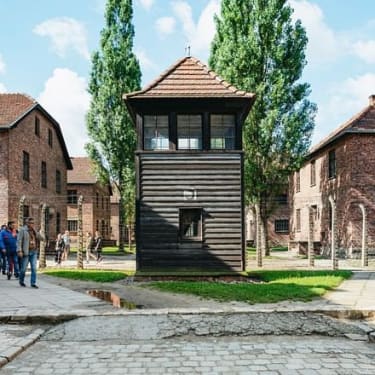
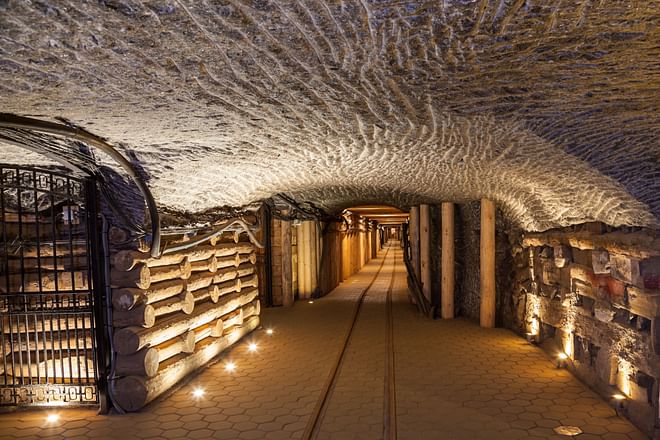
Many tourists choose the morning of their second day to take a trip to Auschwitz or visit the Wieliczka Salt Mines. However, there are still plenty of things to see in Krakow, especially if you want to get to know the city in depth, so the decision is up to you.
If you decide to finish exploring the city, for this second day I’ve set aside the Jewish Quarter and the remains of the city’s infamous ghetto.
Explore Kazimierz, the thriving Jewish quarter
After a leisurely breakfast, the tour will begin in this beautiful neighborhood located south of Wawel Castle. The area is easily accessible on foot from the city center, but if your hotel is too far away or you simply don’t feel like walking, you can always take a tram that drops you off at the entrance to Kazimierz, Kraków’s Jewish quarter.
Kazimierz began as an independent town founded in the 14th century, but by the 19th century it had been incorporated into Kraków. From its founding until World War II, it was home to the Jewish community. Today, the neighborhood is home to the second-largest collection of Jewish monuments on the continent, second only to Prague.
To really get to know the area, you can book a tour of the Jewish Quarter or simply wander the streets discovering its charming corners. If you go on Sunday, don’t miss the antique market set up in Nowy Square
Step inside the Old Synagogue to learn about Jewish culture in Kraków
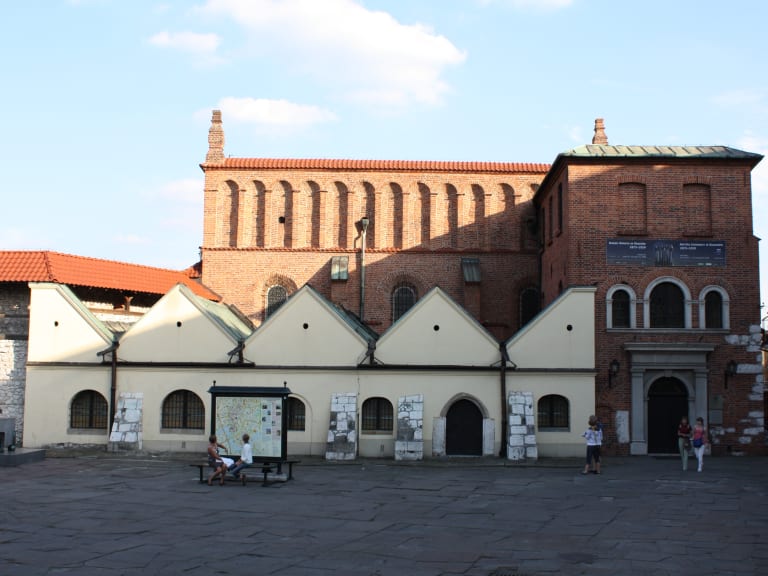
On your tour of the Jewish Quarter, don’t miss a visit to the Old Synagogue, located on Szeroka Street, the oldest Jewish temple in the country.
In addition to admiring its exterior, it’s well worth going inside to see the Museum of Jewish Culture. Once you’ve paid the entrance fee, you’ll be able to witness the history of the Jewish community in Krakow through the objects on display. You’ll learn about their culture, their clothing, their celebrations, and—perhaps most poignantly—the persecution they endured at the hands of the Nazis.
Aside from the museum’s artifacts and photographs, the highlight of the synagogue’s interior is the prayer hall, featuring an altar where the Torah was read and a niche where the sacred texts were kept.
Discover the cemetery of the Remuh Synagogue
Another synagogue in Kazimierz that you must visit is Remuh (also requires an admission fee), built in the 16th century. Although it is the smallest in the neighborhood, it is the only one that still retains its religious function.
Behind the main building lies a very interesting cemetery. Unfortunately, some of the oldest graves were destroyed by the Germans, and their remains were used as cobblestones for the streets.
Stroll through the neighborhood and admire the Isaac Synagogue and the Tempel Synagogue
As you stroll through the neighborhood’s streets, be sure to look for two other synagogues. Although you can enter both, seeing them from the outside may actually be enough.
The first is Isaac’s Synagogue, located at 18 Kupa Street. The building, with its rather simple architecture, was built in the 17th century at the request of a Jewish banker and merchant.
The other synagogue you should visit is the Tempel Synagogue, the last one built in Kazimierz in the late 19th century. The highlight of the temple is its stained-glass windows.
Eat in the Jewish Quarter
There’s no doubt that as you strolled through the neighborhood, you noticed the large number of restaurants lining its streets. Those near the Old Synagogue are a bit pricier, but they offer a good selection of kosher dishes, which you’ll discover if you book a culinary tour of Kraków.
If you prefer something less touristy, the neighborhood has plenty of options, such as the simple Polakowski Restauracja (on Miodowa Street) or Kuchnia Domowa Sąsiedzi (on the same street).
A movie-worthy visit: Oscar Schindler’s factory
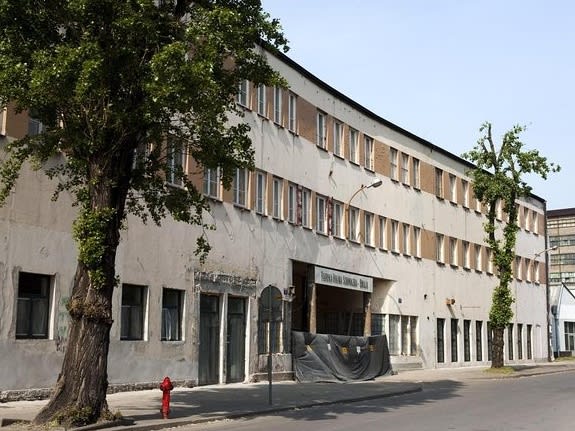
To reach the next stop on the itinerary, you’ll need to leave the Jewish Quarter and cross the Vistula River via the Powstańców Śląskich Bridge. Then, look for Lipowa Street, where you’ll find what is known as Schindler’s Factory.
Schindler was a German businessman who managed to save the lives of over 1,000 Jews by using his kitchenware factory for that purpose. Today, the factory houses the permanent exhibition “Krakow Under Nazi Occupation.”
On the tour of Schindler’s Factory, you’ll learn about the city’s history during World War II, as well as see some of the props used in the filming of the movie that made it world-famous.
The Remnants of Horror in Podgórze, the Jewish Ghetto
Surrounding Schindler’s Factory are the remains of one of the most horrific places that existed in Kraków during World War II: the Jewish ghetto. The Nazis sent more than 15,000 people there to, in their words, “cleanse the city of Jews.” To isolate them, they built a wall surrounding the 30 streets where the deportees lived in overcrowded conditions.
Podgórze, the name of the neighborhood that housed the ghetto, has its center at Bohaterów Square. There, a monument consisting of 60 chairs has been erected to commemorate the Jews who were moved to the area.
On Lwowska Street and Limanowskiego Street, you can see the few remaining sections of the wall that surrounded the Jewish ghetto.
Step into a hero’s shop: the Eagle Pharmacy
On a corner of Bohaterów Square stands the Eagle Pharmacy (Apteka pod Orlem), known for its owner’s refusal to leave when the ghetto was established.
Unlike other merchants in the area, the pharmacist chose to stay there and is believed to have helped save several of the Jews who were moved there. Inside, you can now see an exhibition on the atrocities committed by the Nazis.
Don’t miss the façade of the Catholic Church of St. Joseph
Continuing along the same riverbank, I recommend strolling through the streets leading from the old ghetto until you reach the Catholic Church of St. Joseph. Although its interior is quite simple, don’t miss the chance to admire its splendid façade.
From here, keep walking toward the river until you cross it again, this time via the Marshal Józef Piłsudski Bridge.
Another highly recommended option is to hop on the Kraków sightseeing bus to wrap up your day by revisiting the city’s most interesting spots and, perhaps, discovering new ones that will leave you wanting to return.
Dinner at Plac Nowy
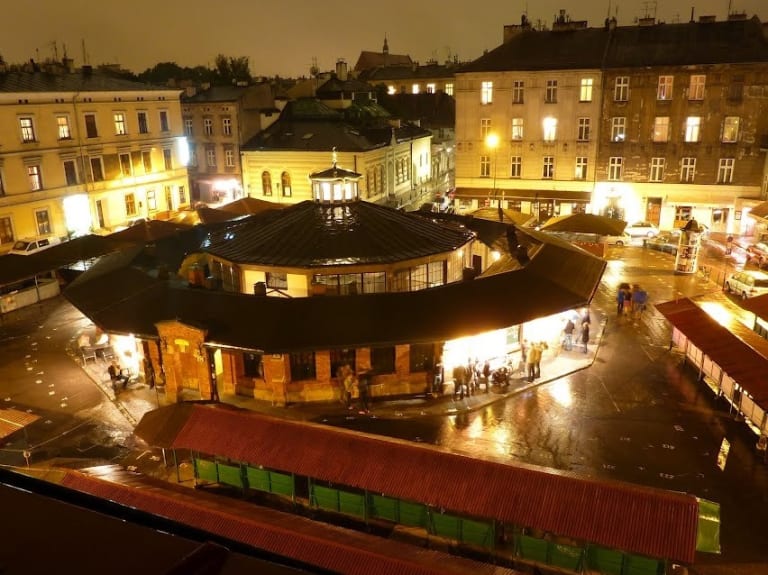
To finish the itinerary, head back into Kazimierz until you reach New Square, known as Plac Nowy in Polish. There you’ll see a circular building in the center that was built to house a slaughterhouse. Today it’s filled with small kiosks selling food, especially zapiekanka, a kind of baguette with mushrooms and other ingredients.
Around the square, you’ll also find other stalls offering everything from grilled meats to homemade sausages. For dinner, there’s no better place than this, whether you sit on one of the few chairs set out in the area or on one of the benches in the square.