10 Best Travelling Tips to Budapest
Budapest is fully prepared to welcome the large number of tourists who visit each year thanks to its many attractions. Even so, it’s always a good idea to keep a few tips in mind to help minimize the chances of any problems arising.

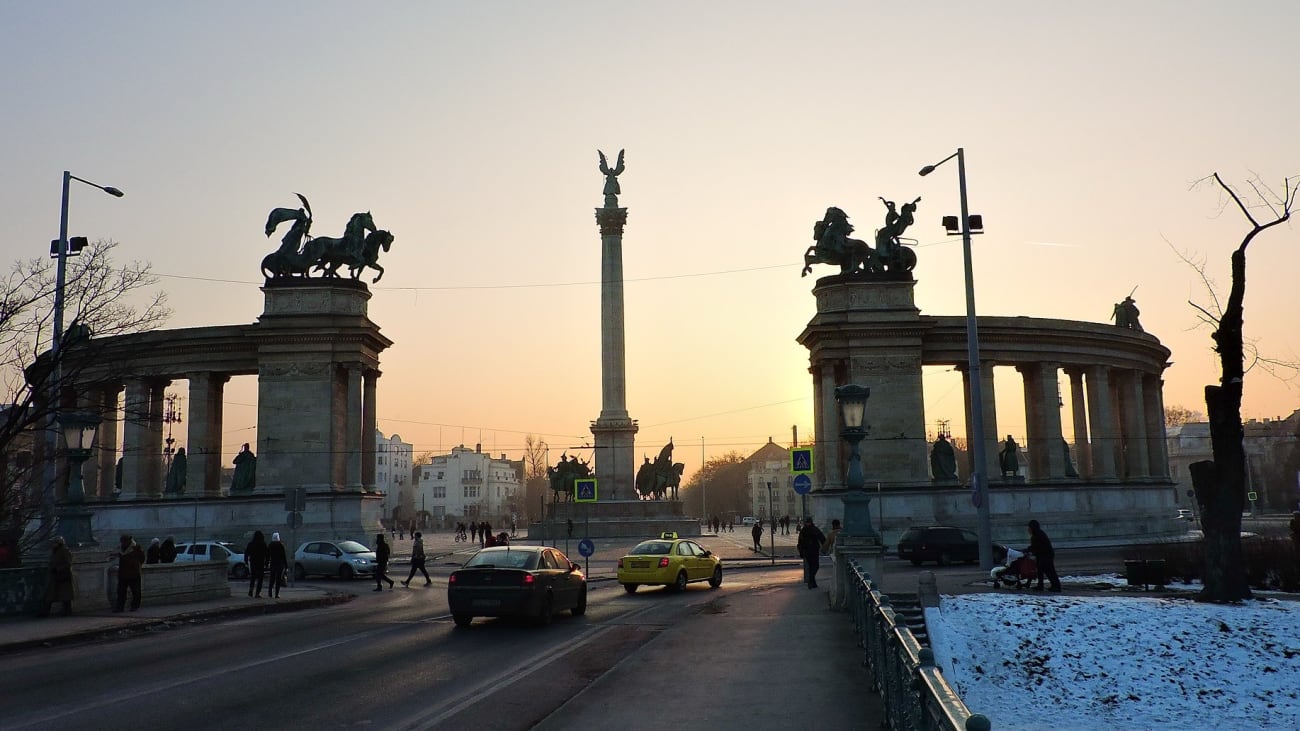
Heroes Square | ©Dimitris Kamaras
When planning a trip to this destination, you shouldn’t just focus on what to see and do in Budapest. The city’s tourism infrastructure has improved significantly in recent years, making it much easier to get around and visit attractions like the Parliament Building or Buda Castle, find a place to eat, or hire a guide to explain what you’re seeing.
However, no matter how well you plan your trip, there’s always a small chance that something might go wrong or that you’ll have to make an unexpected decision. That’s why I’ve put together a list of basic tips for traveling to Budapest that you can keep in mind to ensure nothing goes wrong and you make the most of your time.
1. Start with a guided tour or opt for the sightseeing bus

A great way to start your stay in the city is to take a guided tour that takes you to Budapest’s must-see spots. This way, you’ll not only get a first impression of the city but also learn about its history, which can be very useful for the visits you’ll make later on.
If you’re an athlete, you can book a bike tour in Budapest, though you can also opt for a walking tour through the city center.
Another great option for exploring the city comfortably is to buy a ticket for the Budapest sightseeing bus, which is more highly recommended here than in some other cities.
The price (whether you choose the 24- or 48-hour option) is very affordable, and the route passes by many of the tourist attractions you’ll want to see: St. Stephen’s Basilica, the Chain Bridge, the Millennium Monument, and the Synagogue, to name just a few.
With this mode of transportation, which allows you to hop on and off at any stop, you’ll also enjoy the commentary provided on board to help you learn about the city you’re visiting.
2. Find out where to exchange euros for forints

Hungary, despite being part of the European Union, currently retains its own currency, the Hungarian forint. As in all countries where this is the case, it’s necessary to find the best places to exchange money.
Unless you need it urgently, my advice is to avoid exchanging money at the airport, as the exchange rate is usually unfavorable. Instead, look for currency exchange offices in the city center and compare rates at several of them before deciding. Normally, you should get around 330 forints per euro, but it’s always a good idea to check the rate before traveling.
Another increasingly popular option is a debit or credit card. On the one hand, you’ll be able to use it to pay at the vast majority of restaurants, shops, and attractions, and on the other, you can withdraw cash from the city’s many ATMs.
In both cases, I recommend checking in advance for any fees your bank might charge. In my experience, it’s usually more practical to pay with the card than to use it to withdraw cash.
Get used to the forints
Although it’s advisable to get used to new coins and bills in any country, in Budapest I recommend keeping** 1,000-forint notes** separate** from 10,000-forint notes**. Even though the colors are slightly different, in dimly lit places it’s easy to mix them up and end up overpaying.
3. Be sure to try Hungarian cuisine as part of your exploration of the country

Trying new dishes and learning everything about the local cuisine is, in my opinion, part of any worthwhile trip. Even more so, if possible, when traveling to a place whose cuisine isn’t very well known. For that reason, I recommend that you dare to discover Budapest’s interesting culinary offerings:
Those who prefer to explore this with a guide can book one of the food tours offered in the Hungarian capital, many of which also include a tour of local wineries:
Among the dishes you simply must try are some that could be classified as fast food and others that are more elaborate. The most interesting ones are as follows:
- Goulash: Hungarian goulash is arguably the country’s most internationally renowned dish. It is a soup or meat stew with vegetables, well seasoned with paprika.
- Lángos: a type of fried flatbread served with sour cream, garlic sauce, or cheese.
- Chicken stew with paprika: Paprikás Csirke is another of the country’s most popular dishes.
- Halászlé: fish soup with paprika and some vegetables.
In addition to the food, you can’t miss out on trying a glass of palinka during your trip, preferably at one of the ruin bars in the Jewish Quarter.
Do you tip in Budapest?
When you go to a restaurant in Budapest, keep in mind that it’s customary to tip around 10% of the total bill. In some places, however, that amount is already included in the bill under the heading “service charge.”
4. Is the Budapest Card worth it?

Like other cities, Budapest also offers a tourist card that provides discounts for entry to some of its museums, monuments, and attractions. The Budapest Card, as it’s called, can help you save money during your trip, but my advice is to research beforehand to see if it’s really worth it for you.
This card is available in various formats depending on its validity period. Validity ranges from 24 hours to five days, with an approximate price between €23 and €62 depending on your choice.
It’s important to check which discounted monuments are included on the card you plan to use and to calculate the cost of tickets if you were to buy them directly. Don’t forget to factor in the savings on public transportation, as the Budapest Card allows you to use it without limits.
5. Buy Parliament tickets in advance

The influx of tourists to Budapest has continued to grow in recent years. Until not too long ago, most visitors came to the city as part of a tour that included Vienna and Prague, but now more and more people are spending several days in the Hungarian capital. This means it’s necessary to buy tickets for some attractions in advance.
This need to plan ahead when buying tickets is even greater when it comes to the Parliament, one of the city’s most spectacular buildings. Its exterior alone is worth spending plenty of time examining in detail, but it is the interior that offers the most attractions.
The Parliament can only be visited via a guided tour, as explained in this article about tickets.
Although you can buy them at the ticket office—after waiting in a long line—it’s best to purchase them online on the Parliament’s website or, better yet, book a city tour that includes this guided tour of the interior.
Keep in mind that security regulations require you to arrive about 20 minutes before the scheduled tour time.
6. Don’t miss Margarita Island

With the exception of City Park (which you can’t miss), Budapest doesn’t have many green spaces where you can relax or even sit for a while while having a bite to eat. However, in the middle of the Danube there is a large space that is well worth a visit: Margaret Island.
Over 2,500 meters long, this large park is equipped with leisure and relaxation areas for all visitors. In fact, it’s a popular gathering spot for Budapest families on holidays.
On the island, you can also see the ruins of the old St. Margaret’s Convent, as well as a small church, a zoo, a pool with water slides, and an old water tower that now serves as a lookout point.
One of the best ways to explore the island is by renting a bike, though simply strolling around isn’t bad either. To get to the island, the best option is to take the tram (lines 4 and 6) to Margaret Bridge.
Joaquin’s Traveller Tip
If you’re a student, don’t forget to bring your student ID, as it will give you access to discounts at many monuments and museums.
7. Stroll through Budapest under its night lights

While there’s no doubt about the city’s beauty in daylight, Budapest at night —with its lights turned on—takes on a unique and almost more impressive look. My advice is to start by strolling along both banks of the river and admiring the Chain Bridge, Buda Castle, or the Parliament from there.
If you have time, you should also head up to the castle district to visit the Fisherman’s Bastion, which offers some of the best views of the illuminated city. Of course, you can also book a night tour of the city to explore with a guide.
8. Dare to venture off the beaten path and discover some lesser-known spots

When traveling to Budapest, people usually plan to visit places like Buda Castle, the Parliament, the main churches, or the Central Market. However, if you have enough time, I encourage you to stray a bit from those routes and discover some lesser-known but fascinating spots:
- Go on a hunt for street art: Budapest is full of giant murals and tiny figures on its walls. Go ahead and look for this street art—it’s sure to leave an impression.
- A drink on a boat: this isn’t one of those fantastic night cruises with dinner. In this case, the pub is located on an old Ukrainian cargo ship moored on the Danube.
- Pinball Museum: If you miss old pinball machines, in Budapest you’ll find an entire museum dedicated to them. Of course, you can also play a few rounds.
- Cemetery of Communist Statues: the site houses a large number of the communist statues that once dotted the city.
- The Hospital and Underground Bunker: In the Buda area, you can visit a former underground hospital that was converted into a nuclear bunker after World War II.
9. Learn how to use public transportation in Budapest

Most of the tours you’ll take in Budapest will be on foot. However, you may need to use public transportation at some point, whether to return to your hotel or to reach a monument you don’t feel like walking to.
Budapest has a good public transportation network, consisting of trams, buses, a funicular, and the metro—the fourth oldest in the world and the crown jewel in this regard. You’ll likely use the metro the most.
Although you can buy single-ride tickets for just over €1.10, if you plan to use it frequently, I recommend purchasing one of the available day passes. Here you can find all the information about the different types.
To buy tickets or passes, simply go to a metro station, a newsstand, or a kiosk.
One piece of advice you shouldn’t ignore is that ticket inspectors are known for being quite strict, especially with tourists. Don’t try to use any public transportation without a ticket, as the fines are high.
10. Make a note of a few places if you’re traveling with children

Traveling with children is a real challenge for many. Generally, they get tired of museums and long walks, and, naturally, they prefer places where they can have fun.
Fortunately, Budapest offers plenty of places and activities for the little ones to have a great time:
- Aquaworld Water Park
- Take them for a ride through the hills of Budapest on the so-called Children’s Train
- Sign up for an excursion to nearby Lake Balaton
- At Heroes’ Square, you’ll find attractions they’ll enjoy
- If you take them to the Széchenyi Thermal Baths, I guarantee they’ll have a great time