

More about: 6 Best Maui Hiking Tours
The second island in the archipelago is one of the best destinations in the world for hiking. Its strong point is the diversity of its landscape: lush tropical forests alternate with bamboo forests and landscapes marked by volcanic activity.
If you love nature and are looking for things to see and do in Maui, a hiking trail should be on your agenda. In this article, I summarize all the information you need.
1. Hike through the Haleakala Crater and Iao Valley
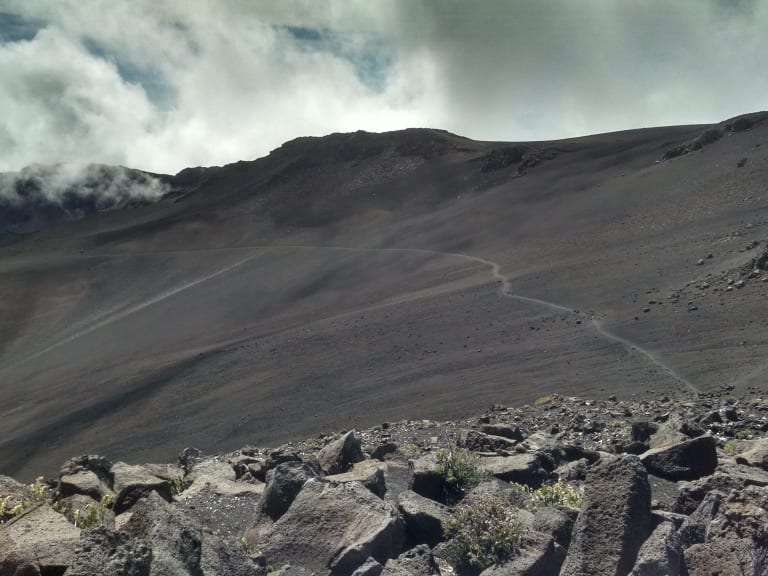
This excursion will take you to the summit of Haleakala, a volcano surrounded by a protected park covering more than 100 square kilometers. The natives believed that the demigod Maui trapped the sun in this place and released it in exchange for it staying longer in the sky.
An air-conditioned vehicle will pick you up at your hotel and take you to the visitor center. There, the climb to the crater will begin. Along the route, you will have the opportunity to see the local wildlife. Rare birds such as the 'Ua'u (Hawaiian petrel) and the Nēnē, the Hawaiian goose, nest here.
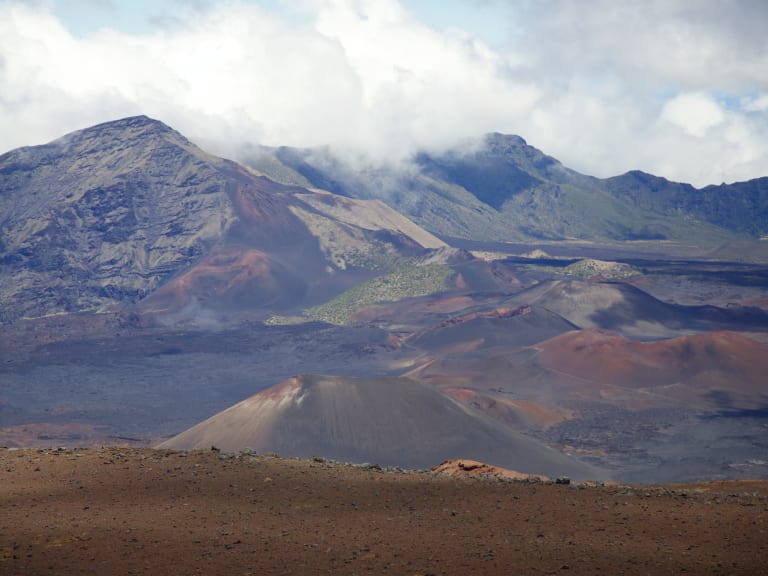
Haleakala is characterized by its variety of landscapes, from lush forests to arid valleys that look like something out of a science fiction movie. The panoramic views are breathtaking and reward the effort. The itinerary includes the following locations:
- Makawao, a small town known for its paniolos, the cowboys of Hawaii. In the early 19th century, King Kamehameha III brought Californian ranchers to the island to teach the locals how to ride horses and herd cattle. The cowboy past is evident both on the main street (Makawao Avenue) and on the surrounding farms.
This stage usually includes a stop for lunch. Personally, I recommend Makawao Garden Café or Polli's Mexican restaurant.
- Wailuku, a former sugar cane growing center that has been converted into a tourist destination. Its most iconic buildings are the Gothic Ka'ahumanu Church, the theater reminiscent of a Spanish mission, and the Bailey House museum.
- Iao Needle, large rocks covered with lush tropical vegetation. They are located in the Iao Valley, a natural park covering some 4,000 hectares
This route is very popular, so it is advisable to book well in advance. In my opinion, the climb to the Haleakala crater is one of the best activities and tours in Maui.
- Price: between €180 and €200
- Duration: approximately 10 hours
2. Hiking on the east coast
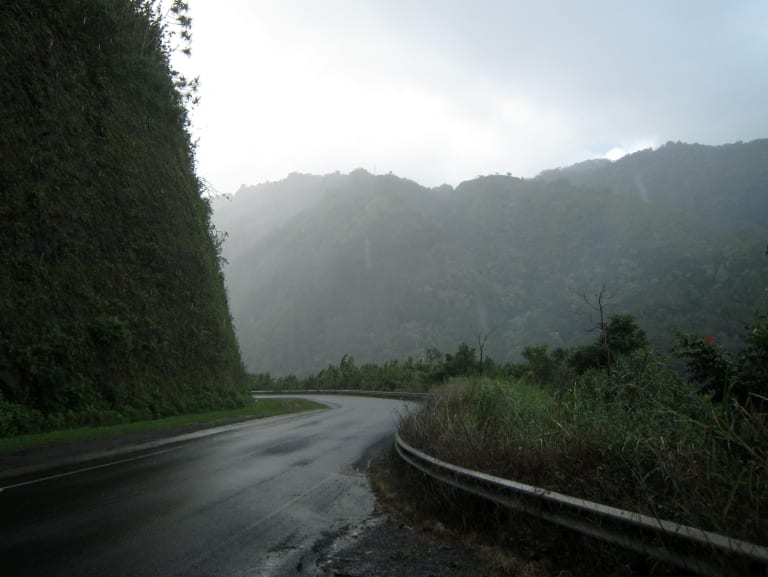
The eastern coastline of Maui is an unspoiled area dotted with waterfalls, tropical forests, and large cliffs. This is where the famous Road to Hana runs, an 85-kilometer road famous for its splendid views and colorful food stalls offering tourists water and fresh fruit.
This excursion covers a stretch of highway and, after a few kilometers, stops so you can enjoy a short hike. The guide will lead you through the jungle until you reach some waterfalls that form natural pools. Once there, you can recharge your batteries with a dip. Don't forget your swimsuit at the hotel!
There is also a version that includes abseiling, a technique for descending vertical walls. In both cases, the routes are designed for small groups and do not involve more than 10 participants.
- Price: around €150. For rappelling, the price exceeds €200.
- Duration: 5 hours or a little longer
3. Jungle walk with chocolate tasting

A short but complete option. The tour begins at King's Garden, a private garden near the famous Road to Hana. Inside the grounds are several waterfalls where you can enjoy a refreshing dip.
During the tour, your guide will point out the most beautiful plants and show you a cave linked to a Mo'o, mythological beings that can appear as beautiful maidens or water dragons.
At the end of the tour, you can enjoy a delicious chocolate tasting. By the way, if you like this delicacy, I also recommend the following places/activities:
-
Maui Chocolate Tour, a guided tour of a farm in Lahaina. Its history is fairly recent—it opened in 2019—but its products are incredibly delicious (78 Ulupono St Suite 1, Lahaina).
-
Maui Specialty Chocolates, a delicious shop in Kahului. I recommend trying their peanut butter and chocolate mochis (180 East Wakea Avenue, Suite E, Kahului)
-
Maui Chocolate & Coffee Tour, a route that combines two culinary classics. It is located in the center of the island, not far from the Kula Botanical Garden (1886 Naalae Road, Kula)
-
Price: just under €150
-
Duration: between 2 and 3 hours
4. Honolua Ridgeline Trail

Honolua Bay is located in northwestern Maui and is a prime destination for surfers. Not everyone knows that a few meters above it is a nature reserve where all species of the Hawaiian rainforest grow. The trails usually start in nearby Napili and are just over 3 kilometers long.
The trail passes through one of the rainiest places on the planet. Thanks to the abundant rainfall, banyan trees, ferns, and other plants grow luxuriantly, and the guides will explain their characteristics and the history of the place. An intermediate level is required to complete this route.
- Price: just under €150
- Duration: between 3 and 4 hours
5. Hiking in western Maui with a private guide

The perfect option for those who want to forget about everything and focus solely on the route. The price is a little high—over $350—but it includes transportation in an air-conditioned minivan, hiking poles, insect repellent, ponchos, and bottles of water.
If you want the vehicle to pick you up at your hotel or resort, you can request this service for an extra fee (only from Kaanapali, Lahaina, Wailea, Kihei, and Kapalua).
The activity takes place in the mountains of western Maui, an unspoiled area that is home to many historical and sacred sites of Hawaiian culture.
- Price: approximately $400
- Duration: 7 hours or slightly less
6. Adventure on the Waihee Ridge

Waihee Ridge is an 8-kilometer (round trip) trail that winds through forests of kukui, guava, and ferns. It is located in the western part of the island, an area characterized by heavy rainfall and rapid vegetation growth. This trail is one of the few that has been able to withstand the relentless advance of trees and shrubs.
The guide will take you to the summit, where you can enjoy an unparalleled view of the area. The tour usually starts early in the morning (between 7:00 and 8:00 a.m.) and the price includes a few bottles of water.
Bring binoculars, as you may see endemic birds such as the iiwi (small with bright red feathers) or the Amakihi with its characteristic yellow color.
-
Price: just over €80
-
Duration: between 2 and 3 hours
When is the best time for hiking?
Thanks to its warm climate, you can go hiking in Maui every month. However, it is best to avoid winter, as this is the rainiest season and heavy rainfall can cause some trails to close or become impassable. For some alternatives, I recommend reading the post explaining what to do in Maui in winter.
What should I wear for hiking in Maui?

On any trekking excursion, footwear is the fundamental starting point. If you plan to do some easy trails, a pair of sneakers is sufficient. However, if you are looking for a challenge, I recommend wearing hiking boots. You can complete your outfit with:
- Breathable shorts
- A quick-dry T-shirt is your best ally against humidity and sweat. It washes quickly and dries in less than an hour, so you can take one or two and save space in your suitcase.
- Cap to protect yourself from the sun
- Rain jacket, an essential accessory for your suitcase. In a tropical environment, rain is common, although in most cases it only lasts a few minutes. If this is not the case, I recommend considering another activity. You can find several options in the post explaining what to do in Maui when it rains
- Sunglasses
- Hiking underwear. Made of synthetic material, usually polyester or Lycra, it prevents chafing and unpleasant odors.
- Swimsuit: you may find a lake at the foot of a waterfall or an irresistible stretch of coastline. A refreshing dip is always welcome.
- Sports socks
- Backpack, preferably a sports backpack. It will be useful for carrying a change of clothes, water bottles, tissues, and anything else you might need during the excursion. In any case, try to travel as light as possible.
Will I encounter dangerous animals?
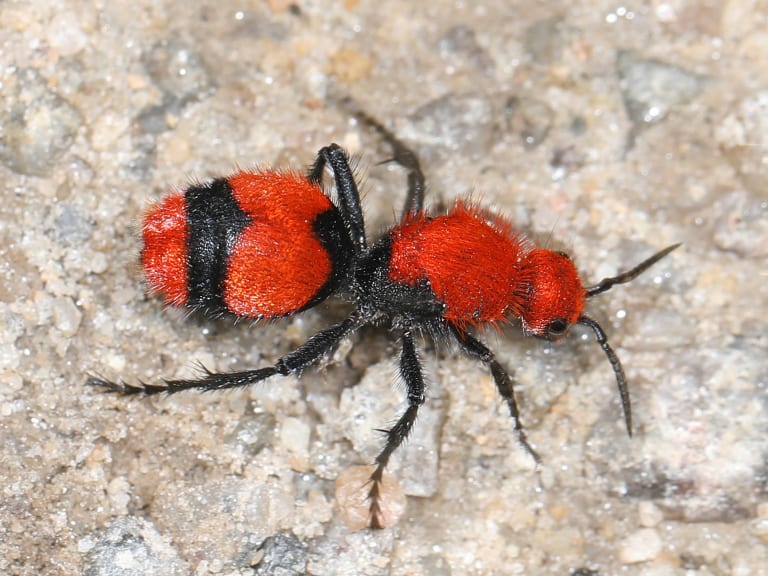
Fortunately not. The Hawaiian archipelago is not home to any lethal wildlife, and the only "danger" comes from insects. Giant centipedes and red velvet ants can sting humans, but their bites are not fatal. They are quite scary, but harmless.
Especially in the northern part of the island, it is not uncommon to encounter the pua'a, the Polynesian pig. It is probably the first non-native species to arrive in Hawaii, and its numbers are steadily increasing.
If you see a herd, do not approach them. They may interpret it as an attack, especially if there are young pigs. Their bite can transmit diseases such as hepatitis and tuberculosis.
Can I go hiking alone in Maui?

Yes, but I don't recommend it. As you know, it's not because of the local wildlife, but for other safety reasons. It's always advisable to go with someone else. After all, you'll be in the middle of nature.
If you can't resist the call of the mountains and forests, I recommend these easy trails:
- Kapalua Coastal Trail, a 4-kilometer (round trip) route between Kapalua and Honokahua bays. It is located near a hotel zone and parking is easy. It runs alongside the ocean and the views are breathtaking.
- Waihou Spring Trail, a walk in the inland area (Upcountry Maui). This is a perfect route if you are visiting the island in summer.
- Seven Sacred Pools, a one-kilometer circular route, perfect for enjoying a snack in Maui's natural surroundings. The waterfalls form small lakes where swimming is allowed (weather permitting).
- Waimoku Falls, a 6-kilometer (round trip) trail through Haleakala National Park. Its main attractions are the large Waimoku waterfall and a splendid bamboo forest. There is an entrance fee to enter the natural area (about $15 if you go on foot).
- Nakalele Blowhole, a short excursion (about 2 kilometers) that follows the coast in the town of the same name. Its main attraction is the blowhole, a hole in the ground that connects to an ocean cave. When the tide rises or the waves increase in intensity, a strong jet of water shoots out of the cavity, creating the effect of a geyser.
Do I need a car if I want to do a route on my own?
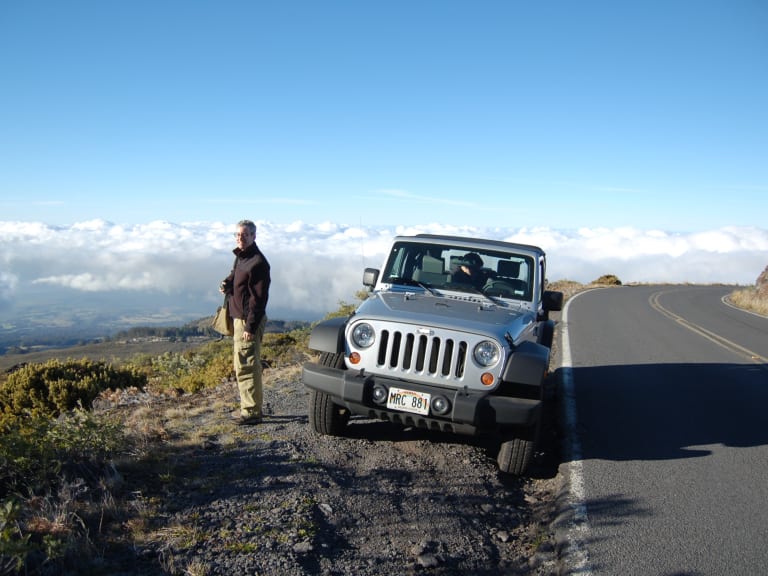
Yes, it's the best option. Maui is very large and public transportation does not cover all parts of the island. Plus, you can put everything you want in the trunk for a more relaxed trip. Before you get behind the wheel, here are some useful tips:
- Be careful when it rains. After all, you are on a tropical island and downpours require very careful driving. If it rains too hard, return to your hotel.
- Parking is difficult. Apart from hotels and resorts, you won't find many areas where you can park for free.
- Try to avoid traffic. In Maui, rush hour is at 4:00 p.m.
- Don't wait too long to refuel. Before setting off on your hiking route, make sure you have a full tank. Gas stations are hard to find in inland areas.
Are there mosquitoes in Maui?

Unfortunately, yes. When the first Westerners arrived here, there were none on the archipelago. It is believed that Aedes aegypti, the most common species, arrived here on whaling ships.
Their numbers usually increase in the morning and shortly before dusk. Fortunately, Maui has fewer mosquitoes than other islands, and the insects do not carry any diseases.
Are there other adventure activities?

Of course! If you want to go faster, I recommend checking out the best bike tours in Maui. On the other hand, if you prefer to reach the most secluded coves by sea, you can rent a kayak or book a catamaran ride. Finally, the island of Hawaii offers a very adrenaline-filled experience: swimming with sharks in Maui.
Do I need travel insurance for my vacation in Maui?

It is not mandatory, but I recommend taking it out before you leave. First of all, if your trip is canceled for any reason, you will be refunded the cost of your flights and hotel. If your luggage is left at the departure airport, you will also be entitled to a refund.
In addition, Hawaii is part of the United States, a country known for its high healthcare costs. Insurance covers you for any unforeseen events and eliminates (or significantly reduces) the amounts you will have to spend in case of illness or other medical problems.
Other tips
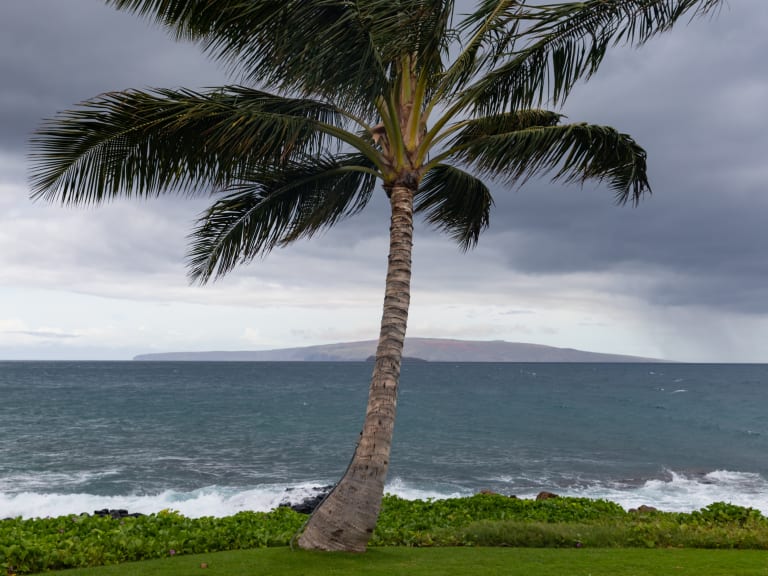
You're almost ready to travel to the archipelago. Here are a few last tips to help you plan the perfect itinerary:
- Don't drink water from springs and streams along the way. After all, you're in a tropical country! Keep in mind that tap water in Maui is completely safe.
- If you decide to go on an excursion on your own, make sure you return before sunset. You can easily check the sunset time online.
- Don't stray from the markedtrails or you'll risk getting lost.
- In the most isolated areas, cell phone coverage is limited. If you are traveling alone, download a map in advance.
- Do not enter private property.
- To stay up to date on any weather or emergency developments, you can call the automated number 808-986-1200, extension 1. A robotic voice will give you all the information you need.