

More about: 10 Things to Do in Dresden
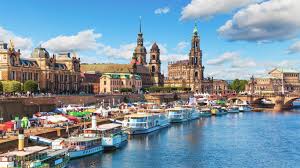
World-renowned for its architectural heritage and rich cultural history, Dresden is one of Germany's most visited cities and an ideal destination for those who want to soak up its Baroque and Renaissance beauty. Located on the banks of the Elbe River, the city offers unmissable views of its monuments and a captivating atmosphere.
Among the best activities you can do in Dresden are visiting Dresden Castle, touring the Church of Our Lady, seeing the Augustus Bridge, and exploring the historic Neustadt district, an epicenter full of color and culture that stands out for its Art Alley.
1. Visit Dresden Castle

Dresden Castle, also known as the Royal Palace, is an iconic building that has witnessed the rich history of the city and the region of Saxony . Its construction began in the 15th century as a fortress and over the centuries it has been expanded and renovated on several occasions, incorporating elements of architectural styles such as Renaissance, Baroque, and Neoclassical.
Despite the devastating bombing of the city during World War II, the castle was meticulously restored and remains a symbol of Dresden's cultural renaissance. The site is also home to cultural institutions and museums, making it a must-see destination for art and history lovers.
One of the castle's most notable exhibits is in the Museum of Prints and Drawings, which includes a room of works by European artists, as well as Prince George's Palace, which showcases the opulence that always characterized the Saxon court. In addition, the castle is home to the treasure collection of the Princes' Chamber, which includes jewelry, weapons, and objects that belonged to the local royalty.
The architecture of the building is undoubtedly one of its greatest attractions. Its ornate façade with elaborate sculptural details and balconies welcomes you to the luxurious halls and corridors, which you can explore in depth if you decide to book a guided tour of Dresden Castle.
2. Tour the Church of Our Lady in Dresden

If you want to see one of the most photographed sites in the city, don't miss Dresden's Church of Our Lady, known in German as the Frauenkirche. This building is one of the city's most representative monuments and is an outstanding example of Baroque architecture. In addition, its large dome, which reaches a height of 91 meters, has made it a landmark on the skyline of this destination.
The Frauenkirche is not only known for its architecture, but also for its rich history. After being destroyed in 1945, the ruins of the church remained for decades as a reminder of the conflict, until the mid-1990s when the national government promoted an ambitious restoration project.
Inside the Church of Our Lady, you can visit the sculptures, frescoes, and marble high altar. The building's acoustics are also exceptional, making it a popular venue for classical music concerts and cultural events. In addition, the dome offers a panoramic view of the city from its observation deck.
The location of the Frauenkirche is also ideal for exploring other nearby sites. Just a few steps away are the Market Square, the Zwinger (a Baroque palace that houses important art collections), and the Old Masters Gallery, which displays works by artists such as Raphael and Rembrandt. One of the best ways to get to the Frauenkirche is to book a Segway tour of Dresden, which includes a stop at this site.
3. Marvel at the colors of the Kunsthofpassage
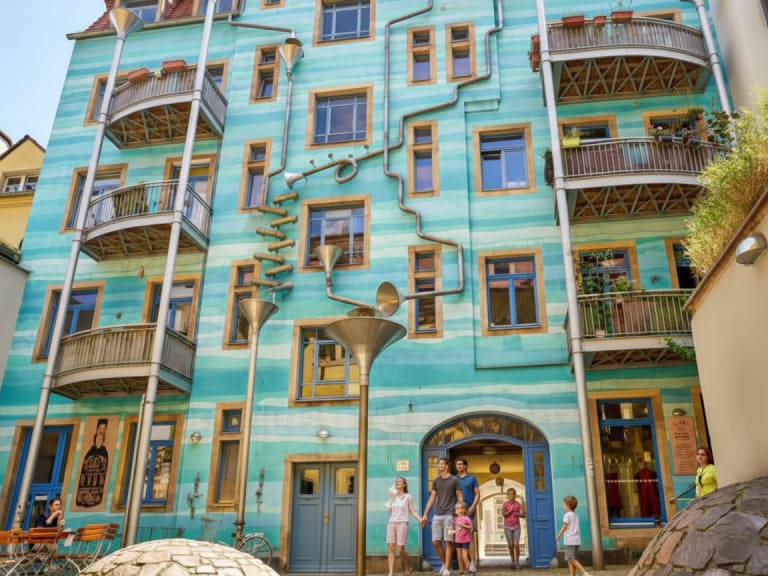
Kunsthofpassage, better known as Dresden's Art Alley, is a complex of pedestrian streets that stands out for its unique architecture and colorful murals. Located in the Neustadt neighborhood, this place is a haven for artists, creatives, and culture lovers.
Kunsthofpassage consists of five interconnected courtyards that house art studios, galleries, craft shops, cafes, and restaurants, all surrounded by a bohemian atmosphere that has made this alley a must-see destination for those seeking to experience local contemporary art.
The history of Kunsthofpassage dates back to the late 19th century, when the area was developed as a residential neighborhood. However, it was in the 1990s that it began to transform into an artistic hub. Artists and designers took the initiative to revitalize the old buildings, giving them a new purpose with colorful murals and decorative elements.
One of the highlights of the alley is the Water House, famous for its channels that collect rainwater, creating a sound spectacle when it rains. In addition, art exhibitions, fairs, and cultural events are organized in the courtyards. You can get there by public transport or by booking a Segway tour of Dresden.
4. Walk along the Brühl Terrace, the Balcony of Europe

One of Dresden's most fascinating attractions is Brühl's Terrace, known as the Balcony of Europe. Built between 1738 and 1843, this terrace was designed as a promenade for the aristocrats of the time and is located on the castle wall, giving it a privileged position and offering panoramic views of the city. Its name comes from Count Heinrich von Brühl, who promoted its construction.
Over the centuries, Brühl's Terrace has been a meeting place for locals and tourists alike, offering a respite from the hustle and bustle of the city. The terrace is adorned with gardens, sculptures, and benches, making it a perfect place to stroll, relax, and enjoy the natural and architectural beauty of Dresden. It is also an ideal spot for taking photographs of this destination.
On the other hand, near Brühl Terrace you will find several points of interest, such as the Dresden City Museum, the famous Frauenkirche and the Semper Opera House, which also makes it an ideal starting point for exploring Saxony's rich cultural heritage. Likewise, this terrace is often included in some of the city's most striking experiences, such as the tour of Dresden with the night watchman.
5. Discover the Parade of Princes

The Parade of Princes, known in German as the Fürstenzug, is one of Dresden's most famous works of art and a symbol of Saxony's history. This tile mural, which stretches along a wall over 100 meters long, depicts local dukes and kings from the 12th to the 19th centuries. The work was created in 1904 by artist Wilhelm Walther and is composed of approximately 25,000 porcelain tiles.
The history of the Princes' Procession dates back to a tradition of representing the nobility, reflecting the greatness of the Wettin family, who ruled Saxony for centuries. This mural is not only a testament to the royal lineage, but also captures significant historical moments and cultural elements of the region.
In addition to its historical significance, the Parade of Princes is located in a prime location, right next to the Royal Palace of Dresden and very close to the Transport Museum, the Church of Our Lady, and the Zwinger.
6. Visit the Dresden Transport Museum

If you want to see one of the best exhibitions in the city, don't miss the Dresden Transport Museum, which combines a comprehensive overview of the history of transport and mobility in the Saxony region and the rest of Germany. Opened in 1952, the museum houses exhibits ranging from land and air vehicles to water transport.
In the halls of this museum, you can explore more than 100 years of transport history. The exhibits include steam locomotives, trams, classic cars, and airplanes, each with its own story to tell. One of the highlights is the collection of trains, which includes restored antique models that offer a glimpse into the development of railways in Germany.
On the other hand, if you decide to buy tickets for the Dresden Transport Museum, you can delve into the engineering and design of vehicles throughout history, as well as access simulators and interactive videos that allow you to discover images from different eras.
7. Visit the Meissen Porcelain Factory

If you want to visit one of Dresden's most iconic industrial sites, be sure to book tickets for the Meissen Porcelain Factory, which was founded in 1710 and is one of the oldest of its kind in the world. Located just 25 kilometers from the city center, this site is famous for being the first porcelain producer in Europe and for popularizing this industry worldwide.
At this factory, you can learn about the entire porcelain production process. The tour includes a visit to the manufacturing facilities, where you can watch artisans in action creating pieces ranging from tableware to decorated sculptures. You will also find exhibitions on traditional hand-painting and molding techniques, and an overview of how the work has evolved over time.
The Meissen Porcelain Factory also has a museum that houses a collection of historical pieces, including masterpieces from different periods, from elegant Saxon court tableware to elaborate decorative figures from the late 19th century.
8. Tour the Baroque Zwinger Palace

The Baroque Zwinger Palace is one of the purest examples of Baroque architecture in Europe. Located in the heart of Dresden, its construction began in the 18th century and it initially served as a venue for celebrations and events of the Saxon court. Over the years, the Zwinger was transformed into a palace complex that housed a series of gardens, fountains, and buildings that served as a leisure space for the aristocracy.
The Zwinger's purpose has evolved over time. Today, it has become an important cultural center that includes art collections and treasures of the Saxon royal family. However, after the devastation suffered during World War II, the Zwinger was restored in detail.
At the Zwinger, you can admire the architecture of the building, characterized by its facades, ornamental sculptures, and meticulously designed gardens. In addition, one of the main attractions of the Zwinger is its art collection, which includes the Old Masters Gallery, where you can see works by renowned artists such as Raphael, Rembrandt, and Vermeer.
You can reach the Zwinger on your own by public transportation or as part of the Segway tour of Dresden, which includes a stop at this site.
9. Relax in Großer Park

Großer Park is one of the largest green spaces in Dresden and a place that invites visitors to enjoy nature and tranquility in the middle of the city. Its history dates back to the 18th century, when it was designed as a hunting garden for Elector Augustus II of Poland. Over time, the park has been transformed into an urban oasis where locals and tourists alike can relax and escape the hustle and bustle of city life.
The park covers more than 140 hectares and is adorned with meadows, paths, and ponds, making it an ideal place for walks, picnics, and outdoor activities. One of the park's highlights is the historic Grosser Garten Palace, a building that houses a small museum and a café where visitors can enjoy refreshments while taking in the views of the surrounding area.
Another attraction within the Großer Garten is the Dresden tram, which offers a scenic tour of the park and its surroundings. Visitors will also find playgrounds for children and sports fields. During the summer months, the park comes alive with cultural events, concerts, and festivals, adding a lively and festive atmosphere to the natural environment.
Near the Großer Park, visitors can explore other notable attractions, such as the Dresden Zoo, which is home to a variety of animals and is an ideal place to enjoy a family day out.
10. Discover the views of Dresden from the Augustus Bridge

The Augustus Bridge, which crosses the Elbe River, is one of Dresden's most famous bridges and an important landmark connecting the old town with the riverbank. Opened in 1731, this bridge was an engineering feat of its time, and its construction marked a milestone in connecting the city, allowing easier access that promoted trade in the region.
The design of the Augustus Bridge is a remarkable example of the Baroque style, with arches and decorations that include statues of mythological figures and heroes from Saxon history. Over the years , the bridge has undergone several renovations, especially after the city rose from the ashes following the damage suffered during World War II. However, despite the changes, it has managed to maintain its historical character and regional relevance.
One of the most important features of the Augustus Bridge is the panoramic views it offers. From its structure , you can enjoy a complete view of the Elbe River, as well as the buildings that adorn the Dresden skyline, including the iconic Church of Our Lady and the Zwinger Palace. These views are especially captivating at sunset and during the night, when the city lights are reflected in the water and create a magical atmosphere.