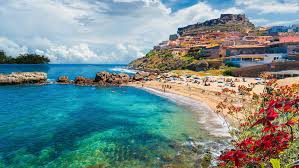


More about: Best Things to Do in Olbia
Olbia is an oasis of entertainment on the northeast coast of Sardinia, where you will be welcomed with hospitality and historical richness. Here you can enjoy archaeological finds and endless water activities such as kayaking, snorkeling, paddle surfing, and touring the gulf by boat. In addition, its charm lies in its spectacular climate, heart-stopping cuisine, and the tranquility of the coast.
During your visit, you can see the Punic walls, sign up for a pasta class, or enjoy a tour of a myrtle laboratory. If you are planning an itinerary for your trip to Olbia, here is a guide with everything you need to see and do.
1. Enjoy a tuk tuk ride through the essentials of Olbia

If your next vacation is in this majestic city, the first thing you have to do is wander the streets and discover its main tourist attractions. Of course, it's fun to do this on foot, but if you'd like to discover the city in a unique way, I invite you to book a tuk tuk tour of Olbia.
Tuk tuks originated in Asia, but those in Olbia are a more modern version adapted to Italian charm. You'll love the experience because they are agile and maneuver easily through the narrow streets of Olbia's historic center, and they usually include fascinating stops such as the ones listed below.
Basilica of San Simplicio
The Basilica of San Simplicio is one of Sardinia's most outstanding monuments, and its architecture shows Lombard and Romanesque influences. At first glance, it may seem simple, but it is an ancient building with an incomparable historical richness. Originally, it was an early Christian church, but it underwent several reconstructions and is believed to have functioned as a Roman temple at some point.
Today, it houses a statue and the excavated relics of San Simplicio, the patron saint of Olbia, who is honored every May 15.
Roman Aqueduct and Cistern
Olbia is one of the cities touched by the magic of Ancient Rome, and archaeological visits are a must. Among its ruins are the Aqueduct and, a short distance away, the cistern used by the Romans to store water. If this piques your curiosity about the local past, you should consider seeing the Sa Testa Sacred Well, evidence of the existence of the Sardinian Nuragic civilization.
Archaeological Museum
If you would like to learn more about Olbia's archaeological past in a specialized setting, you should consider visiting the Musée archéologique d'Olbia. This visit will take you to an artificial island connected to the city, which is well worth the trip to discover maritime history and explore finds from the Nuragic to the Roman era.
Historic Center
Walking through the historic center of Olbia is like walking through contrasts that demonstrate architectural evolution. There are ancient streets and lively pedestrian passages, but one that stands out is Corso Umberto I, a hive of restaurants, boutiques, and picturesque cafes.
2. Go kayaking and snorkeling on the Costa Aranci

If there's one thing you'll enjoy in Olbia, it's the crystal-clear waters of its beaches and the immensity of the Costa Aranci, a gulf that's ideal for extreme sports such as kayaking and snorkeling. In some areas, you can rent equipment and set out on your own, but if you don't have experience or aren't familiar with the area, it's safer and more enjoyable to book a kayaking and snorkeling tour along the coast of Olbia.
These types of experiences include two activities in one day, ideal for enjoying the sea like never before. Before you start, you will probably receive an introductory lesson, and then you can begin paddling through the crystal clear waters of Sardinia and visit some of the most beautiful beaches.
Between each activity, you may be offered snacks, because you're really going to need the energy. When you put down your paddles, you'll have free time to swim among turtles and dolphins, and the guide will lead you through a snorkeling experience.
3. Explore the coast on a paddle surfboard

To connect with the sea in Italy, you can also book a paddle surfing tour in Olbia. If you've never tried it before, this water sport involves paddling on the water while standing on a surfboard. You'll immerse yourself in an adventure through the mysteries of the Costa Arancia and feel more confident with every passing second. It's normal to lose your balance the first few times, but that only makes it more fun and adds a touch of adrenaline to the experience.
During the tour, you're likely to encounter dolphins, turtles, and seabirds, and you'll have around three hours to test your skills. In addition, they will surely take some photos for you to remember the experience and offer you a delicious breakfast to accompany it.
There is nothing to fear! A professional guide will be monitoring all participants, and since these types of activities are usually for private groups, you will be able to enjoy personalized attention. In addition, before you start, you will receive an introductory lesson with all the basic movements and tricks of this sport.
4. Explore the Costa Smeralda

Olbia is incredibly beautiful, and it's worth taking a trip along the Costa Smeralda to enjoy the hidden coves, coastal villages, and most beautiful ports. You can do this by bus or boat, depending on the type of experience that appeals to you.
To optimize your itinerary, you have the option of booking a guided tour of the Costa Smeralda. This way, you'll be joining an unforgettable adventure and won't have to worry about transportation. During the tour, you'll be amazed by the vibrant color of the water and the breathtaking natural landscapes. Among the locations you can visit are:
- Marina di Belvedere, whose name means "Beautiful View," was named by Italians for its crystal-clear beaches that seem almost unreal.
- Porto Cervo, a luxury destination frequented by celebrities, but curiously, before the 1950s, it was an unattractive port.
- Baja Sardinia is as beautiful as Porto Cervo, but its port is more relaxed and ideal for a paradise vacation among the coves of Poltu Quatu, Cala Bitta, Lu Nibarru, and La Pitrizza. Its name is striking because it is not located in the lower part of Sardinia, but in the north.
- San Pantaleo is an artistic port with cobbled streets where craft fairs are often held on Thursdays.
- Tomb of the Giants Coddu Veccju is a large prehistoric burial site that houses several bodies inside.
- Necropolis of Li Muri, an ancient cemetery dating back to the 4th millennium BC, where you can appreciate the funerary traditions of ancient civilizations.
5. Delight in the idyllic landscapes of La Maddalena National Park

Another must-see is the enchanting La Maddalena National Park. This complex encompasses Maddalena Island, the only inhabited island in the archipelago, as well as the Church of Santa Maria Maddalena and the remains of a Corsican shepherd settlement.
However, the park is much larger, and by booking an excursion to La Maddalena, you can discover all its charms. A full visit is ideal for exploring Italian history on the island of Caprera, which is connected by a bridge. You will also have time to see Giuseppe Garibaldi's house-museum and enjoy the scenic hiking trails.
These types of experiences are usually done by boat, allowing you to see the inaccessible island of Budelli and Spargi, one of the most beautiful islands in Sardinia.
6. Enjoy an archaeological tour

This city is famous for its archaeological finds that bear witness to the passage of various civilizations. You can see ancient wells, public walls, castle ruins, necropolises, and the Roman Aqueduct.
Sacred Well of Sa Testa
Olbia hides many interesting secrets and impressive historical sites, both within the city and in the surrounding area. Among the most notable is the Sacred Well of Sa Testa. It is an open-air archaeological find, hidden on an easy trail in Viale Pittulongu. Here you can see the remains of a prehistoric well and learn about the ancient Nuragic civilization.
Pedrés Castle
The medieval period is famous for its castles, and in Olbia you can find the ruins of the imposing Pedrés Castle. It is located on top of a hill, so it is a double experience because you will also see the city from above. It was inhabited by different tribes until it was abandoned in the 15th century.
To get there, you have to go to Via Castello Pedrese and follow a short trail with spectacular views. Keep in mind that it can be visited 24 hours a day, although I don't recommend doing so at night because you won't be able to appreciate the sites and the last sections of the road are dangerous, so it's better to drive during the day.
Punic Walls
Olbia is sometimes called the Punic city of Italy, probably because of its 50 meters of Punic wall remains. These defensive structures were built by the Punics or Carthaginians, who conquered Italy during the Punic Wars against Rome.
7. Sign up for a pasta workshop

A pasta workshop is an ideal activity for exploring Sardinian cuisine, especially all the types of pasta that are prepared in the region. Generally, the class is quite hands-on with interesting stories and theoretical information that will help you improve your skills. In addition, you can learn how to make different variations such as gnocchi, ravioli, and culurgiones.
In the Ogliastra region, it is common to choose the filling according to the season, so you may come across unusual pasta dishes that take advantage of the bounty of the sea. In fact, in Olbia, you can immerse yourself in the rich gastronomic heritage of the Mediterranean through classes that focus on fresh dishes such as salads, fish, and seafood.
You'll also likely be tempted by baking and pastry classes, which entice you with Italian delicacies and allow you to eat pizza galore. And if you have enough time, you can take advantage of a getaway to Oschiri, a mountainous location renowned for its Sardinian panadas. They are similar to empanadas, but with a unique twist thanks to the pairing with Vermentino or Cannonau wine. You're in luck because there are cooking workshops that will help you discover this culinary treasure.
8. Discover a myrtle laboratory

Continuing with the gastronomic plans, you can discover the ideal drink to accompany any dish in Olbia. Mirto is an artisanal liqueur that sums up the essence of Sardinia in a glass, as its flavor is as intense and spectacular as the Italian coast. During your visit, you can learn how to make it in a production laboratory, where an expert will explain how the berries are transformed into this liqueur.
Interestingly, there is a wide variety of berries, and depending on which one is used, the flavor can change dramatically. You can walk through the forest to see the plantations and enjoy the fresh aroma. At the end of the workshop, you will move on to the most exciting part: tasting different varieties of mirto accompanied by cheese and cold cuts. You will most likely be offered mirto made from berries, honey, and leaves, and it may even be served with chocolate and homemade ice cream.
9. Go canyoning on the Pitrisconi River

If you head into the forest, you will come across the spectacular Pitrisconi River, right on Via Aresula. Its course covers the surroundings of Olbia and other locations such as San Teodoro, Gallura, Monte Nieddu, and other must-see places in Sardinia.
In general, it is an ideal natural enclave for adventurers where you can challenge your adrenaline with a canyoning experience. Don't worry about the river conditions, as this is an easy activity, so you can sign up even if you are a beginner (you just need to know how to swim). The approximately 20-meter jump will test your adrenaline meter.
In addition, this river has natural slides, freshwater pools, and areas for rappelling. It is recommended that you rent safety equipment and do it with professionals if you have no previous experience.
10. Take a boat trip to San Teodoro

San Teodoro is a wonder of the Costa Smeralda near Olbia and will take you no more than forty minutes to reach by bus, although it is more fun if you organize a trip on a sailboat. It is well worth diving among its cliffs and coves of inexplicable beauty.
Here you will find the famous beaches of La Cinta and Cala Brandinchi, which dot the region with crystal clear waters and white sand. It is a popular destination for snorkeling in pristine coves and relaxing by the sea. At night, the town transforms into a hub of nightlife with open-air discos and parties until dawn.
Tips for visiting Olbia
Olbia, the happy city, will undoubtedly steal your heart and you will probably want to return a couple more times. To fully enjoy the experience, be sure to organize an itinerary and stay for a couple of days. In addition, vary between boat trips and walks through the charming streets of this Italian oasis.
Here are some basic recommendations to help you make the most of your vacation in Olbia:
- Choose the days you're going to be in the city carefully. Although it offers pleasant weather almost all year round, the best time to visit is between spring and summer. In mid-August, it tends to be crowded with tourists, and in winter, strong winds can hinder some outdoor activities.
- Olbia is a compact city and is best explored on foot, so bring comfortable sneakers because you'll be doing a lot of walking. But don't worry! There are several bus options if you need to get around the city or its surroundings. You can also book a boat trip along the Costa Smeralda.
- Pack clothes appropriate for the season. We recommend light clothing for summer and some layers or jackets for winter.