


More about: 10 Things to Do in Pula
With a history dating back more than 3,000 years, Pula is a destination full of surprises. This city is home to one of the best-preserved Roman amphitheaters in the world, along with other archaeological sites that will transport you back to classical times.
But Pula is not only notable for its cultural heritage, but also for its incredible coastal landscapes. Its crystal-clear beaches and Mediterranean climate are ideal for relaxing after exploring its historical monuments. So, if you're wondering what to see and do in Pula, here's a guide to some of its main attractions.
1. Discover the icon of Ancient Rome in Pula: the Amphitheater
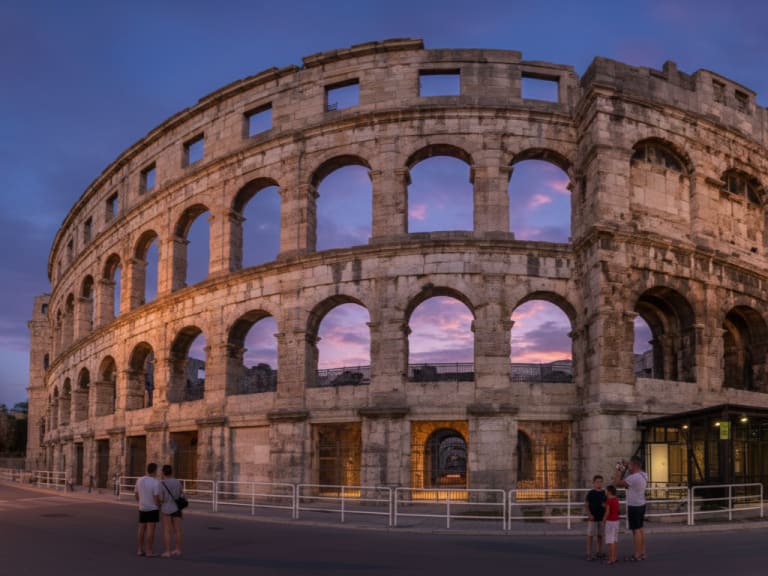
The Pula Amphitheater is one of the city's main tourist attractions and one of the most impressive Roman constructions outside Italy. It was built in the 1st century AD during the reign of Emperor Vespasian, the same emperor who began construction of the Colosseum in Rome. Although smaller than its Roman counterpart, the Pula Amphitheater is impressive for its excellent state of preservation.
With a capacity for 23,000 people, it was the scene of gladiatorial combats, hunts, and public spectacles that were part of everyday life in the city. Today, you can stroll through its stands and arena, and also enjoy cultural events such as the Pula Film Festival, concerts, and soccer matches.
The amphitheater is located near the center of Pula, and you can get there on foot or by public transportation. Don't forget to buy tickets in advance, especially during the high season, as it is one of the most visited monuments in the city.
Useful information
- Address: Flavijevska ul., 52100, Pula, Croatia.
- Opening hours: every day from approximately 9:00 a.m. to 5:00 p.m.
- Price: from €14 for adults and around €8 for children under 8 years old.
2. Explore Roman architecture at the Temple of Augustus

The Temple of Augustus is another must-see in Pula. Dedicated to the first emperor of Rome, it is a symbol of the Roman era in the city. It has survived over the centuries, even after suffering significant damage during World War II. It is located in the center of Pula, in the ancient Roman Forum, which is the main square of the old city.
Without a doubt, it is a key historical site for learning about the Roman era in Pula. You will be surprised by how well preserved it is, with its imposing facade of Corinthian columns and limestone structure. Inside, you can explore an interesting collection of Roman objects and sculptures.
To get to know this temple and its surroundings, you can join a guided walking tour or book a bike tour of Pula, as these types of tours usually include visits to historical sites such as the Uljanik shipyard and the Pula Amphitheater, accompanied by a local expert.
Useful information
- Address: Forum b.b, 52100, Pula, Croatia.
- Opening hours: every day from approximately 9:00 a.m. to 7:00 p.m.
- Price: from €2 for adults and from €1 for students.
3. Stroll through Ancient Pula

If you like history and architecture, you can't miss a tour of the historic center of Pula. The city is famous for its rich Roman heritage, and its streets are full of monuments that tell stories dating back thousands of years.
One of the best monuments in the historic center is the Arch of the Sergii, built at the end of the 1st century. It is located at what was once the main entrance to the ancient city, and today it is the gateway to the historic center. Nearby is the Gate of Hercules, one of the oldest entrances to Pula.
The most important building in the historic center is undoubtedly the Pula Arena, the sixth largest Roman amphitheater still standing in the world. Other iconic buildings include the Temple of Augustus and the Roman Forum, the ancient central square. Exploring the historic center will also allow you to enjoy the modern architecture, which contrasts interestingly with the architecture of the past.
4. Visit the most characteristic museums
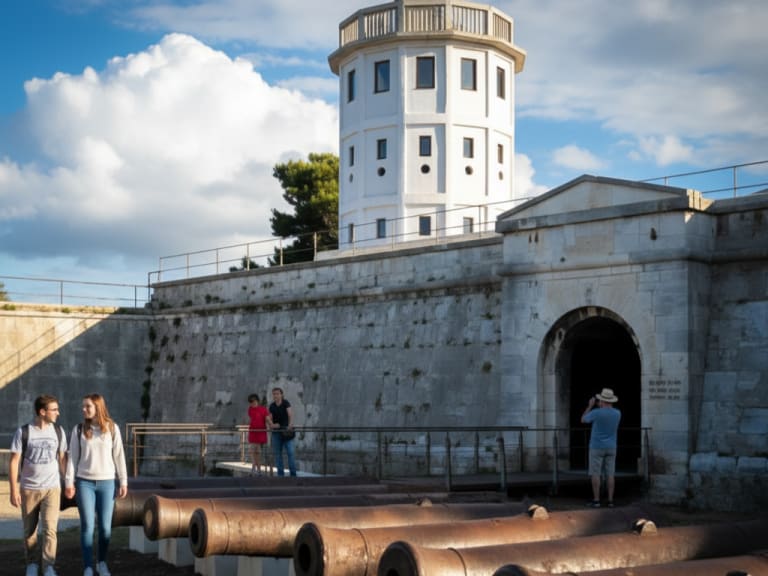
In addition to its famous amphitheater, Pula is home to several museums that allow you to learn about its history and culture, from archaeological treasures to contemporary art. Here are some of the most notable museums you can include in your tour of the city.
Pula Naval History Museum
The Pula Naval History Museum offers an extensive collection of objects related to military history, from prehistory to the modern period, such as coins, photographs, maps, weapons, and military equipment. It is housed in a 17th-century Baroque castle and offers a beautiful panoramic view of the surrounding area. It is located near the port and the historic center.
- Location: Gradinski uspon 6.
- Opening hours: May to September, every day from 9:00 a.m. to 9:00 p.m. approximately. October to April, from 9:00 a.m. to 5:00 p.m. approximately.
- Price: from €7 for adults and from €3 for children between 5 and 16 years old.
Istria Museum of Contemporary Art
Opened in 2006, the Istria Museum of Contemporary Art is an important cultural and artistic center in the region, providing a space to explore contemporary art. It offers a vast collection of paintings, sculptures, photographs, and installations by local, national, and international artists. It is located in the historic center, near the Amphitheater.
- Location: Ul. Svetog Ivana 1, 52100, Pula.
- Opening hours: open daily at 10:00 a.m. and, depending on the season, may close between 7:00 p.m. and 10:00 p.m.
- Price: approximately €3 for adults. Children under 7 years old enter free of charge.
House of Olive Oil
The Olive Oil House is a space that celebrates one of Istria's most important culinary traditions. There you can learn about the importance of olive oil in both local cuisine and the region, as well as about the cultivation and harvesting of olives. It has a tasting room for local oils and its exhibitions cover more than 2,000 years of history.
If you are interested in learning more about these local flavors, you can book an olive oil tour of Pula. In addition to a visit to the museum, these tours usually include the opportunity to taste different varieties of oil and other products with a local expert.
- Location: Istarska 30, HR-52100 Pula.
- Opening hours: Monday to Saturday from 10:00 a.m. to 6:00 p.m.
- Price: between €15 and €45, depending on the type of visit you choose. Children under 8 years old enter free of charge.
5. Discover the local cuisine at the Pula market

Pula Market is a must-see if you want to experience the essence of Istrian cuisine. This Croatian peninsula is famous for its Mediterranean culinary tradition and its blend of flavors that reflect Italian, Austrian, and Slavic influences. What's more, the market is housed in a beautiful historic building.
Inside, fishermen and cheesemakers offer high-quality products, while colorful fruit and vegetable stalls can be found outside. There are also restaurants and cafes where you can try typical local dishes.
If you are interested in learning more about local flavors, you can book a food tour of Pula, as they usually start their tour at this market. And if you are more interested in wine, one of Pula's typical drinks, you can book a wine tour to visit nearby wineries and vineyards.
Useful information
- Location: Narodni trg 9, 52100, Pula.
- Hours: Monday to Saturday from 7:00 a.m. to 8:30 p.m. Sundays from 7:00 a.m. to 12:00 p.m. Please note that some stalls may close earlier.
- Price: free.
6. Learn about the history of the Zerostrasse Underground Galleries
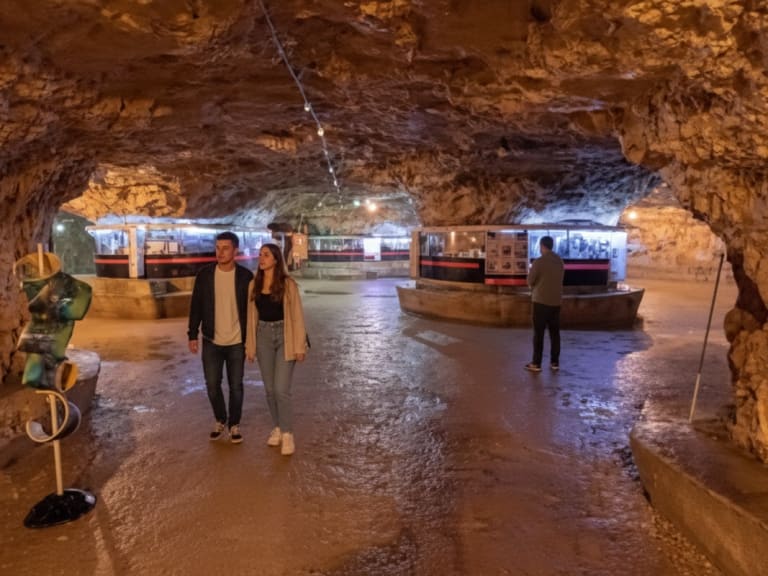
The Zerostrasse Underground Galleries are a series of tunnels that were built during World War I under the streets of Pula as air-raid shelters. They were later converted into shelters against possible nuclear attacks, with a capacity for more than 50,000 people, which was the size of Pula's population at the time.
Today, you can walk through the Zerostrasse Underground Galleries to learn about this chapter in Pula's war history. The tunnels are 3 to 6 meters wide and 2.5 meters high, and some are used as spaces for cultural exhibitions and events.
There are entrances to these underground tunnels from various points in the city, such as Hercules Gate. The galleries are also connected to Pula Castle, so you can take advantage of a combined ticket and visit both monuments on the same day.
Useful information
- Location: Carrarina ul. 3, 52100, Pula, Croatia (main entrance).
- Opening hours: in summer, Monday to Sunday from 9:00 a.m. to 9:00 p.m. In winter, from 9:00 a.m. to 5:00 p.m.
- Price: around €7 for adults and around €3 for children and teenagers aged 5 to 16.
7. Watch dolphins in their natural habitat

The Adriatic coast is home to dolphins. That's why one of the best things to do in Pula is to join an excursion to see these marine mammals. Not only will you get to see these fascinating animals in their natural environment, but you'll also enjoy breathtaking views of the Croatian coast.
The waters surrounding Pula are home to the bottlenose dolphin, also known as the bottlenose dolphin. During the excursion, you may see them swimming in groups or even playing near the coast.
These excursions usually depart from the port of Pula and last a few hours. The best time to go is at sunrise or sunset, when the cetaceans are most active. Don't forget to book in advance, especially during high season.
8. Try your hand at water sports in the Adriatic Sea

Pula, located on the Istrian peninsula, offers privileged access to the stunning surroundings of the Adriatic Sea, where the crystal-clear waters allow you to observe the seabed and its inhabitants. This makes it the perfect place for water sports such as diving, paddle surfing, and kayaking.
Kayak under the stars in a transparent kayak
Imagine paddling in a completely transparent kayak while LED lights illuminate the seabed, revealing creatures that only emerge at night. In Pula, you can enjoy this experience by booking a night tour in a transparent kayak and admiring the marine life as you paddle under the moonlight.
This activity is very popular among tourists in Pula and is suitable for people of all ages and skill levels. Tours are usually led by a local guide who provides information about marine species, instructions, and all the necessary equipment.
Diving in the Adriatic Sea
If you are a diving enthusiast, you probably know that the coast of Pula is ideal for diving. From rocky reefs to underwater caves, each dive offers a new surprise for divers. In addition, the water temperature is pleasant for most of the year.
In Pula, there are several specialized centers where you can book a diving baptism or get the necessary equipment. These courses are aimed at both beginners and advanced divers, and feature experienced guides who can take you to the best spots to practice this sport.
Explore the coast of Pula on a nighttime paddle surf
If you want to experience the serenity of the Adriatic Sea, one of the activities offered by the city is night paddle surfing. This sport is practiced on a board similar to a surfboard, but wider and more stable, which you propel with a paddle. This allows you to observe the marine life and rock formations that embellish the coast up close and enjoy the natural beauty and biodiversity of the Adriatic.
9. Discover the magic of the Blue Cave
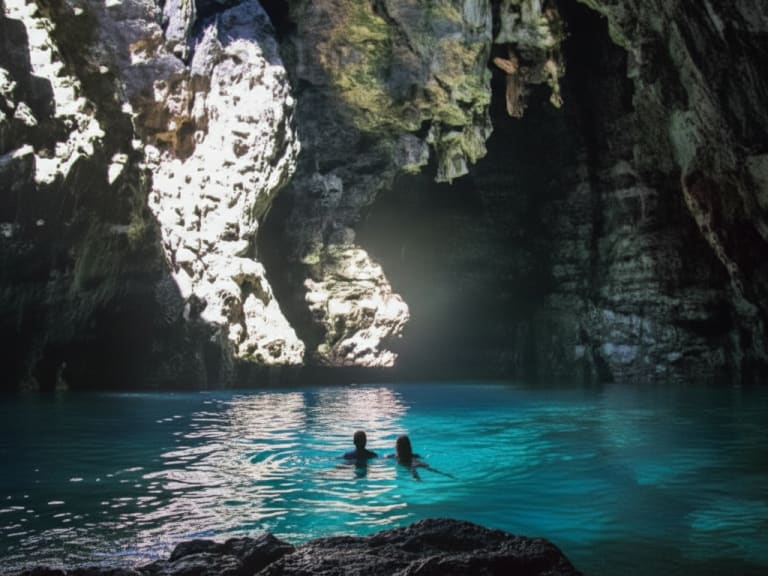
The Blue Cave, located on the coast of Cape Kamenjak, is one of Pula's best-kept secrets. It is famous for the bright blue color that the water takes on when sunlight illuminates the cave.
This effect is best seen between 10 a.m. and 12 noon, but it can also be seen at other times of the day. It is an ideal place to enjoy activities such as swimming and snorkeling, but if you are more adventurous, you can book night tours of the Blue Cave.
After exploring this sea cave, you can enjoy a full day at Cape Kamenjak, where there are beaches, trails, and perfect picnic spots. Without a doubt, visiting the Blue Cave and Cape Kamenjak is an excellent way to connect with nature and enjoy the beauty of the Adriatic Sea.
10. Have fun at Glavani Adventure Park

If you're looking to add some excitement to your visit to Pula, Glavani Adventure Park is an excellent option. It is located about 20 kilometers from Pula, and you can get there by car or bus (30 minutes).
The park has rope courses , zip lines, and climbing walls suitable for all ages, making it perfect for enjoying with friends, family, or your partner. It also offers activities with different levels of difficulty. There are also areas specially designed for children.
The park provides safety equipment, but it is important to bring sunscreen and some food or drinks if you plan to stay all day. Although there is a small café on site, it is always best to be prepared.