


More about: 10 Things to Do in Innsbruck
Innsbruck is not only the capital of the Austrian Tyrol, but also one of the best destinations in the country for exploring the Alps, practicing winter sports, and discovering some of the most outstanding panoramic views in the region. However, it is also a destination with a wealth of cultural attractions that will complement your experience.
Among the best activities you can do in Innsbruck are visiting the Golden Roof, touring Ambras Castle, seeing the Bergisel Ski Jump, enjoying the local cuisine, and contemplating the horizon from the 2,300-meter height of the surrounding Alps, which you can reach via the Nordkette cable car.
1. Visit the Golden Roof
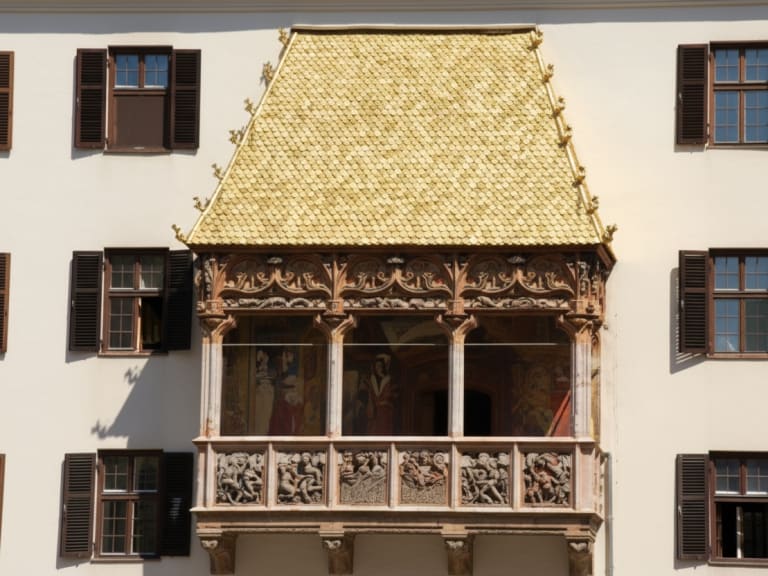
The Golden Roof is undoubtedly Innsbruck's most iconic attraction. This structure is located in the heart of the old town and is famous for its shiny roof covered with golden copper tiles, which glisten in the Alpine sun. Built at the end of the 15th century, the Golden Roof was commissioned by Emperor Maximilian I as a way to commemorate his marriage to Bianca Maria Sforza and celebrate the Holy Roman Empire.
The Golden Roof itself consists of a viewing platform with a decorated balcony, covered by 2,657 gilded copper tiles, from which it gets its name. From this balcony, members of the imperial court could watch tournaments, parades, and other public events held in the central square. Likewise, the reliefs decorating the lower part of the roof depict both scenes from court life and humorous images.
In addition to its historical importance, the Golden Roof has become a cultural and tourist symbol of Innsbruck. The building currently houses a museum with exhibitions on the life of Maximilian I, the history of the city, and the influence of the Holy Roman Empire in the region. From the balcony, visitors can follow tradition and enjoy panoramic views of the old town.
You can visit the Golden Roof on your own, although if you choose to book a guided tour of Innsbruck, one of the stops will include a tour of this attraction and the square in front of it.
2. Tour Ambras Castle

Located in the hills surrounding Innsbruck, Ambras Castle is one of the oldest and most prominent buildings in Austria. Here you can explore a series of fascinating exhibitions, such as the Chamber of Art and Curiosities, located in the castle's basement, which is one of the first documented museums in Europe and houses a variety of objects ranging from armor and weapons to natural curiosities.
Another of the castle's main attractions is the Habsburg Portrait Gallery, which contains more than 200 portraits of members of this powerful dynasty that dominated Europe. The paintings, many of them by the great masters of the time such as Rubens and Velázquez, offer a window into the history and legacy of the Habsburgs.
Personally, I recommend booking a tour of Ambras Castle to delve into the past and discover the landscaped gardens where you can stroll peacefully. These Renaissance gardens, with their fountains, statues, and terraces, are the perfect place to relax after a visit to the collections inside.
3. Discover the Bergisel Ski Jump
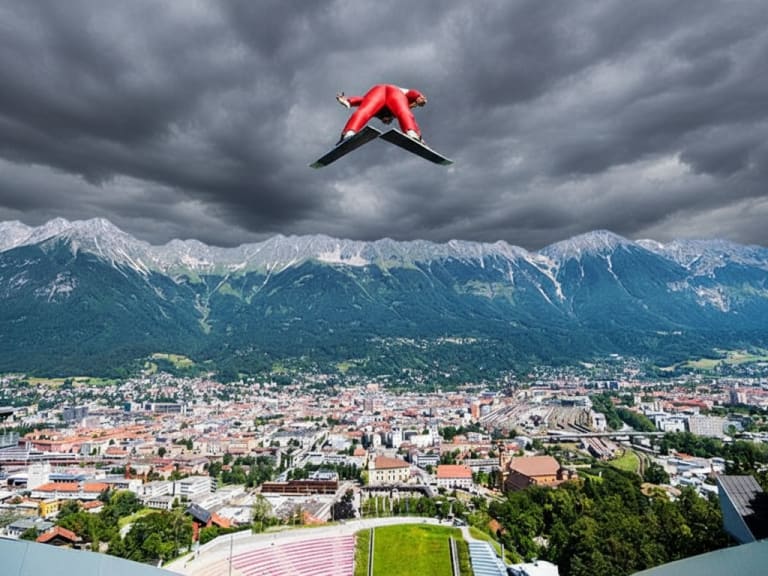
The Bergisel Ski Jump is one of Austria's most important sports facilities, known for its futuristic design and for hosting world-class ski jumping events. This structure combines modernity and functionality in an unbeatable natural setting. The ski jump, which stands on the hill that gives it its name, offers exceptional panoramic views of the city of Innsbruck and the surrounding Tyrolean Alps.
During a visit to the Bergisel Ski Jump, you can explore both the avant-garde architecture and the history of ski jumping in the region. One of the main attractions is climbing the ski jump tower, where there is an observation deck offering unparalleled views of the surrounding landscape.
In addition, at the top of the tower you will find an elegant panoramic café, where you can take a break while enjoying the view of the snow-capped mountains and the Inn River valley. What's more, when you book tickets for the Bergisel Ski Jump, you can also visit the restaurant at the back of the café.
This ski jump is also famous for its legacy in the Winter Olympics, having hosted ski jumping competitions in both 1964 and 1976. Every year, the ski jump also hosts the prestigious Four Hills Tournament, one of the most important events on the ski jumping calendar.
4. Discover panoramic views of the city from the top of Innsbruck
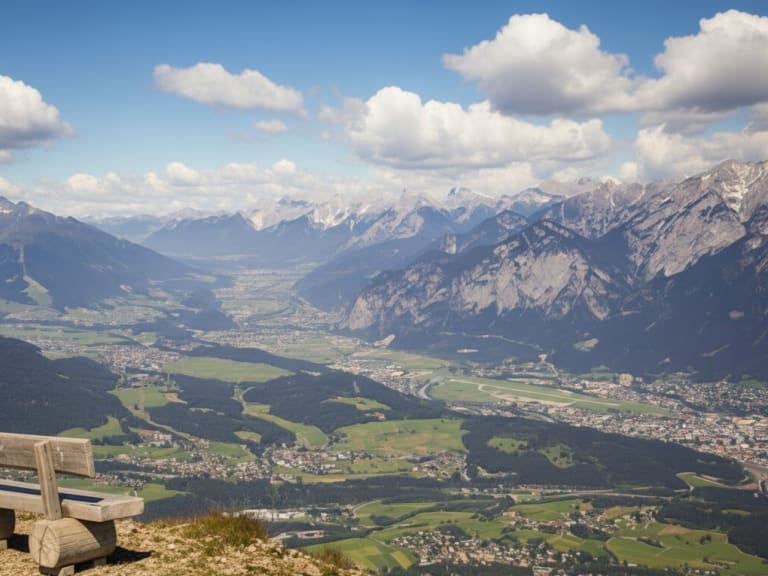
One of the best experiences Innsbruck has to offer is the panoramic views from the top of its mountains. Just a few minutes from the historic center, you can climb to an altitude of 2,300 meters thanks to the local cable car, which transports visitors to the peaks of the Nordkette mountain range.
At the top, you can enjoy several observation platforms, such as the popular Hafelekar, which offers 360-degree views. From this point, you can see the city of Innsbruck at your feet, surrounded by alpine mountains covered in snow in winter and lush greenery in summer. To the north, the view extends to the Karwendel Nature Park, a vast protected area that is home to a rich biodiversity.
In addition to the views, the summit of the Nordkette offers a wide variety of activities to enjoy. In winter, it is a paradise for skiers and snowboarders, while in summer you can explore the alpine trails that start from the highest points, offering routes for both beginners and more experienced hikers.
5. Enjoy local cuisine in Innsbruck

One of the best ways to get to know a destination is to enjoy its cuisine, and in Innsbruck you can connect with Tyrolean culture through its cuisine, which is deeply rooted in Alpine traditions. The authentic flavors of the region reflect its history and natural environment, with influences from Austria, Bavaria, and Italy.
Among the most famous dishes you can try in Innsbruck is Tiroler Gröstl, a mixture of potatoes, beef or pork, and onions, all sautéed and topped with a fried egg. This dish is traditionally eaten by farmers and is perfect to enjoy after a day exploring the mountains . Another local favorite is käsespätzle, homemade pasta smothered in melted cheese and crispy onions, which, as you can imagine, is a calorie bomb; but once in a while is fine, especially after a long tour of the city.
Also, don't miss the speckknödel, which are meatballs served in both soup and salad. On the other hand, those with a sweet tooth will also find their place in Innsbruck and can try typical delicacies such as apfelstrudel, a warm apple pie with raisins and cinnamon, or kiechl, a fried dough that can be served with jam or sauerkraut, depending on whether you prefer something sweet or savory.
Booking a food tour in Innsbruck is a perfect way to discover these flavors, although you can also choose to explore the city's restaurants and cafes on your own.
6. Visit the Innsbruck Alpine Zoo
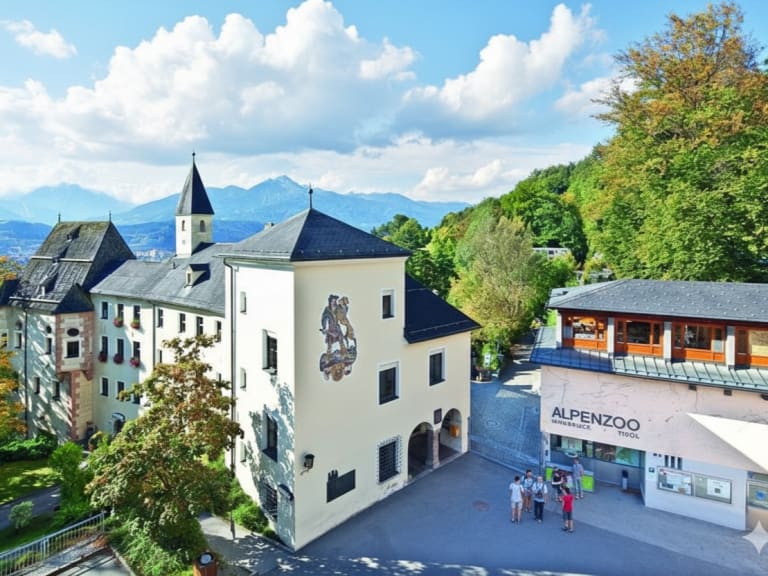
The Innsbruck Alpine Zoo is a unique attraction that offers you the opportunity to explore the native fauna and flora of the Alps in a natural and educational setting. Located on a hillside 750 meters above sea level, this zoo is the highest in Europe and is home to a wide variety of species that inhabit the Alpine mountains.
If you decide to buy tickets for the Alpenzoo, you can discover more than 2,000 animals of around 150 different species, all native to the Alpine region. Among the most notable animals are the lynx, brown bear, golden eagle, and Alpine ibex, a species of mountain goat that is a symbol of the European mountains. The zoo is also home to birds of prey, freshwater fish, and a variety of reptiles and amphibians.
The zoo tour is designed so that visitors can learn about the species in their natural habitat while walking along paths surrounded by alpine vegetation. The zoo also has interactive areas and educational exhibits ideal for children, as well as observation platforms that allow you to discover the nearby mountains.
7. Discover Santiago Cathedral

Innsbruck is not all about alpine beauty. It is also home to St. James' Cathedral, one of the city's most important architectural gems and a testament to the region's religious history. Built in the Baroque style, the cathedral has an imposing facade and two twin towers that are an iconic symbol of the city.
The interior of St. James' Cathedral is lavishly decorated with frescoes, stucco work, and gilded details. One of the most famous elements of the interior is the painting of the Virgin Mary, known as Cranach's Madonna, a work by Lucas Cranach the Elder. This 16th-century painting attracts pilgrims from all over Europe, who also marvel at the church's marble high altar.
In addition to its artistic details, the cathedral is known for its large organ, built in 1904, which is still used in official ceremonies and concerts. During your visit, you will be able to appreciate the perfect acoustics of the space, especially if you have the opportunity to attend one of the sacred music recitals that are often held in the cathedral, particularly during the Christmas season .
The location of St. James's Cathedral, right in the heart of the old town, allows visitors to explore other nearby attractions with ease. Just a few steps away is the Hofburg Imperial Palace and Maria-Theresien-Strasse, one of the city's main avenues.
8. Tour the Hofburg Palace

The Hofburg Palace in Innsbruck is one of Austria's most important buildings, with a history dating back to the 15th century. Originally built as a medieval fortress, the palace was enlarged and transformed into an imperial residence during the reign of Empress Maria Theresa in the 18th century. The building features a mixture of Gothic, Renaissance, and Baroque architecture and currently houses a museum.
A visit to this palace will give you an insight into the life of Austrian royalty. The palace has several rooms and chambers that have been restored to their former glory, including the Hall of Giants, one of the largest and most luxurious halls in Austria, decorated with ceiling frescoes and portraits of the Habsburg family.
The palace museum traces the history of the Habsburgs and their relationship with Innsbruck. Through interactive exhibits and historical objects, you can learn about the influence of this dynasty on European politics, as well as daily life at the imperial court.
One of the most moving areas is dedicated to Empress Elisabeth of Austria, known as Sissi, who spent time at the palace and whose legacy lives on in the country.
9. Attend a Tyrolean show in Innsbruck

Booking tickets for a Tyrolean show in Innsbruck is a unique opportunity to learn about the culture and traditions of the Austrian Alps through an authentic experience full of music, dance, and color. These folk shows have become one of the most popular attractions in the region, proudly showcasing Tyrolean heritage in an energetic format.
Throughout the year, visitors have the opportunity to witness these typical shows in different parts of the city, such as in the traditional Alpensaal or in some of the traditional restaurants that organize special evenings with this type of entertainment.
The essence of a Tyrolean show revolves around the region's traditional music, with the characteristic Schuhplattler, an energetic dance in which the dancers slap their shoes and thighs to the rhythm of Alpine music, creating a joyful and contagious atmosphere. This dance, which has its roots in rural celebrations in the area, is accompanied by instruments such as the accordion, trumpet, and zither.
In addition to music and dance, Tyrolean shows also feature traditional costumes, such as Lederhosen for men and traditional Dirndl dresses for women, adding authenticity to the experience.
10. Visit the Tyrol Panorama Museum

The Tyrol Panorama Museum in Innsbruck offers a unique experience for those interested in the history, culture, and landscape of Tyrol. This exhibition is located on the Bergisel hill and houses the gigantic panoramic mural that gives the museum its name, a masterpiece depicting the Third Battle of Bergisel in 1809, where the Tyroleans fought for their freedom under the leadership of local hero Andreas Hofer.
The heart of the museum is the Innsbruck Panorama, a 1,000-square-meter circular canvas that envelops visitors in a three-dimensional representation of the famous battle. Created in 1896, this work is one of the few remaining panoramic paintings in Europe, and its immersive format creates the illusion of being in the center of the battlefield.
The meticulous details of the landscape, soldiers, and citizens transport visitors to the historic moment, providing an immersive experience that stands out for both its artistic value and historical narrative.
In addition to the famous mural, the Tyrol Panorama Museum also offers exhibitions that explore other important aspects of Tyrolean identity, from religion and politics to popular culture and Alpine traditions. Through historical objects, artifacts, photographs, and documents, you can delve into topics such as the role of Andreas Hofer in the Tyrolean rebellion, life in the Alps, and the political transformations of the region over the centuries.