How to Visit the Jewish Quarter NYC
Take a stroll through New York's Jewish neighbourhood in Williamsburg: it will give you a more complete view of the city and its contrasts.

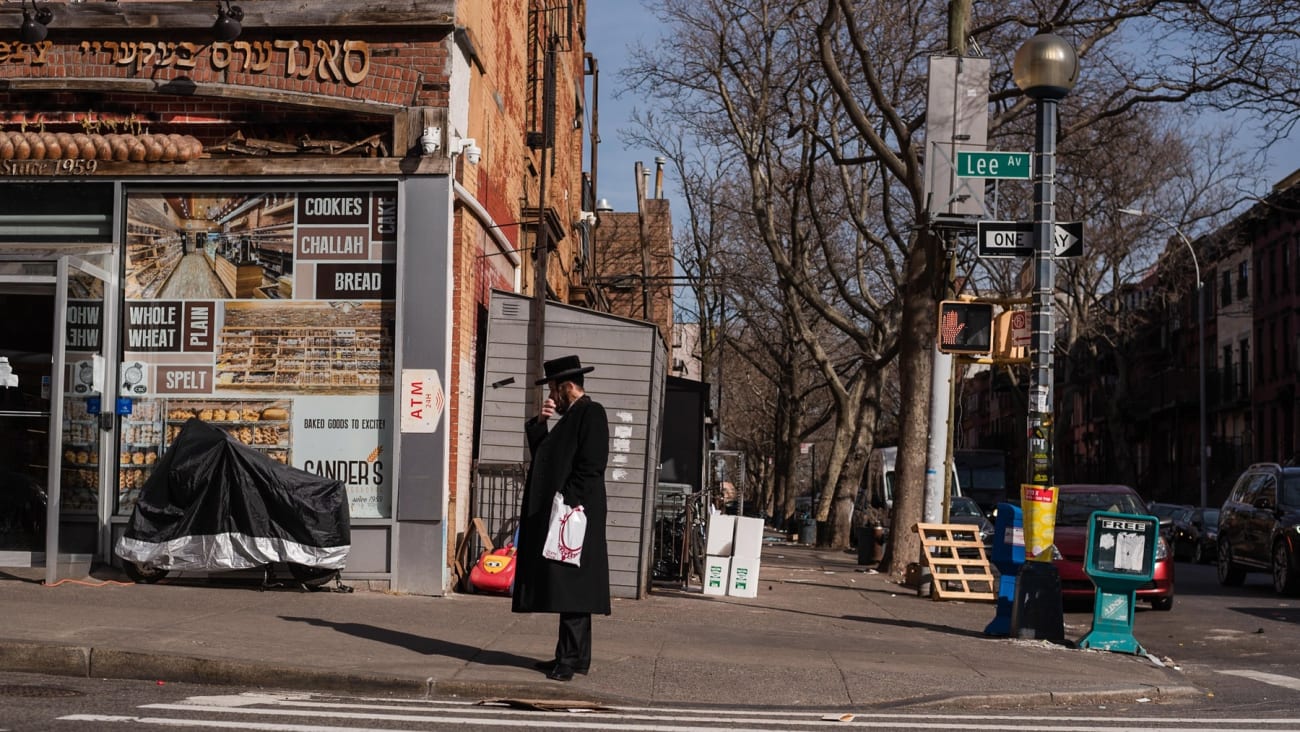
Strolling down Lee Avenue | ©Hellotickets
I don't know if you've had the chance to watch "Unorthodox" (if not, I recommend it), a Netflix series set in this very Jewish community, in which one of its members escapes to Berlin to flee the strict rules of her community.
We've said many times that New York is much more than Manhattan, and this area is great proof of that. In the heart of Brooklyn, south of Williamsburg, you'll find a neighbourhood straight out of a film that's well worth exploring.
What to see on a tour of New York's Jewish neighbourhood
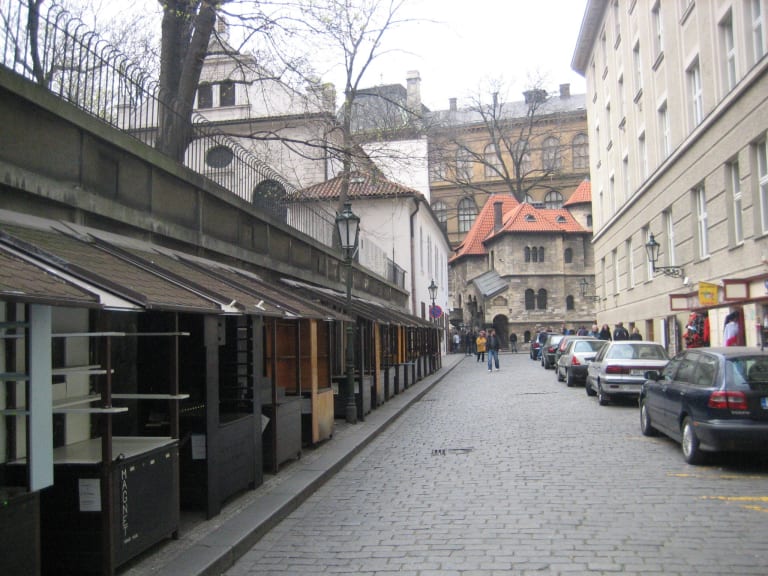
The best way to discover the Jewish neighbourhood is with one of the best tours in New York, which takes you to Williamsburg. With this guided walking tour lasting about two hours, you can see the highlights of this unique place with its culture and history.
On your tour, you'll walk across the Williamsburg Bridge and come across flea markets selling antiques and second-hand goods, where you can mingle with the locals. This neighbourhood is definitely a must-see if you want to learn more about the customs and cultural and social diversity of this country.
Where is the Jewish neighbourhood and how do I get there?

If, on the other hand, you are going on your own, my advice is to take advantage of the visit to the more touristy part of Williamsburg and then discover the Jewish neighbourhood. Get off at the Bedford Ave stop (line L) and walk to the Jewish neighbourhood. It will take you less than 30 minutes and you'll be amazed by the contrast between blocks!
If you arrive directly here by tube, you can get off at Marcy Avenue (lines J, M, Z), Broadway (line G) or Hewes Street (lines J and M). Check out the New York tube guide here to make the most of New York's underground life.
What will I find in the Jewish quarter?
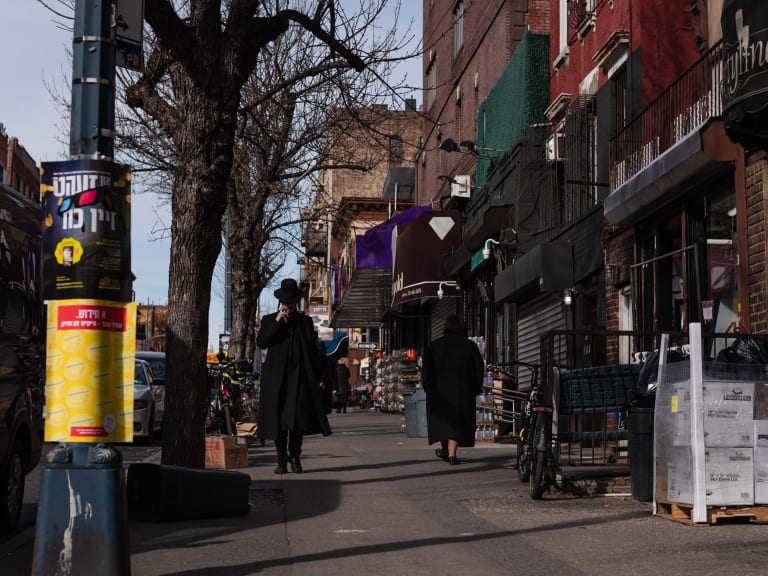
Compared to other areas of the neighbourhood where urban art, chic venues and designer residences abound, the streets of South Williamsburg are austere and the buildings are simple, with worn facades and most of them with bars on the windows.
In this area, a large part of the community lives on the poverty line. In many households, the men devote themselves to studying the Torah and have not received sufficient secular education to qualify for skilled jobs that would allow them to earn more. Therefore, women are the sole source of income in these families, which can have many children.
Is the Jewish neighbourhood safe?

Yes, very much so. In fact, something that surprised me is that, unlike other poor neighbourhoods in New York, the crime rate here is low. All the members of the community know and help each other, so you can walk around peacefully and explore on your own without any problems.
How to visit the Jewish neighbourhood on your own
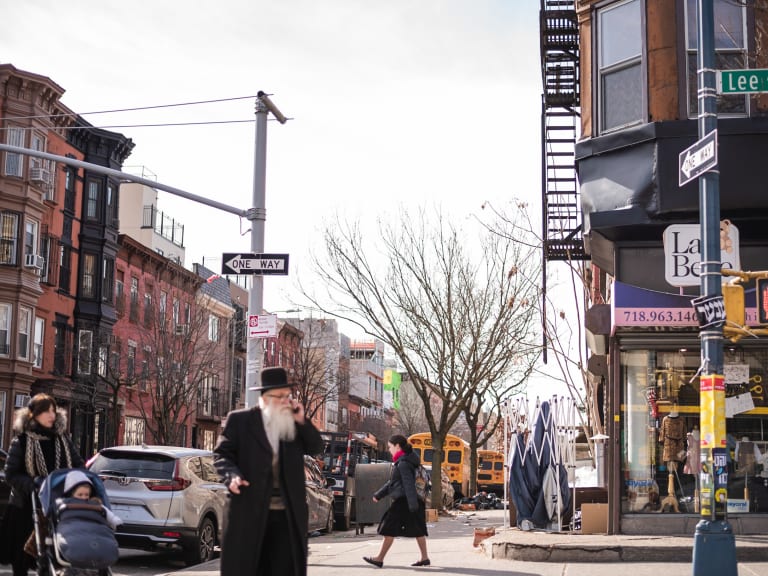
My main recommendation is to take a leisurely stroll through its streets, taking in the local shops, temples, customs... During your walk through South Williamsburg, you'll see that the restaurants and shops have signs in Hebrew, as do the typical yellow school buses. If you can, I recommend popping into a kosher shop and buying some sweets or bread rolls.
But if there's one thing I recommend 100%, it's that before visiting the area, you learn about its customs so that you can fully understand its way of life. I'll tell you everything you need to know before you get there.
What is the Jewish community in Williamsburg like?
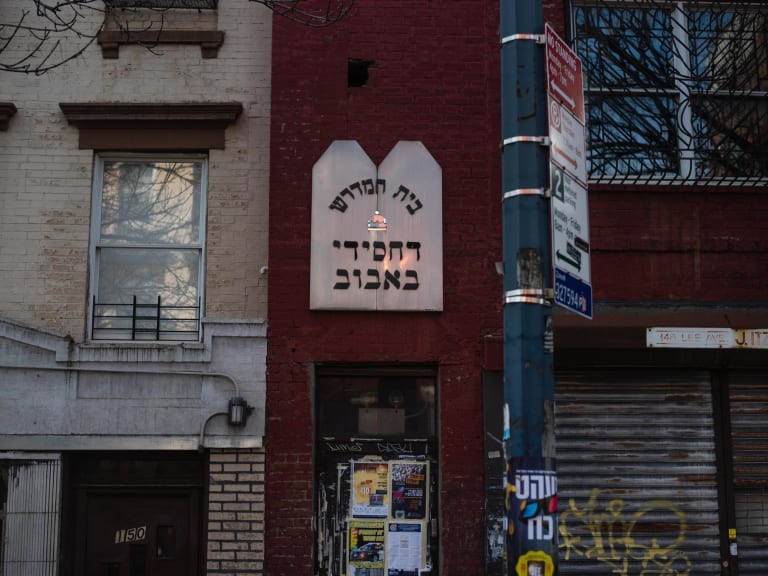
The Orthodox Jewish community in Williamsburg is the largest in the United States. Its inhabitants are Hasidic Jews (a branch of Orthodox Judaism) who came to the country from Hungary fleeing World War II and are characterised by their strict adherence to the Halacha, the collection of the main Jewish laws.
In a cosmopolitan city like New York, where cultural mixing is constant, the secrecy of this Orthodox Jewish community is striking, as they hardly mix with others. In fact, in the South Williamsburg neighbourhood, they have absolutely everything: shops, banks, temples, schools, doctors... enough to live without having to leave. It is like a city within a city.
What are families in the Orthodox Jewish community like?
Unlike the modern world in which most of us live, the Jewish community in Brooklyn is a group that is very attached to its customs, so the roles that each member plays in the family are very clearly defined.
Marriages are usually arranged between the rabbi and the families of each spouse, who are often quite young. Families organise the introduction of young men and women, and depending on the characteristics of each family, the rabbi notes the name of the family member who could be a good match for another.
Clothing
Once married, women must shave their heads, as they cannot show their hair in public. That is why, during your walk through South Williamsburg, you will see them wearing a scarf (tichel) or a wig when they go out. Their clothing is very simple, in keeping with the modesty expected of them: dark garments, long skirts, stockings, flat shoes and no accessories.
As for the men, they must wear a white shirt with a jacket and black trousers. They wear a hat as an accessory, which can be of different types:
- The kippah: a ritual beret with a sacred meaning that reminds us that nothing is higher than God.
- The black felthat with a wide brim as a sign of respect for God.
- The shtreimel: a hat made of fox fur and velvet worn by married men during Shabbat and other Jewish holidays.
Under the hat, men wear peiot, long curls on each side of the head, as established by the Torah. In this way, according to one of the mitzvot, they differed from idolaters who shaved their sides. The beard that usually accompanies the peiot is grown to show that Jews are bound to a spiritual life and not to aesthetics or the outside world.
Roles in the home
Most of the time, men devote themselves to prayer and Torah study, although some work as merchants. However, in most cases, it is the women who work as teachers or shop assistants to support the household, as well as raising the children, who are usually numerous as they do not use contraception.
Children
The birth rate in Brooklyn's Jewish neighbourhood is very high. Each family has an average of six children. Most of their homes are located south of Division Avenue, although walking through any of the streets of the South Williamsburg neighbourhood, you will find courtyards and gardens where you will see parked prams and children playing. You will only see parents with their sons on Saturdays, when they go together to pray at the synagogue.
Despite their young age, children also have rules to follow within the community:
- Circumcision: Boys are circumcised eight days after birth.
- Naming ceremony: This ceremony symbolises the official entry of girls into the Hasidic community.
On the other hand, it is customary for children in Orthodox Jewish families not to have their hair cut until the age of three. This ceremony is called upsherin and marks the transition to another stage of life where one ceases to be a baby and becomes a child with a certain degree of independence.
Isabel's Traveller Tip
Go to Sander's Bakery at 159 Lee Avenue! They have a wide variety of fresh products at very good prices. The pastries are my favourite. Yummy!
What it's like to visit New York's Jewish neighbourhood on a Saturday
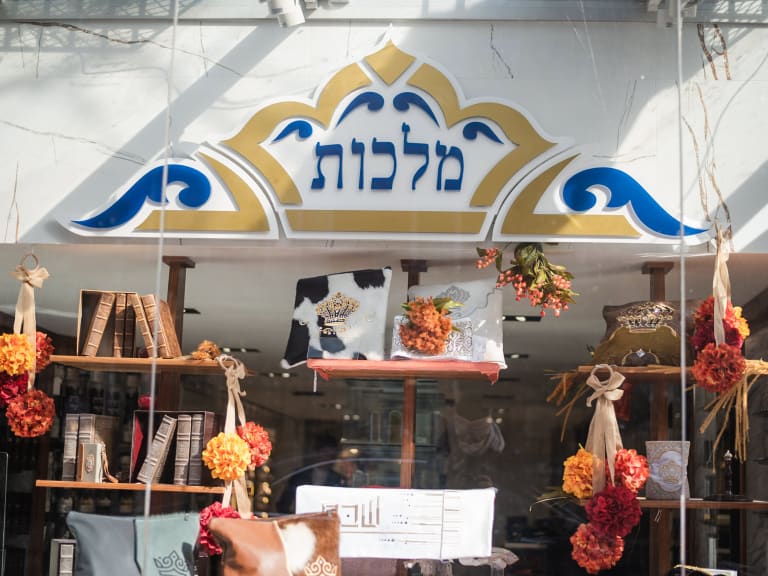
Unlike Christians and Sunday, the holy day for Jews is Saturday. It is a solemn day of rest when shops are closed and it is not permitted to work or carry out other activities such as cooking, washing, driving or even writing.
That is why Fridays are very busy days in the community, as they have to get everything ready so that on Saturday they don't have to do anything but read sacred texts, sing and spend the day with their families and at the synagogue.
As it is a holiday, if your visit to Brooklyn coincides with Saturday, you will be able to experience first-hand how this special day is celebrated in South Williamsburg. You will see men and women dressed in their best clothes on the street on their way to synagogue. In addition, the streets and parks are usually full of children playing. However, you will not be able to enter the shops as they will be closed.
Eruv, the invisible thread
As I was saying, on Saturdays Jews are not allowed to do a number of things that involve work or physical effort so as not to contravene Jewish law.
For this reason, the community came up with an ingenious solution called eruv or free zone. This is a demarcation constructed with transparent cable with the intention of establishing a perimeter where certain activities can be carried out, such as pushing a pram or wheelchair, without breaking the law.
In fact, just at the beginning of Lee Avenue, if you look closely, you will see a thread surrounding several areas of the neighbourhood, creating this safe space. It must be in perfect condition, without any breaks, throughout all the streets it runs through. If this is not the case, on Friday morning a maintenance team repairs it under the supervision of a rabbi so that on Friday afternoon, when Shabbat begins, everything is ready. You may not believe it, but there are about 30 kilometres of eruv in Manhattan.
Travel responsibly
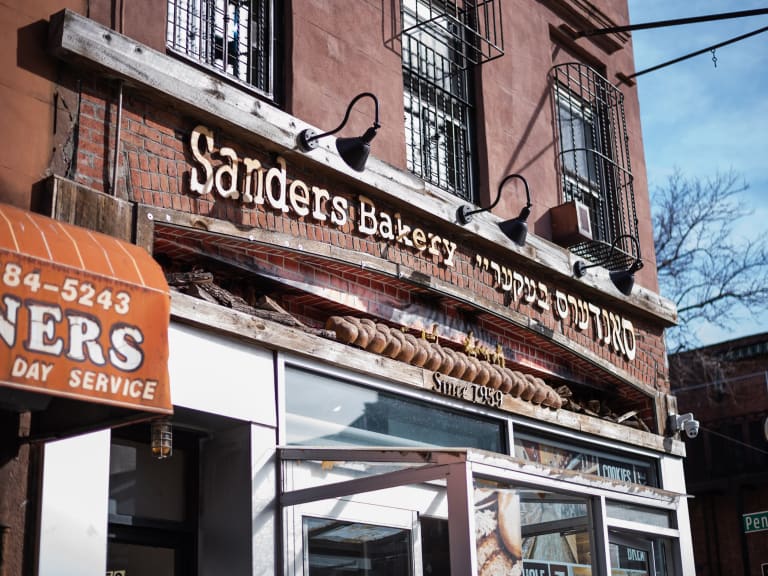
Visitors are not given much attention and are used to seeing them pass through the neighbourhood, but it is advisable to act considerately during your tour of South Williamsburg. The streets of Brooklyn's Jewish neighbourhood are not merely a backdrop for tourists.
Even if you are struck by their clothing, hairstyles or any other detail, try not to stare at them curiously so as not to make them feel uncomfortable. Be respectful when taking photos, as they do not like to be the constant focus of cameras.
Social norms
During my visit to South Williamsburg, I remember the culture shock being quite significant. It is surprising to see children and women walking on one side and men on the other, in separate groups.
In addition, men never look women directly in the eye, as this would be a way of inciting sin. They tend to walk with their eyes fixed on the ground. In fact, you will notice that when tourists walk through the neighbourhood, the residents ignore them. It is not common for members of the Jewish community in Williamsburg to interact with people who do not belong to the neighbourhood.
Other tips for visiting

Visiting the Jewish Quarter is one of the things you have to include in your trip to New York. If you feel like exploring Brooklyn on a guided tour, there are some tours of New York in Spanish that cover this area, with the advantage that you can ask the guide any questions you may have and get all the recommendations you need. If you decide to take the New York Contrasts Tour, for example, you will travel from north to south and end the tour in Brooklyn.
It's a great way to explore the cultural contrasts of the city, providing historical context that will help you understand how dozens of cultures coexist in this great city.